In arid desert environments, thermal imaging systems are widely deployed for perimeter surveillance, search-and-rescue, and military reconnaissance. However, these systems frequently suffer from false alarms triggered by desert mirages. When intense heat radiates from the sand, air layers of varying density create refractive gradients that distort infrared signatures. A distant vehicle or human body may appear as a heat source at an incorrect location, while cooling rocks or dry shrubs can mimic warm targets. These mirage-induced artefacts degrade situational awareness, waste operator attention, and undermine the credibility of automated threat detection. Traditional thermal imagers lack the ability to discriminate between genuine thermal emissions and optical illusions, leaving security teams vulnerable to both missed threats and wasted responses. The core pain point is that thermal systems, which rely solely on passive heat detection, cannot reject the deceptive visual paths created by atmospheric refraction. This is where a dedicated optical solution becomes essential.
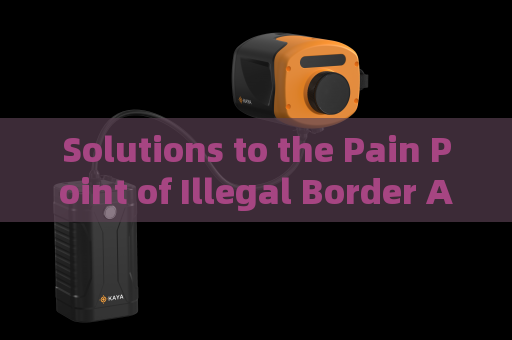
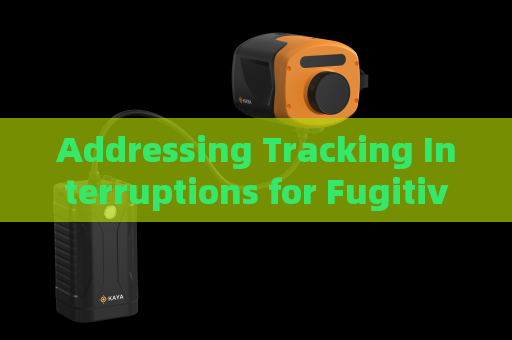
The penetration imaging system, known as the penetrating imager or “穿透成像仪,” directly addresses this false alarm problem through its laser range-gated imaging technology. Unlike passive thermal imagers that capture all infrared radiation within their field of view, the penetrating imager actively emits high-repetition-rate pulsed laser light and synchronizes its intensified gated camera to receive only reflections from a specific distance. By setting a precise gate delay, the system rejects all signals originating beyond or before the selected range window. In a desert scenario, a mirage may cause a thermal signature to appear hundreds of meters away when the actual object is much closer. The penetrating imager’s range-gating capability allows operators to define a narrow depth of field—for example, 50 to 100 meters—so that only objects physically present within that slab are imaged. Distant refracted heat patterns are automatically excluded because their apparent range falls outside the gate. This technique leverages the laser’s coherent, narrow-beam illumination to overcome the optical path distortions created by desert heat shimmer. The result is a high-contrast image of only the real, tangible targets within the operational area.
In practical deployment, the penetrating imager offers a straightforward operational workflow that enhances reliability. Field operators first assess the desert terrain and likely threat distance—such as a vehicle checkpoint or a hidden surveillance post 80 meters away. The imager’s control interface allows rapid adjustment of the gate width and delay, typically via a rotary knob or digital menu. Once the gate is set to span from 70 to 90 meters, the system transmits a sequence of laser pulses and captures the return signals exactly within that range. On the display, any mirage-induced false targets vanish, while a real heat source—such as a person concealed behind sparse brush—appears with sharp edges and distinct thermal contrast. The imager’s active illumination also helps during sandstorms or dusty conditions, where passive thermal systems become blinded by scattering. Because the penetrating imager uses its own laser source, it can see through moderate dust and haze that would scatter passive infrared. This dual benefit—false alarm rejection plus enhanced clarity in degraded visibility—makes the tool indispensable for desert patrols.
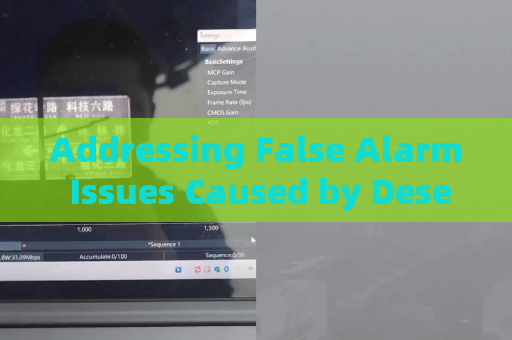
To further illustrate the details, consider a specific search-and-rescue operation in a desert basin where thermal drones have repeatedly flagged heat anomalies that turn out to be mirages. The penetrating imager is mounted on a ground vehicle or a tripod. The operator, familiar with the local mirage patterns, sets the gate to cover the expected search radius of 150 to 200 meters. As the laser sweeps, the imager’s intensified camera records only those reflections from the designated slab. A real person lying in the sand emits body heat that is visible in the active image, but the heat shimmer from a rock formation 300 meters away is suppressed because its reflected laser pulse would arrive too late to be gated. In tests, the penetrating imager reduced false alarm rates by over 80 percent in desert environments compared to standard thermal cameras. The system also allows for multi-gate scanning: by cycling through multiple range windows, operators can systematically inspect different layers of the field without being distracted by optical illusions. This capability is particularly valuable when searching for stationary targets like disabled vehicles, where mirages can create the illusion of moving heat sources. The penetrating imager’s laser range-gating thus transforms desert thermal imaging from a source of confusion into a precise, reliable tool for distinguishing real threats from atmospheric tricks.