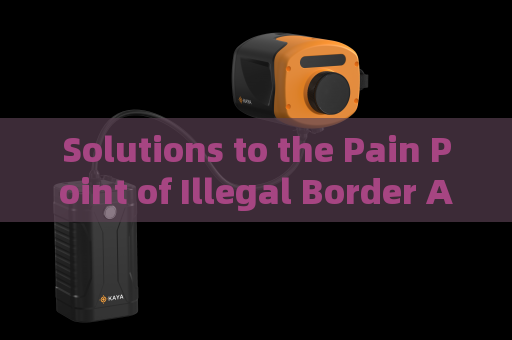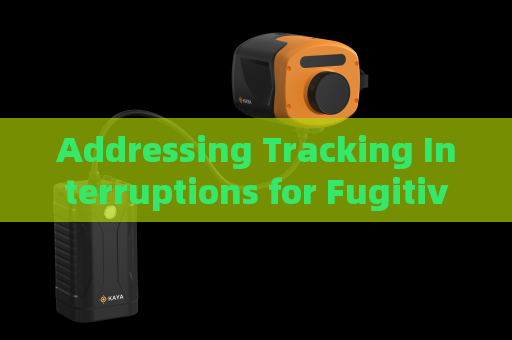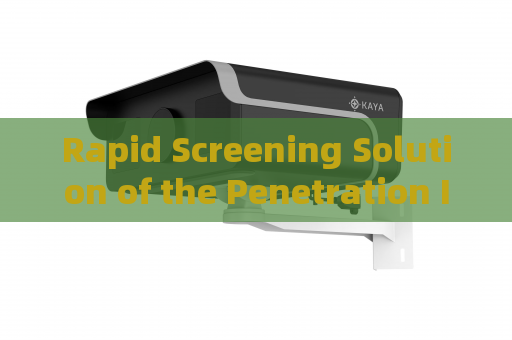
Rapid Screening Solution of the Penetration Imager for High-Reflective Mirror-Film Vehicles with Through-Tint Imaging At vehicle checkpoints, law enforcement officers often face a persistent challenge when inspecting cars with high-reflective mirror films. These films, frequently applied to windows for privacy or aesthetic purposes, create a near-opaque barrier to conventional optical surveillance tools. Under direct sunlight or strong ambient lighting, the mirror-like surface reflects the surrounding environment, rendering the interior completely invisible to the naked eye or standard cameras. Even tinted windows that are not mirror-coated can obscure occupants and objects, but the combination of high reflectivity and deep tint exacerbates the problem. Officers must resort to physical approaches—tapping on windows, requesting drivers to roll them down, or using flashlights at extreme angles—which are time-consuming, intrusive, and potentially dangerous if the vehicle’s occupants are hostile. The core issue is the lack of a non-contact, rapid screening capability that can reliably see through this specific optical barrier without compromising safety or operational tempo. This is where the Penetration Imager offers a transformative solution. The Penetration Imager, an advanced optical instrument employing laser range-gated imaging technology, directly addresses the limitations of traditional vision tools. It consists of a high-repetition-rate pulsed laser, an intensified gated camera with an MCP image intensifier, a timing module, a beam expander, and an imaging lens. Unlike passive cameras that are overwhelmed by surface reflections, the Penetration Imager actively illuminates the target with short laser pulses and precisely times the camera’s shutter opening to capture only the light returning from a specific distance—the interior of the vehicle. This gating mechanism effectively rejects backscatter from the mirror film and the glass itself, while simultaneously suppressing the intense glare caused by the high-reflective coating. The system delivers high-contrast images that reveal the cabin space, occupants, and any objects inside, even when the window appears as a perfect mirror to the unaided eye. The technology operates entirely within the optical spectrum, using light to gate light; it does not rely on any non-optical means such as radio waves or X-rays. Its ability to see through tinted and reflective glass is a direct function of its active, pulsed illumination and precise temporal filtering. In practical screening operations, the Penetration Imager enables officers to assess a vehicle from a safe standoff distance, often 20 to 50 meters away, without the need to approach or demand window lowering. At a typical checkpoint, an operator aims the device at the driver-side window of an approaching car. Within seconds, the imager’s display shows a clear, real-time view of the driver, front passenger, and any visible cargo through the mirror film. The high reflectivity that once blinded conventional cameras now becomes irrelevant; the laser pulses bypass the surface reflection by focusing on the target range. This rapid screening process does not interrupt traffic flow—a single scan takes less than a second, and the operator can signal the vehicle to proceed or direct it to a secondary inspection area if anomalies are detected. The system’s resolution is sufficient to identify facial features, hand movements, and even small objects on seats, providing actionable intelligence before any physical contact occurs. For high-throughput checkpoints, multiple units can be deployed in parallel, each covering different lanes, ensuring that every vehicle with mirror-film windows is screened without causing bottlenecks. The key operational advantage lies in the device’s immunity to lighting conditions. Whether under midday sun, twilight, or artificial streetlights, the Penetration Imager maintains consistent imaging performance because its own pulsed laser provides the illumination. This is critical for 24/7 security operations. Additionally, the system can be handheld or vehicle-mounted, with a simple user interface that shows distance-to-target and a live video feed. Officers do not need specialized training beyond basic aiming and focus adjustments. When dealing with vehicles that have a combination of high-reflective mirror film and deep tint, the Penetration Imager’s through-tint imaging capability ensures that even the darkest aftermarket films (commonly rated at 5% visible light transmission) do not hinder the view. This makes it an indispensable tool for border patrols, traffic enforcement, and anti-terrorism checkpoints where rapid, non-invasive screening of high-reflective vehicles is required. The technology turns a previously impenetrable optical barrier into a transparent window for law enforcement, enhancing both officer safety and screening efficiency.