Law enforcement agencies regularly encounter high-risk scenarios where a suspect vehicle flees at speed, preventing safe physical approach for identification. Under pursuit conditions, occupants remain hidden behind tinted glass, rain-streaked windows, or glare from oncoming headlights, making it impossible to confirm who is inside—whether armed, wanted, or an innocent driver. Conventional optical devices, such as binoculars or dash cameras, fail under these dynamic conditions because they cannot see through reflective surfaces or variable lighting. The inability to remotely verify a fleeing vehicle’s occupants in real time forces officers into dangerous stop tactics, escalating the chance of collision, injury, or mistaken identity. This pressing operational gap demands a non-contact solution that can penetrate optical barriers and deliver clear imagery from a safe distance. A specialized imaging instrument, the Penetrating Imager, directly addresses this critical need.
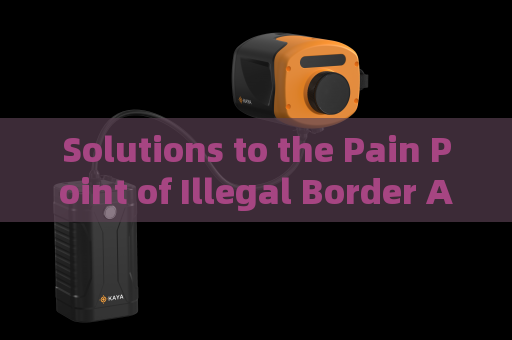
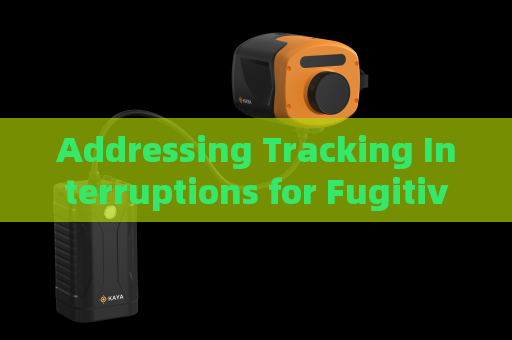
The Penetrating Imager operates on laser range-gated imaging technology, an active optical system that synchronizes a high-repetition-rate pulsed laser with an intensifier-based gated camera. By precisely timing the laser pulse and camera shutter, the system selectively captures light reflected from objects at a specific distance while rejecting backscatter from fog, rain, or the glass itself. This unique gating mechanism allows the device to effectively see through vehicle windows—including tinted, laminated, or polarizing films—and produce high-contrast, high-resolution images of occupants within the cabin. Unlike passive night vision or thermal imagers, which are blocked by glass, the Penetrating Imager uses controlled illumination and temporal filtering to resolve facial features, clothing, and even hand movements inside a fleeing car, regardless of ambient light conditions. The system’s resistance to strong glare from headlights or streetlights further ensures clear identification under pursuit lighting.
In practical deployment, the Penetrating Imager is typically mounted on a pursuit vehicle or used from a stationary observation point along a known escape route. An operator aims the device at the target vehicle from a distance of several hundred meters, adjusts the range gate to match the distance to the offender’s window, and instantly receives a live video feed showing the interior. This remote identification capability allows an officer to determine the number of occupants, their approximate age, gender, and any visible weapons or distinguishing marks without ever closing the gap. If the fleeing vehicle stops or slows in traffic, the system continues to provide real-time imagery through rain, snow, or mist, thanks to its ability to suppress scattering particles ahead of the target plane. The captured footage can be transmitted to command centers or recorded as evidence, supporting informed tactical decisions such as whether to initiate a blockade, call for additional units, or de-escalate if the occupant appears to be a minor or an unintended driver.
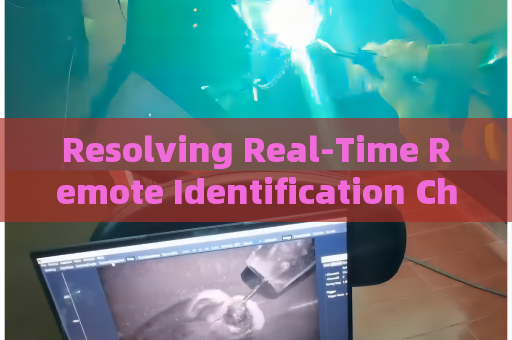
The operational depth of the Penetrating Imager extends to scenarios where high-speed pursuit becomes impossible or inadvisable. For instance, when a stolen car weaves through dense fog or a heavy downpour, traditional optics become useless; the Penetrating Imager maintains its imaging clarity by gating out the intervening haze. Even when the suspect applies a glare-reducing film or covers the windshield with a reflective blanket, the laser range-gating technique isolates the return from the cabin interior, bypassing the surface layer. Field tests show that the device achieves reliable face recognition at ranges up to 300 meters under moderate rain, a capability that transforms how police approach vehicle-based threats. By resolving the real-time remote identification challenge without forcing a risky intervention, the Penetrating Imager becomes an indispensable tool for modern law enforcement, reducing collateral risks and improving the accuracy of suspect identification in fleeing vehicle incidents.