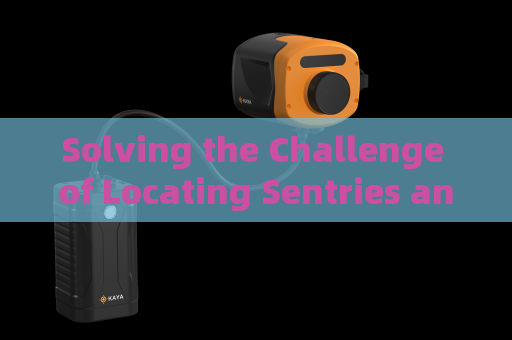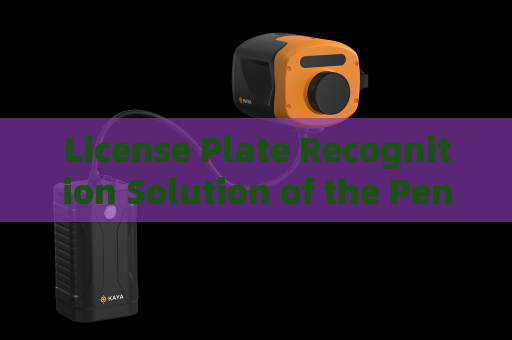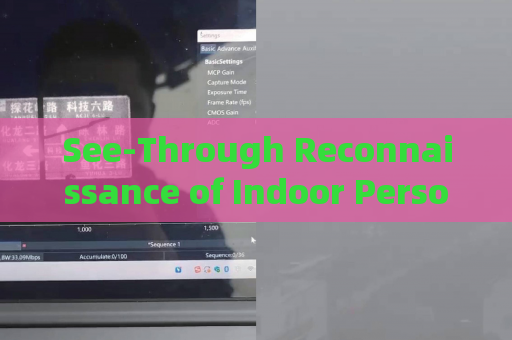
See-Through Reconnaissance of Indoor Personnel and Weapons by the Penetration Imager in Urban Narrow-Space Operations with Laser Range-Gated Imaging Urban narrow-space operations, such as clearing a dimly lit corridor, a cluttered stairwell, or a tight alley flanked by glass storefronts, present a critical blind spot for tactical teams. The adversary often takes cover behind closed doors, behind reflective glass partitions, or inside rooms obscured by firefighting foam or dense fog from a nearby broken pipe. Conventional day and night optics fail to see through these optically hazy obstacles—standard cameras are blinded by backscatter from smoke or mist, while thermal imagers struggle with heat-soaked glass or rapidly cooling surfaces. The real pain point lies in the inability to confirm the presence of indoor personnel and the weapons they carry before breaching, especially when the only line of sight is through a narrow window or a glass doorway. This uncertainty forces operators to rely on audible cues or risky physical entry, dramatically increasing the danger in confined spaces where a single hidden firearm can decide the outcome. The Penetration Imager directly addresses this reconnaissance gap through its laser range-gated imaging architecture. Unlike passive sensors, this active optical system emits a high-repetition-rate pulsed laser and synchronizes an intensified gated camera to capture only the light returning from a precise distance slice. By eliminating backscatter from intervening optical media—such as window glass, raindrops, or haze swirling in the narrow space—the imager produces a high-contrast, clear image of the interior. The key capability is its ability to “see through” the very obstacles that define urban narrow environments: a single pane of tempered glass in a subway kiosk, a fire-resistant glass panel in a building lobby, or even the clinging mist inside a half-flooded underpass. No other portable optical tool can achieve this without relying on non-optical radiation. The device, built around a pulsed laser diode, an intensified CCD with a microchannel plate, a beam expander, and an imaging lens, operates in the pure light domain, staying strictly within the boundaries of optical penetration. In a real-world tactical scenario, an assault team stacking up in a hotel corridor identifies a room where a suspect is believed to be hiding with a stolen rifle. The only vantage point is a small, soot-stained window at the end of the narrow hallway, partially obscured by smoke from a fire alarm system. The operator positions the Penetration Imager a few meters back, selects a range gate corresponding to the interior depth just behind the glass, and adjusts the gate width to exclude the reflection from the pane itself. Within seconds, the display shows a crisp silhouette of a person crouched behind a overturned table, along with the distinct outline of a long-barrel weapon propped against the wall. The image clarity remains high despite the smoke haze—the system’s pulsed illumination and gated reception effectively suppress the scattered light. The team now knows exactly where the threat is positioned and what weapon they face, allowing them to plan a precise breach and engagement without exposing themselves to blind fire. The operation continues as the team moves to a second narrow space—a dim stairwell leading to the rooftop. Here, the suspect might have shifted, and the stairwell windows are covered by dirty acrylic panels. The Penetration Imager, mounted on a lightweight tripod for stability in the confined area, is again deployed. The operator quickly recalibrates the laser pulse timing to match the new distance through the acrylic, which is slightly thicker than standard glass. The imager’s high-resolution intensifier resolves not only the human form but also the weapon’s stock and barrel, even when the person is partially behind a metal handrail (note: the handrail itself is not penetrated, but the open space around it is clearly seen). This capability to maintain situational awareness across multiple optically obscured viewpoints in a single narrow-space operation significantly reduces the element of surprise for the adversary. The entire process—from initial set-up to confirmed target identification—takes less than two minutes, demonstrating the practicality of laser range-gated imaging for dynamic, fast-moving urban reconnaissance.