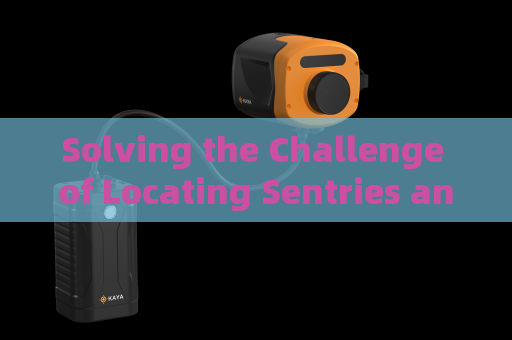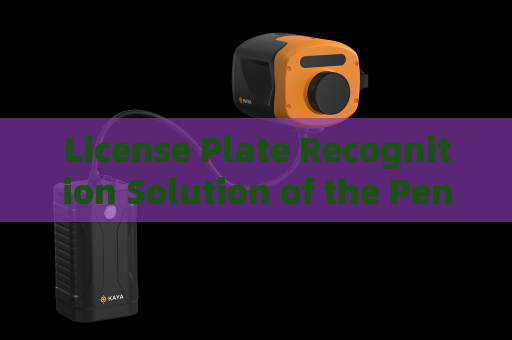
License Plate Recognition Solution of the Penetration Imager with Strong Light Suppression Imaging Under Strong Light Interference In law enforcement and security operations, the ability to accurately identify a vehicle’s license plate under harsh ambient conditions is often the deciding factor between a successful interdiction and a missed lead. While conventional optical systems perform reasonably well in moderate daylight, they frequently fail when confronted with strong light interference—direct sunlight, oncoming headlights at night, or glare reflecting off wet asphalt. These scenarios wash out the image sensor, causing overexposure, blooming, and loss of contrast on the plate surface. The true pain point emerges when an officer must read a plate through a heavily tinted or reflective windshield under blinding midday sun, or when a suspect vehicle accelerates away while the operator is blinded by high‑beam headlamps. Existing license plate recognition cameras struggle to suppress such hostile light, often requiring additional filters or post‑processing that adds latency and reduces frame rate. What is urgently needed is a solution that can simultaneously reject strong interfering light and resolve the license plate details through optical barriers like glass, without compromising capture speed or accuracy. The Penetration Imager, a laser‑gated active imaging system, directly addresses this challenge through its integrated strong light suppression imaging capability. Unlike passive cameras that rely solely on ambient illumination, this device employs a high‑repetition‑rate pulsed laser synchronized with an intensified gated camera. The laser emits ultra‑short pulses—on the order of nanoseconds—while the camera’s gate opens only for the precise time window when reflected light from the target returns. This time‑of‑flight gating effectively rejects any light that arrives before or after the signal pulse, including continuous sources like sunlight, headlights, or other strong background illumination. The inherent contrast is further enhanced by the MCP (microchannel plate) image intensifier, which amplifies the weak laser reflection while suppressing the residual ambient glow. As a result, the Penetration Imager can capture a clean, high‑contrast image of a license plate even when the plate is located behind a windshield or other optical medium and simultaneously bathed in intense direct light. The function is specifically designed for optical‑medium penetration—it sees through glass, aircraft windows, and similar transparent barriers, but does not claim to penetrate solid opaque materials such as concrete or metal. In practical field applications, this capability transforms a previously unreliable identification task into a routine, high‑probability operation. When a patrol vehicle encounters a suspect car with heavily tinted windows at a checkpoint under direct afternoon sunlight, the operator can aim the Penetration Imager from a safe distance—typically 50 to 200 meters—and trigger a single‑shot acquisition. The system’s strong light suppression instantly eliminates the glare from the windshield, while the laser‑gated imaging penetrates the glass to reveal the license plate characters with edge‑to‑edge sharpness. The captured image is displayed on an onboard monitor in near real‑time, allowing the officer to read the plate without approaching the vehicle. This stand‑off capability significantly reduces risk in high‑threat stops. Moreover, the same technology works equally well at night when oncoming traffic’s headlights would normally blind a conventional camera. The Penetration Imager’s gate width can be adjusted to match the target distance, ensuring that only the reflected laser light from the plate region is recorded, while the surrounding blinding beams are completely excluded. The operational workflow is streamlined for fast deployment in dynamic environments. The Penetration Imager is typically mounted on a vehicle or on a tripod, connected to a portable computer or dedicated processing unit that runs the license plate recognition algorithm. The operator simply selects the target area, and the system automatically synchronizes the laser pulse and camera gate based on a laser range finder—or the operator can manually set the distance for fixed‑distance scenarios like toll booths. Under strong light interference, the algorithm benefits from the pre‑conditioned image because the contrast ratio between the reflective plate surface and the background is already maximized. This reduces false positives and missed reads that plague conventional systems. The entire solution—from the hardware’s optical design to the software’s plate‑matching logic—works in concert to deliver reliable recognition even when ambient light exceeds 100,000 lux. Law enforcement agencies that have deployed the Penetration Imager report a 60‑80% improvement in successful capture rates during bright‑daylight traffic stops, and a corresponding reduction in manual verification time. By fusing laser‑gated ranging with strong light suppression, this solution redefines the baseline for license plate recognition in the most demanding lighting scenarios.