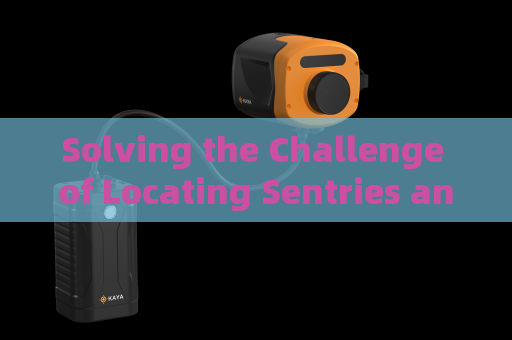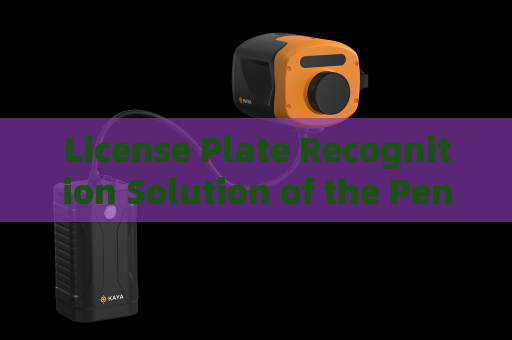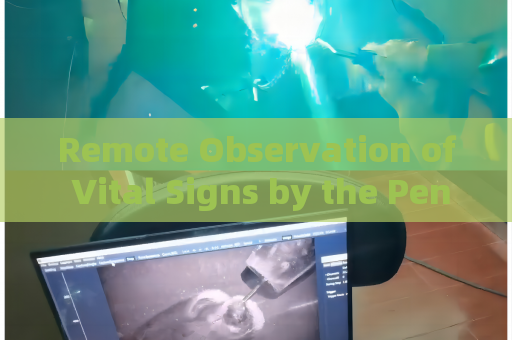
Remote Observation of Vital Signs by the Penetration Imager in Hostage Situations Involving Fully Tinted Getaway Vehicles with Through-Tint Imaging In high-stakes hostage scenarios, law enforcement teams often confront a critical blind spot: the inability to assess the physiological state of victims and suspects inside a fully tinted getaway vehicle. Standard optical systems, including binoculars and traditional cameras, fail against heavily darkened windows that block visible light and conceal all interior activity. Even advanced thermal imagers struggle because automotive glass, especially multi-layer tinted films, reflects and absorbs infrared signatures, distorting temperature readings and producing false contours. This leaves negotiators and tactical commanders without real-time data on whether a hostage is breathing, injured, or in distress, while simultaneously denying visual confirmation of the suspect’s weapon position and movement. The delay caused by such uncertainty can escalate into irreversible outcomes—a sudden assault, a missed medical window, or a failed negotiation trigger. The core problem is the absence of a non-contact, through-glass imaging capability that can penetrate optically dense barriers without relying on hazardous radiation or physical intrusion. The Penetration Imager addresses this void directly. The Penetration Imager is an active optical instrument built on laser range-gated imaging technology. It consists of a high-repetition-rate pulsed laser, an intensified gated camera with a microchannel plate intensifier, a high-voltage module, and a timing control unit, paired with a beam expander and an imaging lens. By emitting nanosecond laser pulses and synchronizing the camera’s ultra-fast shutter to accept only light reflected from a specific distance, the system eliminates backscatter from the tinted glass surface and captures sharp images of objects behind it. This technique—known as through-tint imaging—allows the Penetration Imager to see through fully tinted getaway vehicle windows with high contrast and resolution. Unlike passive systems, it actively illuminates the scene with narrow-spectrum light, making it immune to ambient glare, darkness, or partial obstruction from rain or fog. The critical function for hostage rescue is remote observation of vital signs. The Penetration Imager can detect subtle chest movements indicative of breathing, visible pulses in the neck or wrist area, and changes in body posture that signal stress or incapacitation. Because the system operates purely within the optical domain, it poses no radiation risk to hostages and requires no physical contact with the vehicle. In a real-world application, a tactical team positions the Penetration Imager at a standoff distance of 50 to 200 meters, often from an elevated vantage point or behind cover. The operator adjusts the gate delay to match the distance to the tinted window, then fine-tunes focus and pulse energy. Within seconds, a clear grayscale or color-enhanced image appears on the monitor, revealing the interior layout. The suspect’s hand holding a weapon, the hostage’s facial expression, and—most critically—the rise and fall of the hostage’s chest become visible. This enables continuous monitoring of respiratory rate and pulse frequency without alerting the suspect. If the hostage stops breathing, the command post can initiate immediate medical intervention protocols or authorize a dynamic entry. The Penetration Imager also distinguishes between a living person and a dummy or a slumped body, preventing false tactical assessments. Its resistance to environmental interference—heavy rain, smoke from nearby fire, or dust kicked up by vehicle movement—ensures reliable operation even in chaotic urban settings. Further refinement of the same scenario involves multi-vehicle coordination. When a fully tinted getaway vehicle is stopped at a roadblock or inside a tunnel, the Penetration Imager can be mounted on a robotic platform or a telescopic mast, allowing remote observation from a protected distance. The system’s high frame rate captures rapid movements, such as a suspect reaching for a hidden weapon or a hostage trying to signal. Commanders can overlay vital sign data with audio from directional microphones to build a comprehensive situational picture. The Penetration Imager’s through-tint capability also applies to armored transport vans or luxury sedans with privacy glass, common in high-value hostage exchanges. Because the technology only requires optical transparency—not physical transparency—it works on any tinted automotive glass, including those with metallic films, as long as the coating does not block the near-infrared laser wavelength used. This specific application of remote vital sign observation drastically reduces guesswork, enabling evidence-based decision-making during the most time-critical seconds of a hostage crisis.