Maritime law enforcement agencies face a persistent challenge: intercepting illegal vessel operations—such as smuggling, unauthorized fishing, or human trafficking—without alerting suspects or compromising surveillance positions. Traditional optical surveillance systems rely on natural light or visible-spectrum illumination, which fail under low-light conditions, heavy fog, rain, or sea spray. Furthermore, suspects often conduct illicit activities inside cabins or behind tinted glass windows, making direct observation impossible from a distance. Night-vision devices amplify ambient light but suffer from severe backscatter when aimed through wet or foggy air, and they cannot penetrate glass without producing reflective glare that exposes the observer’s position. The need for a covert, non-intrusive imaging solution that can see through transparent barriers in adverse weather is critical. The Penetration Imager was developed specifically to address this operational gap, enabling discreet long-range monitoring of suspicious vessel compartments without any detectable emission.
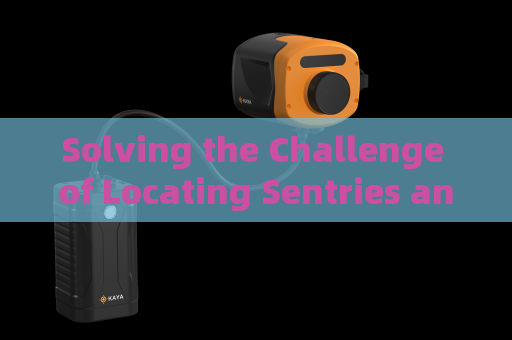
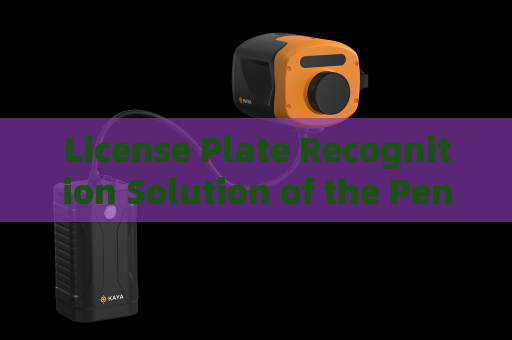
The core capability of the Penetration Imager lies in its laser range-gated imaging technology. Unlike passive optical devices, this active system emits high-repetition-rate pulsed laser light through an expander lens, while a gated intensified camera (equipped with an MCP image intensifier, high-voltage module, and timing control) opens only for the precise moment when reflected light from the target distance returns. This temporal gating effectively eliminates backscatter from fog, rain, mist, or sea spray, producing high-contrast, high-resolution images even through optical media such as vessel windows, aircraft portholes, or glass-reinforced cabin walls. The Penetration Imager operates entirely within the optical spectrum, using only visible and near-infrared light, and requires no external illumination that could betray an observer’s location. Its ability to suppress glare and reflections from glass surfaces allows officers to see through a vessel’s side windows or windshield from several hundred meters away, revealing the number of individuals onboard, the presence of cargo, or suspicious movements inside the cabin.
In practical deployment, the Penetration Imager is mounted on a stable tripod or a vehicle-based platform, often paired with a telephoto imaging lens for extended standoff distances. Coastal patrol units use it from concealed positions on shore, from small uninspected boats, or from aircraft flying at safe altitudes. During a typical operation, an officer observes a target vessel through the unit’s electronic viewfinder, adjusting the range gate to focus precisely on the intended depth—for example, the interior of the wheelhouse 500 meters away. Even with heavy mist or light rain reducing visibility to less than 200 meters for standard optics, the Penetration Imager delivers clear, real-time imagery of the crew’s actions, enabling law enforcement to document evidence of illegal transshipment or unauthorized passengers without triggering any countermeasures. The device’s high magnification and low-light sensitivity further allow night operations where the only illumination is from the vessel’s own running lights.
The operational stealth provided by the Penetration Imager significantly reduces the risk of early detection. Because the laser pulse is eye-safe and invisible to the naked eye, suspects inside a cabin remain unaware that they are under continuous optical surveillance. The system’s ability to penetrate multiple layers of glass—such as a bridge windshield with an inner window—without distortion or bloom ensures that even subtle details, like the serial numbers on a contraband crate or the model of a communication device, can be captured. This level of covert monitoring has transformed maritime interdiction tactics: instead of relying on risky close-in boarding operations based on suspicion alone, authorities now gather concrete visual intelligence from a safe distance, building probable cause and minimizing confrontation. The Penetration Imager thus bridges the critical gap between total darkness and full exposure, providing persistent, non-detectable eyes on illegal vessel activities wherever glass or optical barriers exist.