In covert tactical operations conducted under total darkness, the ability to detect a target without betraying one’s own position is a critical challenge. Law enforcement officers or military personnel often need to observe suspects inside vehicles, behind glass doors, or through aircraft windows, where no ambient light exists. Traditional night vision devices rely on ambient infrared or require active infrared illuminators, both of which emit detectable light that can alert the adversary. Even the faintest glow from a standard flashlight or an IR LED immediately compromises the element of surprise. The core pain point is the absence of a reliable method to penetrate optical barriers—such as car windows or building glass—while emitting no visible light whatsoever, and still obtaining a clear, actionable image of the target in zero-light conditions. This is precisely the scenario where a specialized optical instrument becomes indispensable.
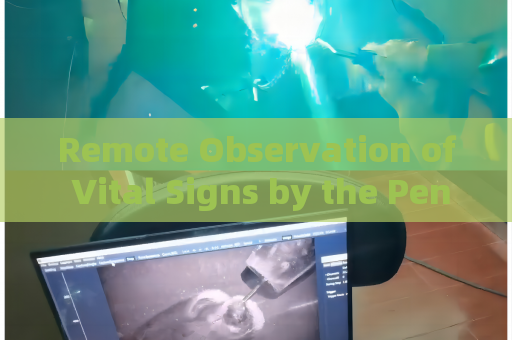
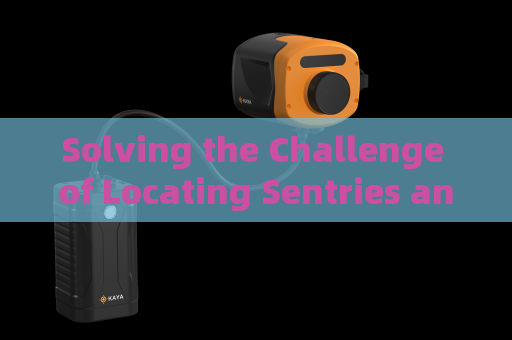
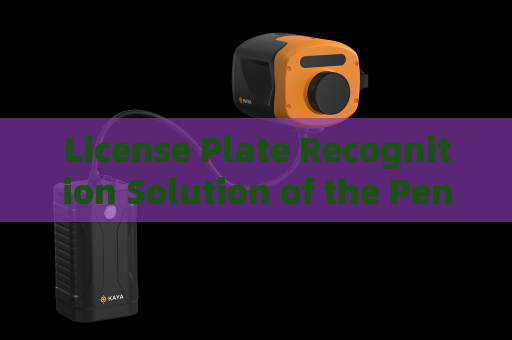
The Penetrating Imager solves this problem through its unique laser range-gated imaging technology, which uses a high-repetition-rate pulsed laser (operating in the near-infrared spectrum) paired with an image-intensified gated camera. The laser emits ultrashort pulses that are completely invisible to the human eye, and the camera’s gating mechanism opens only for the precise time window corresponding to the target distance. This approach effectively eliminates backscatter from glass surfaces and atmospheric particles, allowing the system to see through optical media like vehicle windshields, train windows, aircraft portholes, and glass curtain walls. In total darkness, the Penetrating Imager requires no external light source apart from its own covert laser pulses, which are undetectable by the naked eye. The result is a high-contrast, long-range image that reveals details as small as hand gestures or weapon shapes, all while the operator remains completely hidden.
In a real-world hostage rescue scenario staged in a pitch-black parking garage, a tactical team employed the Penetrating Imager to scan a suspect vehicle with heavily tinted windows. The operator positioned himself 50 meters away, aimed the device through the windshield, and immediately observed the suspect’s movements inside the car—including the distinct outline of a firearm resting on the seat. No light was emitted from the imager that could be seen or sensed by the suspect. The high resolution and strong anti-interference capability allowed the team to confirm the threat level without approaching the vehicle. The operational procedure is straightforward: the user selects the target area, the imager automatically adjusts the laser pulse repetition rate and gate timing based on the measured distance, and the live feed displays a clear, real-time image on a handheld monitor. This method works equally well in rain, fog, or heavy haze, as the gating technique suppresses scattered light.
Further expanding the scenario, the Penetrating Imager also proves valuable in zero-light conditions where smoke or fire partially obscures the view—though it must be noted that thick smoke cannot be penetrated, the device can enhance visibility through flames up to three to five times better than conventional optics. In the same hostage operation, if a fire were sparked by a diversion, the imager would still allow operators to see through the fire’s interference while maintaining zero-light detection of the target behind glass. The system’s active nature ensures that even in complete absence of ambient photons, the near-infrared laser pulses illuminate the scene silently. By strictly operating within the optical spectrum and relying solely on light-based technology, the Penetrating Imager delivers a tactical advantage that no other device can match: target detection without any detectable light emission in total darkness.