In counterterrorism and reconnaissance operations, the ability to locate concealed sentries or hidden tunnel entries without revealing one’s own position is a critical challenge. Traditional optical devices—binoculars, night vision goggles, or thermal imagers—often fail in environments filled with fog, smoke, or when targets are positioned behind glass, such as car windows or building windows. More problematic is the use of any laser-based ranging or targeting system: continuous-wave or high-power laser emissions can be easily detected by enemy sensors, instantly compromising the operator’s location and triggering defensive actions. Even passive approaches like long‑wave infrared imaging struggle through atmospheric obscurants and cannot penetrate ordinary glass with sufficient clarity to identify a human silhouette or a camouflaged tunnel mouth. The operational pain point is clear: how to achieve reliable, real‑time identification of sentries and tunnel openings at stand‑off distances, without emitting any detectable laser radiation that would alert the adversary.
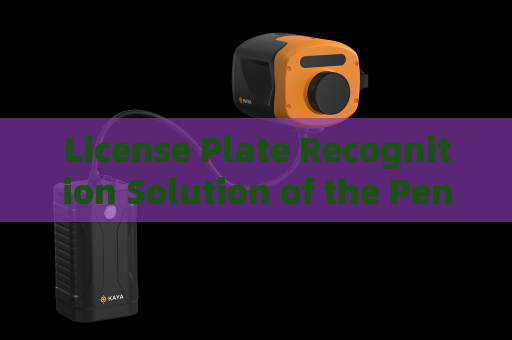
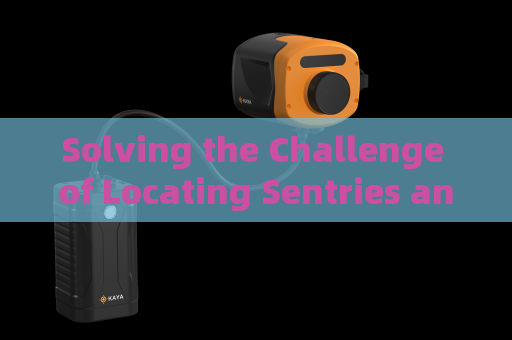
The Penetrating Imager directly addresses this dilemma through its unique laser range‑gated imaging technology. Unlike conventional laser rangefinders that emit a continuous or easily intercepted beam, this system uses a high‑repetition‑rate pulsed near‑infrared laser whose individual pulses are extremely short and invisible to the human eye. The imager’s intensified gated camera—incorporating a microchannel plate (MCP) image intensifier, high‑voltage module, and precise timing electronics—opens its shutter only for a very narrow time window corresponding to the round‑trip travel time of the laser pulse to the target distance. This “gating” mechanism effectively rejects backscatter from fog, rain, or smoke between the imager and the target, producing high‑contrast images of objects at the selected range. Because the laser pulses are both brief and eye‑safe (typically in the near‑infrared band), any emissions are indistinguishable from natural background radiation; enemy detection equipment, even if tuned to near‑IR wavelengths, would struggle to discriminate these micro‑second pulses from ambient light. The system thus achieves covert, high‑resolution imaging without the telltale signature of a continuous laser emission.
In practice, the Penetrating Imager excels at locating sentries behind vehicle windshields or building glass at distances exceeding several hundred meters. A tactical user, positioned at a stand‑off observation point, aims the imager at the suspected area—for example, a checkpoint where a sentry’s silhouette may be visible through a tinted window, or a hillside where a tunnel entrance is partially obscured by camouflage netting and light fog. By adjusting the gate delay, the operator selectively images only those objects at the precise range of interest, eliminating distracting reflections and atmospheric haze. The resulting image reveals human figures, weapons, or structural openings with clarity comparable to direct daylight observation. For tunnel entries, the imager can penetrate through thin layers of dust, light foliage, or smoke generated by nearby fires, allowing operators to confirm the presence of an opening where conventional optics see only a solid wall. This capability has proven invaluable in swat entries, perimeter security, and forward reconnaissance tasks where the element of surprise is paramount.
Further refinement of the technique involves pairing the Penetrating Imager with a precision gimbal or a tripod‑mounted pan‑tilt unit, enabling systematic scanning of a large area while maintaining covertness. In a typical operation to locate tunnel entrances in a rural or urban fringe zone, the operator first identifies an area of interest using a telescopic sight, then iteratively adjusts the gate delay in small increments to “slice” through layers of heavy fog or multiple glass panels. Because the imager’s laser emission is near‑infrared, no visible flash or beam is produced—a critical advantage when the observation post is itself under threat of counter‑sniping. Moreover, the system’s ability to operate in rain, light snow, and through helicopter windshields or aircraft portholes makes it ideal for airborne surveillance missions. Every detection of a sentry or tunnel mouth is confirmed without ever transmitting a telltale laser beam, thereby solving the fundamental challenge of locating enemies while maintaining absolute emission discipline.