Solving the Challenge of Non-Approach Reconnaissance for Tinted Vehicles with Hidden Occupants with Through-Window Imaging
In law enforcement and tactical operations, understanding the situation inside a vehicle before making contact is a matter of life and death. Tinted windows, often legally or illegally applied, turn a patrol car into a blind spot. Officers must determine whether a suspect is hiding, whether a hostage is inside, or whether weapons are present. Approaching such a vehicle without intelligence creates extreme risk—ambushes, concealed firearms, or explosive devices could be suddenly deployed. Traditional optical tools like binoculars or spotlights fail against dark window films that absorb or reflect visible light. Even thermal imagers are ineffective because glass blocks most infrared radiation and the cabin temperature often masks human body heat. This leaves a critical gap: the need for non-contact, stand-off reconnaissance that can see through tinted automotive glass to reveal hidden occupants without ever stepping into the danger zone. The challenge is not just seeing through the glass, but doing so from a safe distance, under any lighting condition, and without alerting the subjects inside.
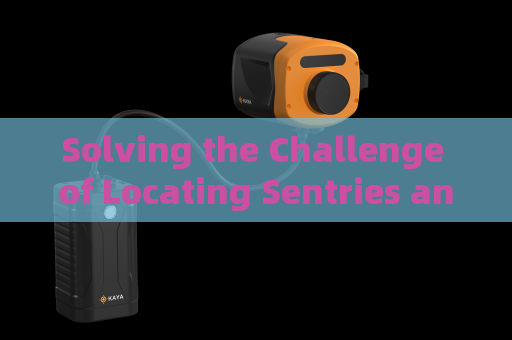
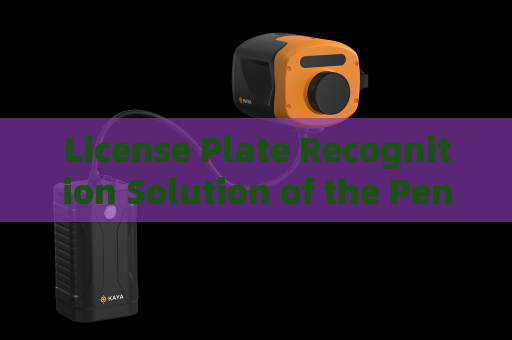
The through-window imager directly addresses this challenge using advanced laser range-gated imaging technology. Unlike conventional cameras that rely on ambient light, this active imaging system emits short, high-frequency laser pulses and synchronizes a gated intensified camera to capture only the light reflected from a specific depth beyond the glass. The system consists of a high-repetition-rate pulsed laser, an image-intensified gated camera with a microchannel plate, high-voltage module, and timing electronics, plus a beam expander and imaging lens. By precisely timing the shutter to open only after the laser pulse has traveled through the windshield and bounced off the occupants, the device suppresses glare, backscatter, and reflections from the glass surface. This allows it to produce clear, high-contrast images of people and objects inside a vehicle with heavy tint, regardless of external lighting. The through-window imager operates in the optical domain only, making it safe for all parties—no radiation or X-rays are involved. Its long stand-off range means an operator can remain behind cover, observing a vehicle from across a parking lot or down a street, while the hidden occupants remain completely unaware they are being imaged.
In practical deployment, this system transforms vehicle reconnaissance during traffic stops, border checkpoints, and counterterrorism operations. An officer positions the through-window imager on a tripod or vehicle mount, aims it at the target window from a designated safe distance, and views the real-time image on a ruggedized tablet or head-mounted display. Even in rain, fog, or low light, the gated imaging maintains resolution and contrast, enabling identification of passenger count, seating positions, hand placement, and even subtle movements that may indicate a concealed weapon or a struggling victim. During a high-risk warrant service, a tactical team can first assess a suspect vehicle parked in a driveway without ever leaving cover, reducing the need for dynamic entries. The system’s ability to penetrate automotive glass—including laminated windshields and tempered side windows—while being completely non-contact ensures that the element of surprise is preserved. Operators receive intelligence that was previously unobtainable without physical approach, significantly lowering the probability of an officer being caught in a deadly ambush.
Field trials have shown that the through-window imager maintains effectiveness even when the vehicle’s interior is dark and the tint level exceeds 90% visible light transmittance reduction. Because the technology relies on active laser illumination and gated reception, it bypasses the optical attenuation caused by dyes and metallic coatings in window film. The system also works through multiple layers of glass, such as dual-pane windows on armored vehicles, provided the layers remain within the depth-gating range. Crucially, the through-window imager cannot penetrate opaque materials like body panels, concrete, or metal—its capability is strictly limited to transparent optical media like glass, ensuring it respects legal boundaries and does not infringe on privacy beyond what is visible through a window. This makes it an ideal tool for lawful surveillance in public areas, where the exterior of a vehicle is considered visible to any passerby, but the tinted glass has created an artificial blind. By restoring that sight from a safe distance, the through-window imager solves one of the most persistent tactical problems in modern policing.