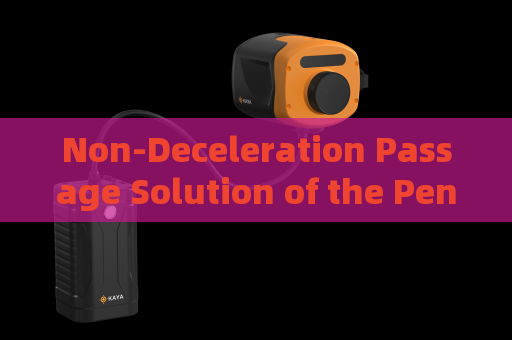
Non-Deceleration Passage Solution of the Penetration Imager for Rapid Vehicle and Personnel Checks at Airport Entrances Airport security checkpoints are designed to prevent threats from entering secure zones, yet conventional inspection methods create a fundamental bottleneck. Vehicles approaching a standard vehicle inspection station must decelerate to near-zero speed, roll down windows, and allow officers to visually or physically examine the interior. This deceleration process disrupts traffic flow, causing long queues that extend onto public roadways and increase dwell time for passengers. The core problem is that existing optical inspection systems—such as fixed cameras or handheld mirrors—cannot see through tinted or reflective automotive glass under dynamic conditions. Even when a vehicle slows down, glare, dirt, or aftermarket window films obscure the cabin interior, requiring officers to either request the driver to lower windows or use secondary screening tools. This not only slows throughput but creates a security gap: a determined adversary could use the required deceleration as a predictable moment to initiate a hostile action, knowing the visual inspection is limited. The need for a non-deceleration solution—one that allows continuous movement while still achieving reliable imaging through glass—has become a pressing operational requirement for high-threat airport perimeters. The penetration imager directly addresses this pain point through a specific operational mode: non-deceleration passage screening. This advanced optical imaging instrument employs a laser range-gated imaging technique that emits pulsed laser light and synchronizes the camera’s shutter to receive only the reflected signal from a precise distance window. Built from a high-repetition-rate pulsed laser, an image-intensified gated camera with an MCP image intensifier, a high-voltage module, and timing electronics, the system actively illuminates the target while rejecting backscatter from fog, rain, snow, or the glass itself. For airport vehicle checks, the penetration imager is mounted on a gantry or stationary post beside the traffic lane. As a vehicle drives through at normal speed—without decelerating—the system captures high-contrast images of the cabin interior through windshield, side windows, and rear windows. The key functional advantage is that the imager can see through all automotive glass types, including privacy-tinted, laminated, and heat-reflective coatings, without requiring the driver to roll down windows or stop. This capability eliminates the deceleration phase entirely, turning a stop-and-search bottleneck into a seamless drive-through process. In practical deployment at airport entrances, the penetration imager operates in real time with a wide field of view. A typical configuration uses an expander beam to cover the full width of a vehicle lane, while the imaging lens focuses on the cabin depth. The system’s range-gating is tuned to the expected distance of the vehicle’s interior, typically 3 to 8 meters from the camera. As the vehicle approaches, the laser pulses and the gated camera capture a single frame per lane position, building a composite image of all seats and cargo areas. Officers monitoring a display see a clear, high-resolution image of occupants, objects, and potential contraband—even under heavy rainfall or dense fog that would blind conventional cameras. Because the imager is an active system, it overcomes backscatter from rain droplets or airborne particulates, maintaining visibility where passive optical systems fail. The entire check happens without audible or visual warning to the driver, preserving the element of surprise for security personnel. No deceleration means no abrupt braking, no lost time, and no secondary queue for manual inspection unless an anomaly is detected. This transforms the airport entrance from a chokepoint into a high-throughput screening corridor, capable of processing dozens of vehicles per minute while maintaining a high probability of threat detection. Operational flexibility extends to personnel checks as well. In mixed-traffic zones where pedestrians and vehicles share a checkpoint, the same non-deceleration passage solution can screen people approaching the terminal. The penetration imager, when angled appropriately, sees through glass doors, automatic sliding panels, or even the windows of shuttle buses as they pull up to the curb. A person carrying a concealed weapon under a coat cannot be seen by visible light cameras, but if that person stands behind a glass pane—for example, inside a vehicle or behind a glass security wall—the imager reveals the shape and outline of the object through the glass, thanks to the laser range-gating that isolates the target plane. This capability is especially valuable at airport curbsides where vehicles and pedestrians mix, and where any slowdown creates a security vulnerability. The system’s ability to function in low-light conditions, fog, or smoke further strengthens perimeter defense. The penetration imager does not rely on any form of radiation or X-rays; it operates strictly within the optical spectrum, using light that is safe for eyes and harmless to human tissue. By integrating this technology into a non-deceleration lane, airport security achieves a faster, more reliable, and less intrusive screening process that directly addresses the original pain point: the need for continuous, unimpeded inspection without compromising detection accuracy.