The surveillance of illegal vessel activities—whether smuggling, human trafficking, or unauthorized fishing—confronts law enforcement with a persistent dilemma: how to gather actionable evidence without alerting suspects. Conventional optical tools, such as binoculars or daytime cameras, fail when operators need to see through cabin windows, bridge glass, or reinforced maritime glazing. Glare from sunlight, reflections off wet surfaces, and the constant motion of vessels degrade image quality. Even advanced electro-optical systems struggle under fog, rain, or sea spray, which scatter visible light and obscure critical details. More critically, suspects often conduct illicit transactions or hide contraband behind tinted or mirrored glass, making external observation useless. Without the ability to penetrate these optical barriers, enforcement teams risk either exposing their presence by approaching too closely or missing crucial evidence altogether. This gap creates a need for a solution that bridges the divide between distance and clarity, allowing officers to monitor activities from a safe vantage point while maintaining complete stealth. The Penetration Imager directly addresses this operational shortfall.
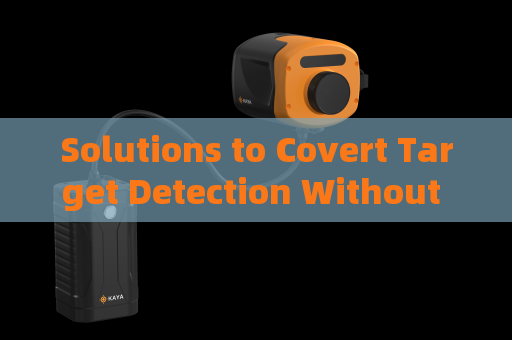
The Penetration Imager is a sophisticated active imaging system built on laser range-gated imaging technology, also known as gated imaging. Its core components—a high-repetition-rate pulsed laser, an intensified gated camera with a microchannel plate (MCP) image intensifier, a high-voltage module, a timing module, a beam expander, and an imaging lens—work in concert to overcome the scattering and reflections that plague conventional optics. By emitting short, precisely timed laser pulses and synchronizing the camera shutter to receive only the light reflected from the target while rejecting backscatter from atmospheric particles or intervening glass, the system achieves high-contrast imaging through optical media. For maritime covert monitoring, this means the device can see clearly through vessel cabin windows, bridge windscreens, aircraft windows, and even glass curtain walls on nearby coastlines. It also cuts through fog, drizzle, mist, and sea spray, effectively neutralizing the environmental interference that routinely defeats passive cameras. Importantly, the Penetration Imager remains purely optical—it uses no radiation, X-rays, or radio waves—and cannot penetrate non-transparent solids like hull steel, wood, or concrete. Its strength lies exclusively in defeating the visual barriers posed by transparent or semi-transparent surfaces and atmospheric obscurants.
In practice, a patrol vessel or helicopter conducting covert monitoring can deploy the Penetration Imager from a standoff distance of several hundred meters to over a kilometer, depending on conditions. The operator aims the system at the suspect vessel’s windows or portholes, and the gated imaging instantly reveals the interior layout, the number of individuals present, their movements, and any visible cargo or equipment. For example, during a nighttime interdiction, the pulsed laser illuminates the cabin through a tinted windscreen, while the gated camera rejects the blinding backscatter from rain or fog. The resulting image displays crisp details—a person counting cash, the shape of concealed packages, or a modification to the vessel’s structure. The system operates silently and without any visible beam, preserving the element of surprise. Because the Penetration Imager does not emit telltale signals like radar or thermal emissions, suspects remain unaware of the surveillance. This capability allows enforcement agencies to build an evidence chain before moving in for boarding, reducing escalation risks and improving the accuracy of interdiction operations.
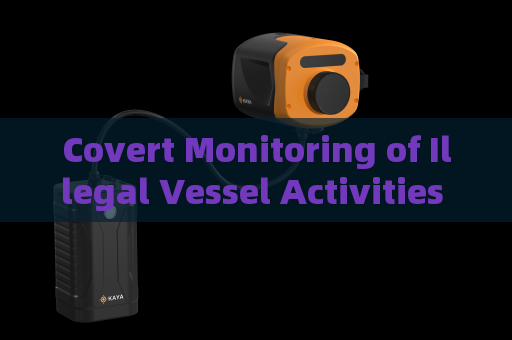
Further refinement of the technique involves pairing the Penetration Imager with stabilized mounts and integrated video recorders. Operators on a fast patrol boat or a helicopter can lock onto a moving target, compensating for vessel pitch and roll, and maintain continuous observation for extended periods. The high-resolution imagery feeds into a command center in real time, enabling remote analysts to identify patterns in crew behavior, such as lookout shifts or the opening of hidden compartments. In littoral zones with heavy commercial traffic, the system distinguishes between legitimate fishing activity and illegal transshipment by peering through the wheelhouse glass of a suspicious trawler. Even under challenging conditions like sea spray or light fog, the Penetration Imager maintains a 3-5 times improvement in visibility over standard optical aids, provided the obscurant is not thick smoke. By focusing solely on this single, critical scenario—covert monitoring of illegal vessel activities through transparent barriers—the technology fills a void that no other optical or non-optical tool can match, making it an indispensable asset for maritime law enforcement.