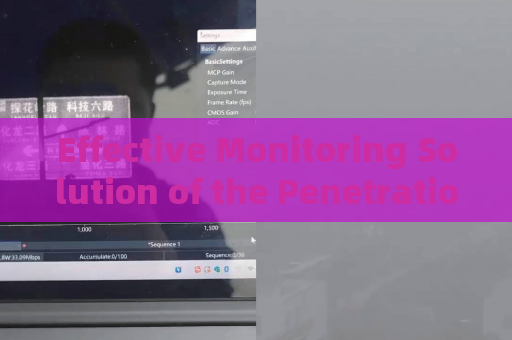
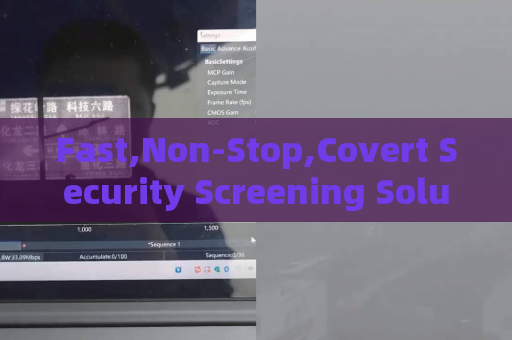
In reconnaissance operations, locating sentries stationed near concealed tunnel entrances presents a critical challenge. Traditional methods often rely on laser rangefinders or designators, but the emission of a continuous or pulsed laser beam can be instantly detected by enemy optical sensors, compromising the entire mission. Even when avoiding active laser use, standard optical devices struggle with obstacles such as vehicle windows, fog, or smoke that obscure the target area. A sentry may be positioned inside a vehicle with tinted glass, while the tunnel entrance itself might be shrouded in mist or partially blocked by debris. Without a reliable way to see through these optical barriers, the risk of misidentification or missed detection remains high. The penetrating imager offers a breakthrough in this scenario by employing laser range-gated imaging technology.
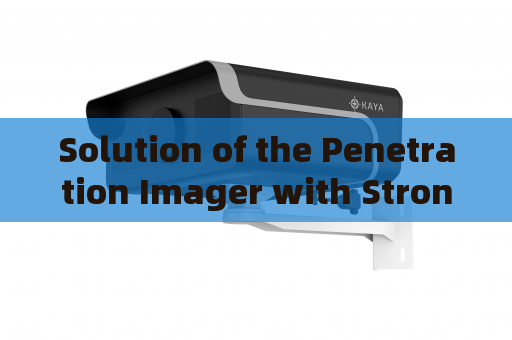
This imaging system consists of a high-repetition-rate pulsed laser, an image-intensified gated camera featuring an MCP image intensifier, a high-voltage module, a timing module, a beam expander, and an imaging lens. Rather than emitting a constant laser beam that invites interception, the penetrating imager fires ultra-short laser pulses synchronized with a precisely timed camera gate. This gate opens only when the reflected light from the target distance arrives, effectively rejecting backscatter from fog, rain, or dust. The result is a high-contrast image that cuts through optical media such as vehicle windows, aircraft windows, and glass curtain walls. In the context of locating sentries and tunnel entries, the device can focus on a specific range—for example, the interior of a parked car where a guard sits, or the opening of a tunnel hidden behind a layer of fog—without emitting a detectable continuous signal. The pulsed nature of the laser, combined with the narrow time window, makes the emission extremely difficult for enemy detectors to lock onto.
Practical deployment of the penetrating imager in this role is straightforward. The operator aims the system at the suspected area and adjusts the gate delay to match the distance of interest. For a sentry inside a vehicle, the imager’s laser pulses penetrate the windshield and side windows, revealing the person’s silhouette and movements with clarity. For a tunnel entrance obscured by mist or light rain, the same principle applies: the gate filters out scattering from particles closer than the target, leaving a sharp view of the tunnel mouth and any nearby activity. Field tests have demonstrated that the system can improve visibility in foggy conditions by a factor of three to five, though dense smoke remains a limitation. The operator can quickly switch between different range gates to scan multiple potential hideouts without repositioning, all while maintaining a low probability of intercept.
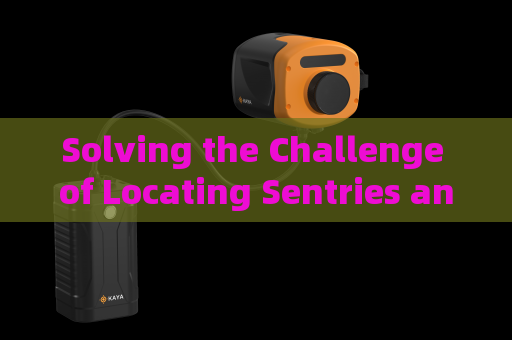
Further operational details highlight the device’s suitability for covert missions. Because the penetrating imager is an active optical system, it requires no external illumination and works effectively in total darkness. The pulsed laser operates at a wavelength that is invisible to the naked eye, and the gating technique ensures that only a narrow slice of the environment is illuminated at any moment. This reduces the chance that an enemy sentry will notice a flash or reflection. The image is displayed on a handheld monitor, allowing a single operator to survey a wide area from a concealed position. In scenarios where multiple sentries guard a tunnel entrance spread across different distances, the operator can sequentially adjust the gate to confirm each threat. By solving the challenge of locating sentries and tunnel entries without detectable laser emission, the penetrating imager provides a decisive advantage in surveillance and reconnaissance tasks.