Maritime monitoring faces a critical challenge when dense sea fog rolls in, drastically reducing visibility and rendering conventional optical surveillance systems nearly useless. Standard cameras and binoculars fail to penetrate thick fog, while radar systems, though less affected by fog, struggle to detect small objects like drifting buoys, small fishing boats, or debris due to their limited resolution and susceptibility to sea clutter. This creates a dangerous gap in situational awareness for port security, coastal patrols, and search-and-rescue operations. Vessels navigating foggy waters risk collision, grounding, or failing to spot a person overboard. The core pain point lies in the inability of existing imaging tools to cut through the scattering and absorption effects of fog droplets, which block light and obscure critical details. A reliable solution must overcome backscatter while maintaining long-range, high-resolution imaging—a requirement that points directly to the capabilities of a fog penetration imager.
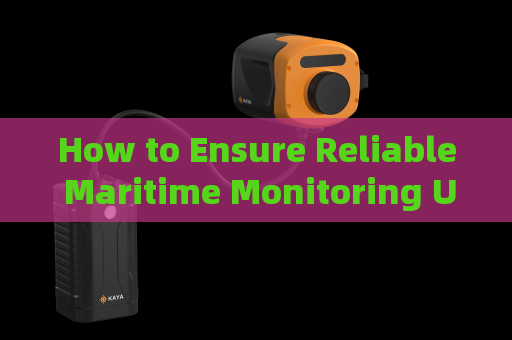
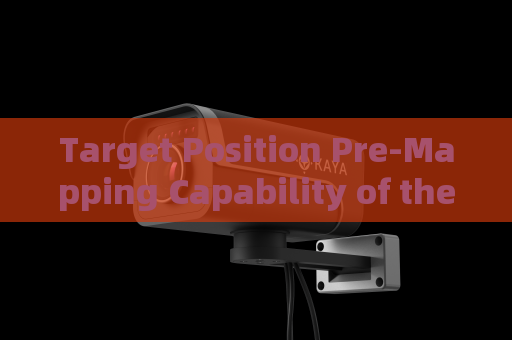
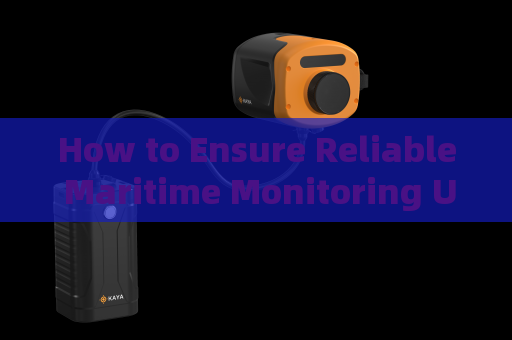
The fog penetration imager, an advanced optical instrument based on laser range-gated imaging technology, directly addresses this maritime monitoring dilemma. It consists of a high-repetition-rate pulsed laser, an intensified gated camera (with MCP image intensifier, high-voltage module, and timing control), a beam expander, and an imaging lens. By emitting short laser pulses and synchronizing the camera’s gating window to capture only the light reflected from the target at a specific distance, the system effectively rejects backscattered light from fog particles in the intervening medium. This active imaging approach achieves high contrast imaging at long ranges with superior resolution, making it possible to see through fog, haze, rain, and snow—all common optical interferences encountered at sea. Unlike passive cameras that rely on ambient light, the fog penetration imager provides its own illumination and can selectively gate out fog, enabling clear visual identification of objects even under heavy sea fog conditions.
In practical maritime operations, the fog penetration imager delivers tangible improvements. Deployed on coastal surveillance towers, patrol boats, or unmanned maritime platforms, the system allows operators to spot navigation markers, incoming vessels, and potential hazards through fog that would otherwise blind standard optics. For example, during a fog-bound harbor security patrol, the imager can identify a small unauthorized boat at a distance of several kilometers, displaying its shape and movement with sufficient detail for threat assessment. The system operates in real time, outputting video to a display console, and can be integrated with existing tracking software. Its laser source is eye-safe at operational power levels, meeting safety standards for use in busy waterways. The ability to adjust the gating delay also enables the operator to focus on different ranges, scanning from near-surface floating objects to distant vessels, all while maintaining clear imagery unaffected by the fog layer.
For search-and-rescue scenarios under sea fog, the fog penetration imager proves invaluable. When a distress signal is received but thick fog prevents visual confirmation, the imaging system can sweep the search area and detect a life raft or a person in the water by illuminating the target and rejecting the fog’s backscatter. The high contrast and resolution allow rescue teams to see details such as the color of a life jacket or the movement of a victim, facilitating faster and more precise response. Unlike thermal imagers that may struggle with low temperature differences between water and a person in cold fog conditions, the fog penetration imager works on optical reflection and does not rely on heat signatures. This makes it a reliable tool for around-the-clock maritime monitoring, ensuring that even under the most challenging sea fog conditions, the ability to see and act remains uncompromised. The integration of such a fog penetration imager into standard maritime surveillance gear represents a significant leap forward in operational safety and efficiency.