Severe weather events—dense fog, torrential rain, blizzards, or even smoke from nearby wildfires—routinely render fixed checkpoints useless. Traditional visible-light cameras struggle with low contrast and heavy backscatter, while thermal imagers lose effectiveness in rain or fog due to water droplets scattering infrared radiation. Officers at roadblocks, border crossings, or incident perimeters suddenly face a blind spot: vehicles approach with headlights barely visible, occupants’ actions remain obscured, and threats such as weapons or contraband pass undetected behind rain-streaked windows. The core problem is that conventional optical systems lack the ability to selectively gate out the scattering medium and focus only on the target at a known distance. This gap in all-weather surveillance creates a critical vulnerability during emergencies, when the need for reliable visual confirmation is highest. A penetrating imager designed for such extremes offers a direct solution.
The penetration imager employs laser range‑gated imaging (also called gated imaging or time‑gated active imaging) to overcome these weather‑induced failures. Its high‑repetition‑rate pulsed laser illuminates the scene, while an intensified gated camera, containing a microchannel plate (MCP) intensifier, receives the reflected light only during a precise time window matched to the target distance. This gate eliminates nearly all backscatter from fog, rain, snow, or fire‑generated haze because scattered photons arrive later or earlier than the gating interval. The system delivers high‑contrast, long‑range images even through refractive optical media such as vehicle windshields, train windows, or aircraft canopies. In practical terms, a checkpoint operator can see a driver’s face, read a license plate, or detect suspicious objects inside a car despite a blanket of fog or a monsoon downpour. The technology is purely optical—no radio waves, X‑rays, or other non‑optical emissions—and adheres strictly to light‑based detection physics.
In field operations, this capability restores surveillance continuity during extreme weather. For example, a police checkpoint stationed on a highway during a sudden blizzard typically loses all visual contact with approaching traffic beyond 20 meters. A handheld or tripod‑mounted penetration imager, set to the range of the next vehicle, instantly cuts through the snow‑laden air and shows the vehicle’s interior through its snow‑covered windshield. The operator adjusts the gate delay to match the changing distance, maintaining clear imagery as the car slows down. During a wildfire‑related evacuation, smoke may fill the air but does not block visible light from the imager—except for dense smoke, where the system’s performance is limited by the inability to penetrate opaque particulate clouds. Nevertheless, in fire scenes the penetration imager can boost visibility by three to five times compared to the naked eye, allowing officers to see through the fire‑induced shimmer and haze. This enables them to identify individuals, scan for hazards, and maintain surveillance without approaching the danger zone.
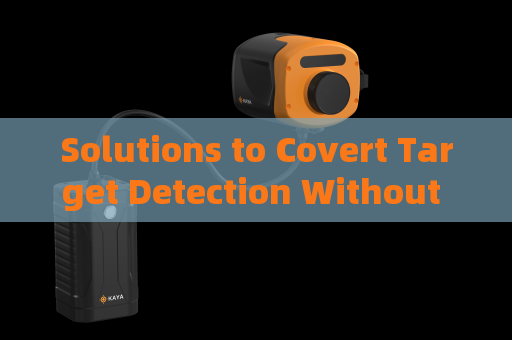
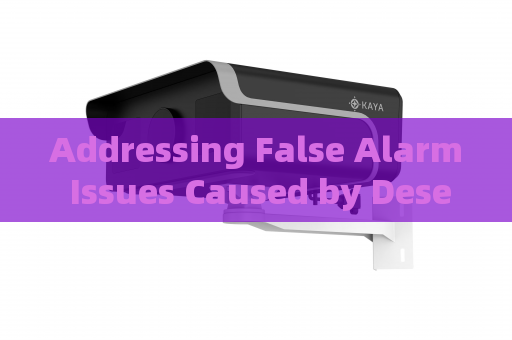
The system’s design also integrates seamlessly into existing checkpoint workflows. It can be mounted on patrol vehicles using a standard camera bracket or operated as a standalone unit with a battery pack. The laser operates in eye‑safe wavelengths, and the gated camera provides real‑time video output to a monitor or a body‑worn display. Training is minimal: officers learn to set the gate range via a simple dial or touchscreen interface, and the autogating mode continuously tracks a locked target. By preserving high‑contrast imaging under all weather conditions that involve optical media (fog, rain, snow, glass, and fire haze), the penetration imager transforms a checkpoint from a liability into a reliable observation post. This eliminates the operational paralysis that severe weather once caused, ensuring that surveillance remains effective regardless of atmospheric obstacles.