Illegal vehicle detection in total darkness presents a formidable challenge for law enforcement and border security personnel. When ambient light is completely absent, conventional optical systems—including standard night-vision devices that rely on residual starlight or moonlight—become functionally blind. Even thermal imagers, though able to detect heat signatures, struggle to provide the fine detail required for identifying contraband, concealed occupants, or illicit modifications inside a vehicle. Vehicle windows, often tinted or coated with reflective films, further degrade image quality by scattering or blocking whatever minimal light exists. Officers must approach suspicious vehicles at close range under dangerous conditions, risking ambush or missing critical evidence hidden behind glass. The core pain point is clear: there is no reliable, non-contact method to see through vehicle windows in utter darkness and confirm what lies inside. This is precisely the gap that a penetrating imager, designed for zero-light imaging, is engineered to close.
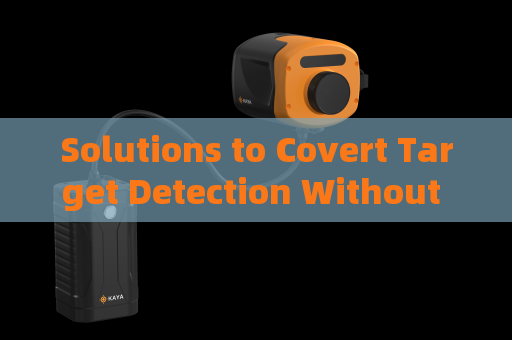
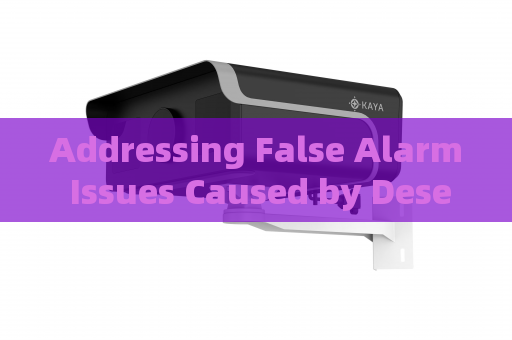
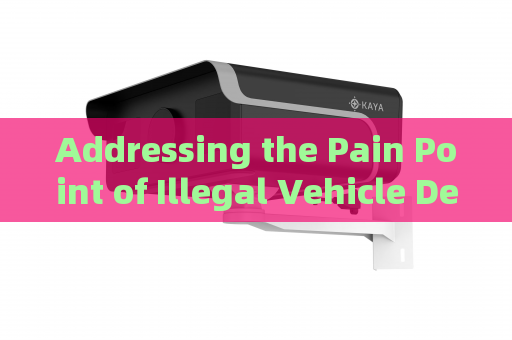
A penetrating imager employing laser range-gated imaging technology directly addresses this operational void. The system consists of a high-repetition-rate pulsed laser, an image-intensified gated camera containing a microchannel plate image intensifier, a high-voltage module, a timing module, a beam expander, and an imaging lens. As an active imaging device, it emits short, high-power laser pulses toward the target and opens the camera’s electronic shutter only when the reflected light from the vehicle’s interior arrives—precisely gated by distance. This technique effectively gates out backscatter from fog, rain, dust, and, critically, the surface reflections of glass itself. The result is a high-contrast, high-resolution image of what lies behind the windshield or side windows, even under conditions of complete zero illumination. Unlike passive devices, the penetrating imager does not depend on ambient light; it creates its own illumination that is spectrally matched to the sensor, yielding clear visibility through optical media such as automotive glass, aircraft windows, and glass curtain walls.
In practical law enforcement operations, the penetrating imager transforms the tactics for vehicle interdiction in total darkness. An officer can remain at a safe standoff distance—dozens to hundreds of meters away—and aim the device at a stopped or slowly moving vehicle. Within seconds, the system displays a real-time, monochrome image showing the vehicle’s interior: the driver and passengers, their movements, any objects on seats or in the cargo area, and potential weapons or narcotics hidden behind tinted window film that appears opaque to the naked eye. The gating capability ensures that even heavy rain or dense fog does not wash out the scene, because the laser pulse and the shutter synchronization reject the scattered light from atmospheric particles. This enables persistent surveillance of a target vehicle as it approaches a checkpoint, allowing operators to pre-classify threats without ever needing to illuminate the area with visible searchlights, which would alert suspects. The imaging system is entirely eye-safe at normal operational distances and does not emit any detectable sidelight.
Furthermore, the technology excels in scenarios where traditional night-vision goggles fail entirely—such as inside a tunnel, under a dense forest canopy, or on a moonless rural road where ambient light measures below 10⁻⁵ lux. The penetrating imager’s zero-light imaging capability means that even in absolute blackness, with no artificial illumination from nearby sources, the operator obtains a crisp, contrast-rich view of the vehicle’s cabin. This has proven invaluable for detecting human trafficking where victims are hidden in cargo compartments behind heavily tinted windows, or for identifying modified fuel tanks used for smuggling. The system also works through fire, smoke, haze, and rain—though it cannot penetrate thick, opaque smoke as found in structural fires. In vehicle interdiction, however, the most common optical obstacles are glass and weather, both of which the penetrating imager overcomes. By enabling remote, positive identification of illegal activity inside vehicles under zero-light conditions, the penetrating imager directly eliminates the operational blind spot that has long plagued night-time enforcement.