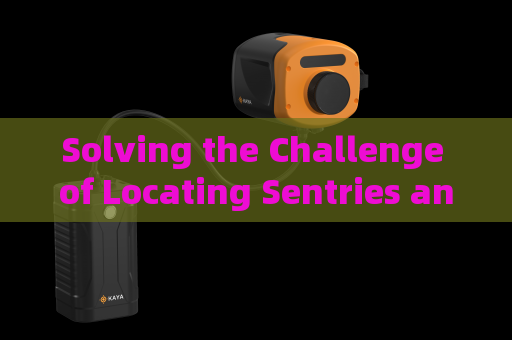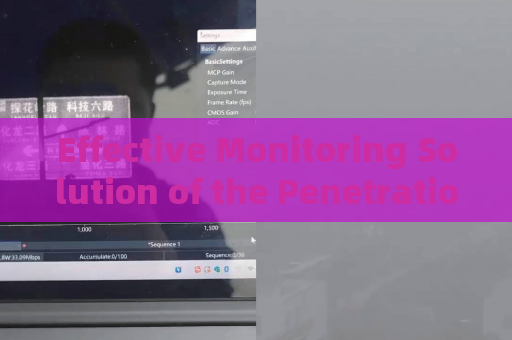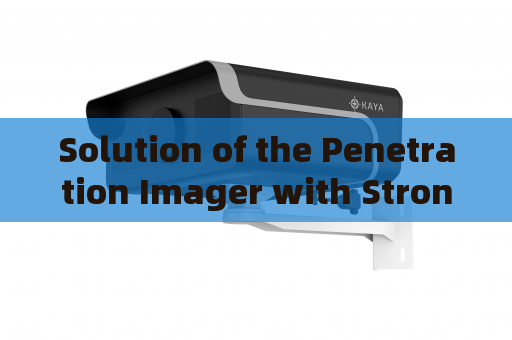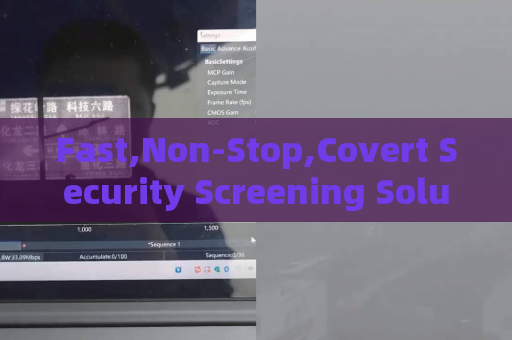
Solving the Challenge of Non-Approach Reconnaissance for Tinted Vehicles with Hidden Occupants with Through-Window Imaging Law enforcement and security personnel frequently encounter situations where vehicles with heavily tinted windows conceal occupants whose intentions or identities remain unknown. Traditional optical surveillance tools, including standard binoculars or telescopic lenses, fail to penetrate such window films, especially when low-light conditions or glare further degrade visibility. Approaching the vehicle directly poses significant tactical risks—an armed suspect could react unpredictably, or the element of surprise might be lost. The core pain point lies in the need for stand-off, non-contact reconnaissance that can reveal hidden occupants without ever drawing closer. Reflections off the glass surface, combined with the obscuring effect of the tint, render conventional cameras useless. This gap forces operators to choose between dangerously close inspection or operating blind. The through-window imager directly addresses this challenge. It is an advanced optical imaging instrument that employs laser range-gated imaging technology—also known as gated imaging. The system consists of a high-repetition-rate pulsed laser, an intensified gated camera (incorporating an MCP image intensifier, a high-voltage module, a timing module, etc.), a beam expander, and an imaging lens. As an active imaging system, it delivers high-contrast images with long operational range, superior resolution, and strong anti-interference capabilities. Crucially, it overcomes backscatter effects that plague conventional optics. When aimed at a tinted vehicle window, the through-window imager emits short laser pulses timed precisely with the camera’s electronic shutter. Only the light reflected from the target—at a specific distance—reaches the sensor, effectively filtering out window glare and surface reflections. This allows operators to see through the glass and clearly identify occupants, their positions, movements, and even hand-held objects, all from a safe stand-off distance. In real-world operations, a single officer can set up the through-window imager on a tripod inside a surveillance vehicle or at a concealed observation point. Within seconds of activation, the display reveals a crisp, real-time image of the vehicle’s interior. The system works equally well during daytime and nighttime, as the pulsed laser provides its own illumination. Even in fog, rain, or snow, the active gating mechanism maintains image clarity by rejecting atmospheric scatter. For a roadside check of a suspicious sedan with near-black tinted windows, the operator can count the number of occupants, assess their body language, and detect any weapon indicators—all without alerting the subjects. This transforms a high-risk approach into a low-risk, informed decision-making process. The depth of this capability extends to complex tactical scenarios. When multiple tinted vehicles are involved, such as in a convoy of a potential threat group, the through-window imager can be used to scan each vehicle sequentially from a single vantage point. Its ability to isolate targets at different distances—thanks to range-gating—means the operator can dial in the exact distance to each car and obtain clear images without interference from vehicles behind or in front. This level of precision eliminates guesswork and reduces the time needed for threat assessment. In hostage or barricade situations, knowing precisely how many individuals are inside a tinted van, and their relative positions, can be the difference between a successful resolution and a catastrophic misstep. The through-window imager remains the only optical tool that provides this non-approach, through-glass visibility without relying on any form of penetrating radiation or non-optical detection. Its entire operation stays strictly within the domain of light, making it safe, stealthy, and tactically indispensable.