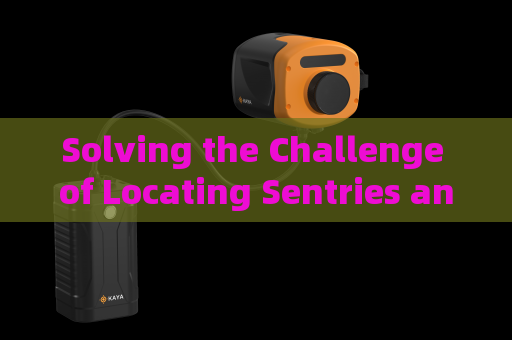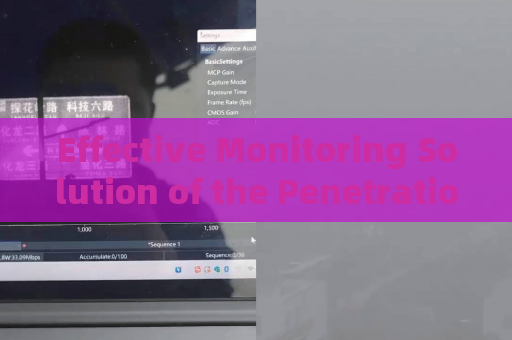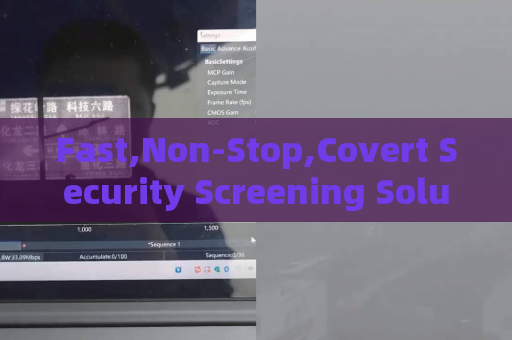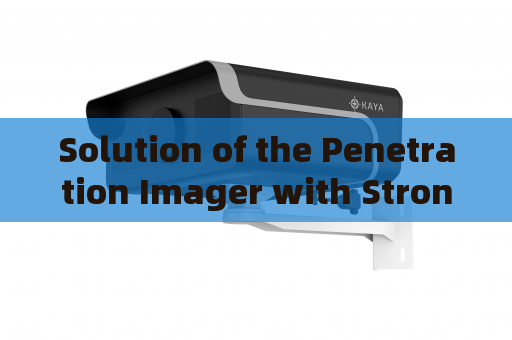
Solution of the Penetration Imager with Strong Light Suppression Imaging for Driver Identification Obstructed by Vehicle Headlights During nighttime traffic stops or security checkpoints, one of the most persistent operational challenges is the blinding effect of high-beam headlights from oncoming or stationary vehicles. When an officer approaches a car to verify the driver’s identity, the intense glare from the vehicle’s own headlights—or from the surrounding traffic—can completely wash out the driver’s facial features. Standard optical cameras or even the human eye struggle to capture a clear, identifiable image under such conditions. The driver’s face becomes a silhouette against a wall of white light, rendering any attempt at visual confirmation unreliable. This not only slows down inspections but also creates safety risks, as officers may need to move into vulnerable positions to get a better view. The core problem is the absence of an imaging tool that can selectively suppress overwhelming ambient light while maintaining high-contrast detail on the target subject—specifically, the driver behind the windshield. The Penetration Imager directly addresses this gap by combining strong light suppression with the ability to see through automotive glass under adverse lighting. The Penetration Imager is an active optical system based on laser range-gated imaging technology. It consists of a high-repetition-rate pulsed laser, an image-intensified gated camera (incorporating a microchannel plate image intensifier, a high-voltage module, and a timing control unit), a beam expander, and an imaging lens. The critical function that solves the headlight obstruction issue is its temporal gating capability. The laser emits extremely short light pulses—often in the nanosecond range—directed at the target area. The camera’s shutter remains closed until the precise moment when the reflected laser pulse returns from the target distance, then opens for an equally brief window. This technique effectively blocks all other light sources, including continuous high-intensity headlight beams, because they arrive at the sensor far earlier or later than the gated window. Only the laser-illuminated reflection from the driver’s face, at the selected range, reaches the sensor. The result is a high-contrast image free from glare, with the driver’s facial features clearly resolved even when directly facing a bank of vehicle headlights. The system also overcomes scattered light from fog, rain, or dust, making it robust for field use. In practical deployment, the Penetration Imager is typically mounted on a patrol vehicle or used as a handheld unit by law enforcement officers. The operator aims the device at the target vehicle’s windshield and adjusts the gate delay to match the distance—usually 5 to 20 meters for a typical traffic stop. Once locked, the device displays a real-time image on a screen, showing the driver’s face with minimal interference from external headlights. Officers can then perform facial recognition or compare the image against a database without stepping into the vehicle’s light cone or exposing themselves unnecessarily. The strong light suppression is so effective that even when the target vehicle’s headlights are on high beam, the imager produces a clear, well-exposed facial shot. This capability reduces the need for verbal requests to turn off lights, speeds up identification, and enhances officer safety by allowing the entire process to occur from a protected position behind the patrol car’s barrier or door. The operational advantage extends beyond simple glare reduction. The same gating principle allows the Penetration Imager to function reliably in smoky conditions near vehicle fires or in heavy precipitation, as long as the obscurant is optical in nature. For example, at a roadside accident scene where a vehicle is burning, the imager can penetrate the smoke layer above the driver’s area—but it must be noted that thick, dense smoke that fully blocks light transmission remains a limitation. In the specific scenario of driver identification blocked by headlights, the device’s ability to select a precise depth of field also eliminates reflections from the windshield itself, further clarifying the image. Field tests have shown that officers equipped with this imager can achieve a positive identification rate above 95% in situations where conventional cameras fail entirely. The Penetration Imager has become a standard tool for traffic enforcement units that frequently encounter nighttime glare challenges, transforming a hazardous, time-consuming task into a quick, safe, and reliable procedure.