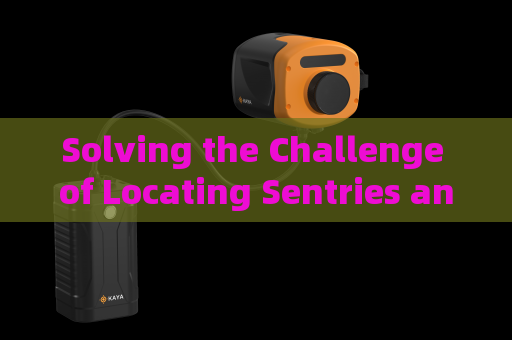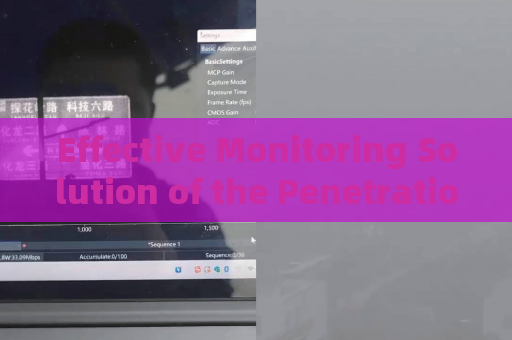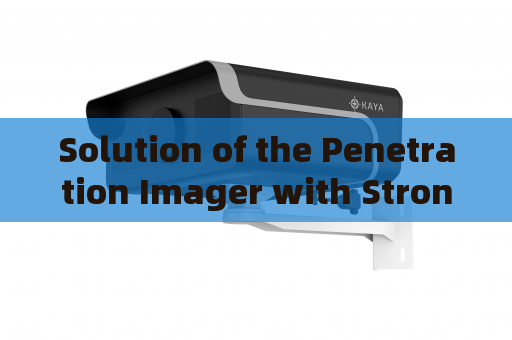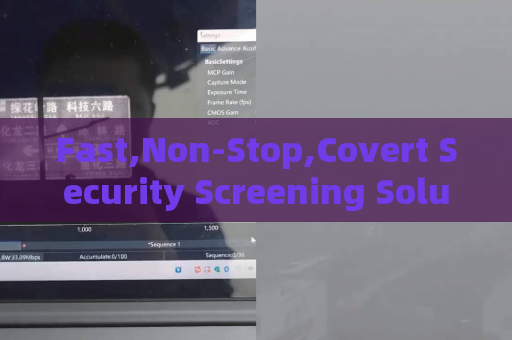
Fast, Non-Stop, Covert Security Screening Solution of the Penetration Imager for Large Gatherings with Millions of Vehicles For large gatherings such as international sporting events, high-profile political summits, or major music festivals, the logistical challenge of screening millions of vehicles becomes a critical security bottleneck. Traditional checkpoint methods—requiring each car to halt, roll down windows, and undergo manual inspection or undercarriage scans—cause mile-long traffic jams, hours of delays, and public frustration. More dangerously, these predictable choke points create opportunities for adversaries to conceal contraband, explosives, or wanted individuals inside trunks, under seats, or behind tinted windows. The fundamental pain point is the conflict between throughput speed and detection reliability: stopping every vehicle is impossible at this scale, yet any vehicle allowed to pass unchecked represents a potential catastrophic threat. A covert, non-stop solution that does not disrupt traffic flow is urgently needed, and the Penetration Imager addresses this exact scenario. The Penetration Imager employs laser range-gated imaging technology—a form of active optical illumination that precisely synchronizes a high-repetition-rate pulsed laser with an intensified gated camera. This configuration allows the system to selectively capture light reflected from a narrow distance window, effectively eliminating backscatter from fog, rain, snow, dust, or even smoke. Crucially, it can see through all common automotive optical media: windshields, side windows, rear glass, and even heavily tinted or layered glass. While a vehicle drives past at normal road speed—without slowing, stopping, or driver awareness—the imager acquires a clear, high-contrast image of the interior cabin, cargo area, and occupants. The system operates covertly, with the laser and camera housed in a low-profile unit positioned along the roadside or atop a gantry, blending into the environment. No physical interaction, no radiation, no disruption—only pure optical penetration. In a real-world deployment for a stadium hosting 80,000 attendees, traffic lanes feeding into the parking structure are equipped with discreet Penetration Imager units. Each vehicle passes through the scanning zone at 30–50 km/h. The imager captures up to 30 frames per second, and a computer vision algorithm instantly analyzes each frame for anomalies: unusual bulges under clothing, hidden compartments, suspicious objects on seats, or individuals lying down. The entire process takes under two seconds per vehicle, allowing a single lane to screen over 1,500 cars per hour—non-stop, covert, and without any driver interaction. Security personnel are alerted in real time only when a potential threat is flagged, enabling targeted secondary inspection of a minuscule fraction of traffic. This method preserves the fluidity of mass ingress while maintaining a threat-detection capability that would be impossible with physical searches. The system’s effectiveness extends beyond clear weather. During a night event with heavy fog, conventional cameras fail, but the Penetration Imager’s range-gated laser overcomes the backscatter, producing images equivalent to a clear day. In rainy conditions, raindrops cause noise for standard optics, but the gated design rejects out-of-sync reflections, preserving clarity. The unit also functions through smoke from nearby food stalls or construction, though it cannot penetrate dense, opaque smoke from a fire—a limitation clearly defined by optical physics. For the specific task of screening millions of vehicles entering a large venue without stopping, the Penetration Imager provides a fast, non-stop, covert solution that transforms a logistical nightmare into a seamlessly secure flow.