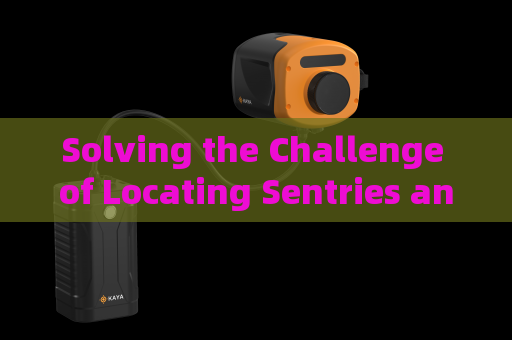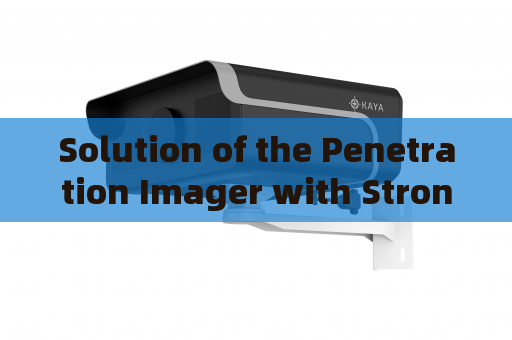
Effective Monitoring Solution of the Penetration Imager with Strong Light Suppression Imaging in High-Glare Coastal Environments In high-glare coastal environments, routine surveillance and law enforcement operations face a persistent and crippling challenge. During daylight hours, the sun’s reflection off the ocean surface creates blinding glare that washes out every detail in optical systems. Maritime patrols monitoring approaching vessels, port security scanning vehicle windshields, and search-and-rescue teams scanning the shoreline all struggle with the same reality: traditional cameras and binoculars are rendered useless when direct or reflected sunlight floods the sensor. Even with polarization filters or neutral-density coatings, the dynamic range of conventional imagers cannot handle the extreme contrast between the bright sky or water and darker objects such as a boat’s cabin or a car’s interior. In these moments, critical visual intelligence—a suspect’s movement behind tinted glass, a drifting swimmer partially obscured by sun flare, or suspicious cargo pushed against a windshield—is simply lost. The operational gap is acute: the very light that enables daytime visibility simultaneously destroys the ability to see through the glare. This is not merely a nuisance; it directly impacts the speed and accuracy of decision-making in coastal security and emergency response. The penetrator imager, built on laser range-gated imaging technology (gated imaging), directly addresses this glare-driven failure. Its core architecture—a high-repetition-rate pulsed laser, an intensified gated camera with an MCP intensifier, a timing module, a beam expander, and an imaging lens—operates as an active imaging system. The critical mechanism for strong light suppression lies in the precise temporal gating: the laser emits a nanosecond pulse toward the target, and the camera’s shutter opens only for the exact moment when the reflected light returns from the intended distance. All ambient light—including the overpowering sun glare, reflections off wave crests, and scattered light from haze or spray—arrives at the sensor at different times and is effectively blocked because the gate remains closed outside the chosen range window. This time-domain filtering removes the overwhelming background illumination, leaving only the laser-illuminated target area visible. In high-glare coastal contexts, this means that the penetrator imager can pull out a clear image of a boat’s windshield or the silhouette of a person behind it, even when the surrounding water surface is a sheet of blinding white. The system does not rely on spectral filtering or digital post-processing; it physically suppresses the glare at the sensor level, producing high-contrast imagery where conventional optics see only saturation. On the water, the practical effect is transformative. A coastal police patrol vessel tries to identify the occupants of a moored yacht during midday when the sun is low on the horizon. The yacht’s aft cabin windows are angled to reflect a wall of light. With standard binoculars or a daylight camera, the interior remains opaque—a mirror of sky and sea. Deploying the penetrator imager, the operator simply selects the distance to the cabin windows, fires the laser, and watches the gated feed. The glare vanishes, and the faces and movements inside the glass cabin become sharply visible. The same applies to searching for a person floating in a wavy sea: the sun’s glitter pattern on the water typically masks the dark shape of a head or a life jacket. The penetrator imager’s range gate can be set to the water surface or just above it, stripping away the surface glare and revealing the human target. The system also handles natural optical interference such as mist rising from the surf or light rain squalls. In these conditions, the penetrator imager can further improve visual contrast by 3 to 5 times in hazy zones, though it remains ineffective against thick smoke—but coastal smoke is rarely a primary concern. The operators benefit from real-time imaging without the need to wait for calm seas or change observation angles. The operation of the penetrator imager in high-glare coastal environments is straightforward yet precise. Because the device is an active imaging system, the operator must monitor the laser output and ensure the gate distance matches the observed object’s range. The pulsed laser emits at eye-safe levels compliant with standards for field use, and the intensified camera with its MCP produces enhanced gain even in low-light portions of the scene that are not overwhelmed by glare. The strong light suppression function is not a separate mode but an inherent property of the gated imaging process. In practice, the system can be mounted on a tripod on the shore or on a stabilized platform aboard a vessel. The operator looks through an eyepiece or views a handheld display, adjusts the gate delay incrementally until the glare dissolves, and then fine-tunes focus. For fixed surveillance posts along a coastline, the penetrator imager can continuously monitor a specific zone—such as a beach exit or a boat ramp—through all daytime glare conditions. The key operational constraint is that the target must be within the laser’s effective range and behind an optical transmissive medium like glass or through open air; the penetrator imager does not see through solid barriers. When these conditions are met, the high-glare coastal environment no longer dominates the visual picture. The device turns a blinding scene into a controllable observation field, allowing security personnel, search-and-rescue teams, and maritime law enforcement to maintain persistent visual monitoring without being defeated by the sun.