In law enforcement operations, the pursuit of a fleeing suspect during severe weather—heavy rain, dense fog, or blinding snow—poses a critical challenge. Conventional optical surveillance tools, such as binoculars or vehicle-mounted cameras, quickly lose effectiveness when raindrops, fog particles, or snowflakes scatter light and obscure the view. The suspect’s vehicle, especially its windows, becomes a reflective or blurred surface, preventing officers from confirming the occupant’s identity, actions, or potential threats. This limitation forces ground teams to close dangerously close to the target, increasing the risk of ambush or loss of visual contact. The inability to maintain a clear, continuous observation chain in such conditions often leads to delayed tactical decisions or even escape. The Penetration Imager directly addresses this operational gap by leveraging advanced optical principles to see through the very media that defeat standard imaging.
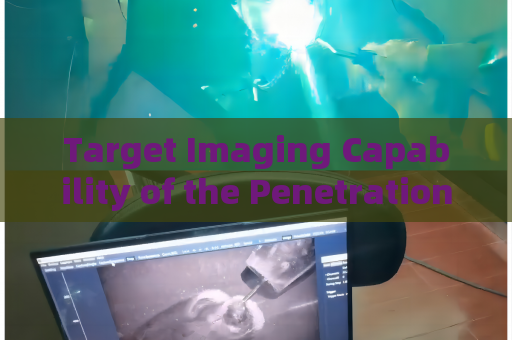
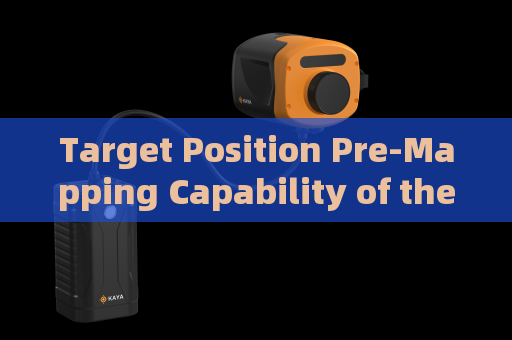
The Penetration Imager is an active imaging system based on laser range‑gated technology, incorporating a high‑repetition‑rate pulsed laser, an intensified gated camera (with MCP image intensifier, high‑voltage module, and timing module), a beam expander, and an imaging lens. Its core function lies in its ability to penetrate optical media such as vehicle window glass, train windows, aircraft portholes, and glass curtain walls. Simultaneously, it is immune to interference from fire, fog, haze, rain, and snow. In severe weather, the system’s pulsed laser illuminates the target in extremely short bursts, while the gated camera opens synchronously only when the reflected signal from the target distance arrives. This mechanism effectively rejects backscatter from rain droplets or fog particles, producing a high‑contrast, clear image of the interior of a suspect’s car even through a rain‑streaked windshield. Unlike thermal or radar‑based devices, the Penetration Imager operates strictly within the optical domain, making it suitable for identifying facial features, hand movements, or weapons inside a vehicle without emitting radiation or penetrating solid obstacles such as body panels or walls.
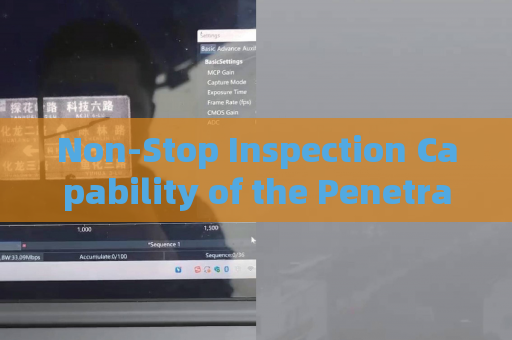
During a real‑world pursuit in a heavy rainstorm, a patrol unit equipped with a vehicle‑mounted Penetration Imager can track a fugitive’s sedan from a safe distance of over 300 meters. The operator simply aims the device at the suspect’s rear or side window. The system’s timing module automatically adjusts the gate delay to match the changing distance as both vehicles move. Despite the torrential rain and water spray from the road, the display shows a crisp, real‑time image of the suspect’s upper body and face, allowing the officer to positively identify the individual from a database photo without closing the gap. The imaging is continuous, with no interruption from weather‑induced glint or washout. This uninterrupted tracking capability enables command to coordinate roadblocks or helicopter support with precise knowledge of the fugitive’s position and behavior.
The operational simplicity of the Penetration Imager further enhances its tactical value. A handheld variant allows foot patrols or officers on aerial platforms to maintain visual lock even when the suspect changes direction through fog‑shrouded intersections. The system provides a live video feed that can be shared across units via secure radio links. In a snowy night scenario, where standard cameras show only a white blur, the Penetration Imager cuts through the snowfall, revealing the driver’s face and any passenger actions. This clarity reduces false positives—officers no longer mistake a glare for a weapon or lose track during a sudden rain squall. By solving the fundamental problem of weather‑induced optical degradation, the Penetration Imager transforms a chaotic, high‑risk chase into a controlled, evidence‑based operation, ultimately increasing apprehension rates while preserving officer safety.