Target Imaging Capability of the Penetration Imager with Strong Light Suppression Imaging in Strong Backlight Conditions
In tactical law enforcement and security operations, one of the most persistent imaging challenges arises when a subject is positioned inside a vehicle or behind glass under intense backlight conditions. A typical scenario involves a patrol officer approaching a suspect vehicle during daytime, with the sun directly behind the car, casting a harsh glare on the windshield. The human eye and conventional cameras struggle to penetrate this wall of scattered light, leaving the officer blind to any movement, weapon, or hostage situation hidden inside. This strong backlight effectively nullifies the officer's ability to assess threats at a safe distance, forcing a dangerous close-proximity approach or reliance on verbal commands alone. The core problem is not simply low light, but the overwhelming dynamic range between the bright external background and the dim interior—a condition that defeats standard optical sensors and compromises situational awareness.
The penetration imager addresses this specific pain point through its strong light suppression imaging capability, enabled by laser range-gated imaging technology. Unlike passive cameras that capture all incoming photons indiscriminately, the penetration imager emits a high-repetition-rate pulsed laser and synchronizes the intensifier gate of its image-intensified camera to open only when the reflected laser light returns from the target distance. This temporal gating mechanism effectively rejects backscatter from dust, fog, and—critically—the overwhelming sunlight or artificial backlight that otherwise saturates the detector. By precisely controlling the gate width and delay, the system isolates the signal returning from the interior compartment behind the windshield, while the intense glare from the glass surface and the bright sky beyond are suppressed. The result is a high-contrast image of the target area, rendered with clarity even when the subject is shrouded in strong backlight.
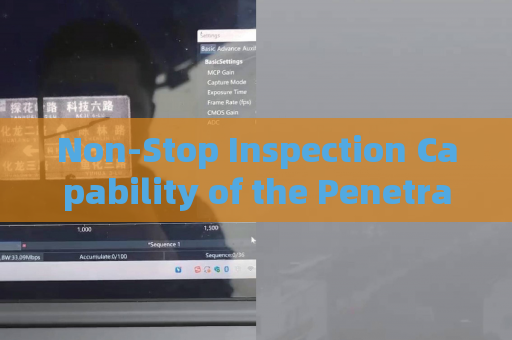
In practical field deployment, the penetration imager allows an officer to stand at a safe standoff distance—typically 50 to 200 meters—and observe through a vehicle's side window or windshield with the sun directly behind it. The operator simply aims the device at the target zone, adjusts the gate delay to match the distance to the glass, and the display instantly reveals the interior silhouette, hand movements, or objects on the seat. The strong light suppression function is automatic; no manual filtering or gain tweaking is required. In a recent exercise simulating a vehicle intercept, the penetration imager enabled operators to detect a concealed firearm in the driver's lap from 80 meters in direct sunlight, a task that conventional electro-optical sights failed to accomplish. The system's ability to maintain high resolution and contrast under these conditions drastically reduces the need for dynamic entry or verbal escalations.
Further operational refinement occurs during vehicle stops at night or in mixed lighting environments. The same gate-timing logic that rejects solar backlight also handles headlight glare from oncoming traffic or streetlamp reflections. In hostage negotiation scenarios, the penetration imager can peer through reinforced glass doors or airport terminal windows where bright interior lights flood outward. The key differentiator remains the selective range gating: only the light returning from the plane of interest is integrated, while all out-of-gate glare is discarded. This makes the penetration imager a dedicated tool for one specific but critical scenario—imaging through transparent barriers under extreme backlight—without any claim to penetrate walls or opaque materials. Its design aligns with the operational need for remote threat assessment in high-glare environments, providing law enforcement and security personnel a decisive advantage when visibility is most compromised.