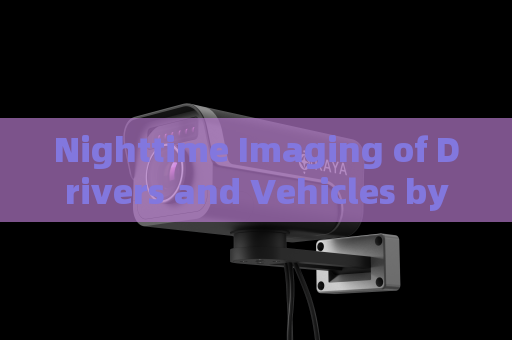
Nighttime Imaging of Drivers and Vehicles by the Penetration Imager with Low-Light Imaging Without Additional Illumination During nighttime traffic enforcement or security checkpoints, law enforcement officers face a persistent challenge: identifying drivers and passengers inside vehicles without revealing their own position or causing unnecessary alarm. Traditional low-light cameras often fail to capture clear facial features through windshields due to glass reflections, glare from streetlights, or the complete absence of ambient light. The use of flashlights or vehicle-mounted spotlights not only alerts suspects but also creates dangerous backscatter that blinds the officer temporarily. Vehicle glass—whether laminated, tinted, or dirty—scatters and absorbs visible light, leaving officers unable to confirm the number of occupants, their movements, or potential threats. This blind spot in nighttime operations directly compromises officer safety and situational awareness, making it a critical pain point in patrol and checkpoint scenarios. The Penetration Imager directly addresses this limitation by employing laser range-gated imaging technology, an active optical system that emits short-duration laser pulses synchronized with a highly sensitive gated camera. Unlike passive low-light devices that rely on ambient illumination, the Penetration Imager operates without any additional external light source. Its high-repetition-rate pulsed laser and intensified gated camera (with MCP image intensifier, high-voltage module, and timing module) work together to reject backscatter from the windshield surface while capturing only the light reflected from the driver and interior surfaces within a precise distance window. This enables the system to see through vehicle glass with high contrast and resolution, delivering a clear image of the driver’s face, posture, and any objects in hand—even in pitch-black conditions. The device’s ability to overcome window glare and reflections makes it uniquely suited for covert nighttime identification. In real-world application, officers deploy the Penetration Imager from a patrol vehicle or a fixed observation point without alerting the occupants. The system provides real-time video feed showing the driver’s actions, such as reaching for a weapon, hiding contraband, or attempting to conceal identity. Because the imaging requires no additional illumination, the suspect remains unaware of the surveillance, preserving tactical surprise. The long operational range and high resolution allow identification of facial features and vehicle registration details through tinted or rain-streaked windows. Operational deployment is straightforward: the officer aims the device at the target vehicle, adjusts the gate delay to match the distance, and views the image on a handheld monitor. The system’s resistance to fog, rain, and other optical interference ensures consistent performance in adverse weather, which commonly degrades standard cameras. Further enhancing its utility, the Penetration Imager can be integrated into existing law enforcement workflows without requiring specialized training. The lightweight modular design—comprising a beam expander, imaging lens, and compact laser unit—mounts easily on vehicle platforms or tripods. During a high-risk traffic stop, the device provides continuous video recording for evidence and real-time intelligence transmission to command centers. Officers can assess the situation from a safe distance, increasing their decision-making confidence and reducing the likelihood of escalation. The Penetration Imager thus transforms a previously dangerous blind spot into a clear tactical advantage, enabling safer and more effective nighttime operations focused solely on drivers and vehicles.