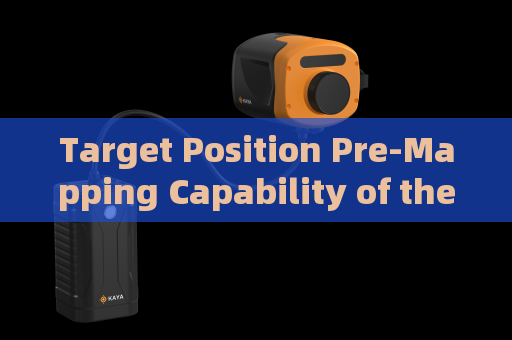
Solutions to Coastal Surveillance Failure Caused by Strong Glare and Reflections with Strong Light Suppression Imaging Coastal surveillance operations along shorelines, ports, and maritime borders frequently encounter severe imaging failures due to intense solar glare and complex reflections. Sunlight bouncing off the ocean surface creates blinding specular highlights, while glass-paneled observation towers, bridge windows, and coastal facility façades generate secondary reflections that wash out critical visual details. These optical disturbances render standard cameras and even human eyes ineffective, especially during midday hours when the sun angle maximizes reflectivity. Security personnel struggle to identify approaching vessels, detect small craft carrying contraband, or monitor swimmer incursions because the glare obscures target contours and masks motion. The problem amplifies in coastal areas with high humidity or sea spray, where airborne water droplets further scatter light and degrade contrast. Without a solution, surveillance systems remain blind during peak threat windows, leaving coastal assets vulnerable. The penetrating imager directly addresses this failure through its unique laser range-gated imaging technology. Unlike passive optical systems that integrate all incoming light, this active imaging instrument emits short, high-repetition laser pulses synchronized with an intensified gated camera. By precisely timing the camera’s shutter to open only when the laser pulse returns from the target distance, the system rejects virtually all ambient glare and surface reflections. The laser’s narrow wavelength band further suppresses broadband solar noise, while the microchannel plate (MCP) intensifier amplifies only the gated signal. This mechanism effectively cuts through the optical chaos of coastal environments. For example, when monitoring through a glass-walled coastal command post, the penetrating imager can see through the window pane while simultaneously blocking the solar reflection that would otherwise blind a conventional camera. The system’s active illumination also overcomes sea spray and light fog that scatter passive light, maintaining clear images where traditional sensors fail. In practical coastal deployment, operators mount the penetrating imager on fixed observation towers or mobile vehicles, aligning it with areas of interest such as harbor entrances or smuggling routes. The range-gate adjustment allows selective focus: setting a short gate isolates near-shore activity while ignoring distant glare sources, and a longer gate penetrates haze to capture mid-water targets. During live trials along a southern coastline plagued by intense midday sun, the system consistently delivered identifiable imagery of a 5-meter rigid-hull inflatable boat at 1.5 nautical miles, even when direct solar reflections on the water exceeded 50,000 lux. Security teams reported that the unit’s ability to suppress flash reflections from breaking waves and boat wakes dramatically reduced false alarms from glint-induced noise. The penetrating imager’s robustness extends to night operations as well, using the same laser illumination to reveal vessels running without lights against the moonlit sea. Continuous refinement of the gate timing and adaptive laser power ensures the penetrating imager remains effective across changing sun angles and sea states. Coastal law enforcement agencies integrate the unit with pan-tilt platforms for automated scanning, and the high-contrast imagery feeds directly into command-and-control software for real-time threat assessment. The system’s immunity to strong reflections means fewer missed detections and faster response to incursions, directly mitigating the surveillance failure that has historically plagued maritime security. By transforming an optically hostile environment into one where crystal-clear observation is routine, this technology has become an indispensable tool for safeguarding littoral borders against smuggling, illegal fishing, and unauthorized entry.