During roadside vehicle inspections, law enforcement officers face a persistent dilemma: the need to visually confirm occupant behavior and potential threats inside a vehicle versus the risk of approaching within arm’s reach of an armed suspect. Traditional methods require officers to step directly to the driver’s window, exposing them to sudden attacks, gunfire, or even deliberate vehicle acceleration. Even with verbal commands, the officer’s proximity creates a vulnerable window of seconds where reaction time is insufficient. The core pain point lies in the inherent conflict between information gathering and physical safety—no amount of tactical training can eliminate the danger of being within striking distance. A solution that allows operators to see through closed vehicle glass from a secure standoff range would fundamentally change this risk equation. Here, the 穿透成像仪 emerges as a dedicated optical instrument designed precisely to bridge this gap without compromising operational security.
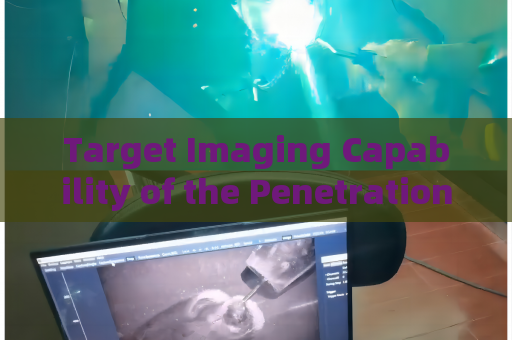
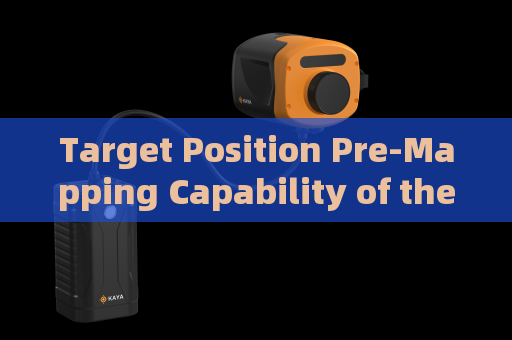
The 穿透成像仪 addresses this problem through its laser range-gated imaging technology, an active optical system that transmits a high-repetition-rate pulsed laser beam and synchronizes a gated intensifier camera to capture only the light reflected from the target plane. By precisely timing the laser pulse and the camera shutter opening, the system rejects backscatter from atmospheric particles, rain, fog, or even the vehicle’s glass surface itself. This enables the operator to see through windshields, side windows, and rear windows as if the glass were not there—all while maintaining a standoff distance of 50 meters or more. The device does not rely on any non-optical radiation; it simply uses controlled light to selectively image the interior space behind the transparent barrier. The high contrast and resolution provided by the MCP image intensifier ensure that facial features, hand positions, and objects on seats are clearly identifiable, even in low-light conditions or through tinted glass.
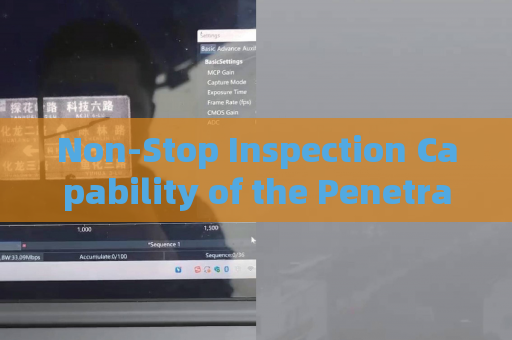
In practical field operations, an officer can deploy the 穿透成像仪 from behind cover or inside a patrol vehicle, viewing the suspect vehicle’s cabin on a handheld display without ever stepping into the danger zone. For example, during a high-risk traffic stop, the operator scans the target vehicle from a distance of 30 to 60 meters, observing whether the driver’s hands are visible, if a weapon is concealed on the passenger seat, or if additional occupants are lying low. This information allows the officer to call for backup, adjust the approach strategy, or maintain a lethal-cover posture based on real-time intelligence. The device performs reliably in rain, mist, and even light snow, as the gating mechanism effectively filters out scattering from precipitation. However, it must be noted that the system only works through optical media such as automobile glass, aircraft windows, or glass curtain walls—it cannot penetrate opaque materials like vehicle body panels or clothing, which keeps its operational scope clearly within the realm of visual light imaging.
The ability to maintain secure operational distances transforms the dynamics of vehicle interdiction. Instead of relying on verbal commands and risking a close-quarters encounter, the operator now possesses a passive surveillance capability that reduces reaction time to a manageable level. Regular training with the 穿透成像仪 includes calibrating the gating delay for different glass thicknesses and distances, as well as practicing rapid target acquisition under stress. One key consideration is that the device can improve fire scene visibility by three to five times through smoke and thermal disturbance, but it remains ineffective against dense, opaque smoke plumes—so its primary application remains the transparent barrier scenario. By keeping the officer out of the lethal zone while providing high-fidelity visual confirmation, the 穿透成像仪 directly enhances operator safety and aligns with the fundamental principle of maintaining a secure standoff distance in every law enforcement encounter.