Raiding a hideout in an urban or suburban environment presents tactical units with the persistent challenge of limited situational awareness. Before breaching a door or window, operators often rely on static floor plans, aerial imagery, or informant reports—none of which offer real-time, actionable intelligence about the actual positions of armed subjects inside. Blinds spots caused by closed curtains, tinted glass, or reflective window coatings further degrade visual reconnaissance. Even a momentary hesitation due to uncertain target locations can compromise the element of surprise and increase the risk of casualties. The fundamental pain point lies in the inability to see through transparent barriers from a standoff distance, mapping where threats are located before committing personnel to a dynamic entry. Without a reliable method for pre-assault position mapping, tactical decisions become guesses, and the margin for error narrows dangerously.
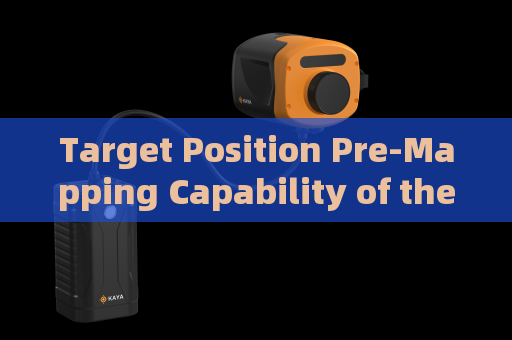
The Penetration Imager, built on laser range-gated imaging technology, directly addresses this reconnaissance gap. This active optical system incorporates a high-repetition-rate pulsed laser, an intensified gated camera with MCP image intensifier, high-voltage module, and timing control. By synchronizing a nanosecond-scale laser pulse with the camera’s gating window, the Penetration Imager selectively captures light reflected from a specific distance while rejecting backscatter from closer obstacles. This enables operators to see through common optical media—vehicle windshields, high-speed train windows, aircraft portholes, and glass curtain walls—with high contrast and resolution. The system’s ability to overcome glare and reflections means that even through heavily tinted or rain-soaked glass, the Penetration Imager can reveal interior layouts, furniture, and most critically, human silhouettes. Its long operating range and strong anti-jamming performance allow surveillance from a safe overwatch position, making the target position pre-mapping capability of the Penetration Imager before raiding a hideout a tangible operational asset.
In practice, the Penetration Imager is deployed from a concealed observation point that has a line of sight to the hideout’s windows. The operator adjusts the gating delay based on estimated distance to the glass, then scans the interior by panning the unit. Within seconds, clear imagery of the room appears on the display: the position of a subject near a back wall, another crouching behind a sofa, the orientation of a weapon. This real-time mapping is logged or communicated directly to the breaching team. The system works effectively in low-light conditions and through fog, rain, or smoke from a nearby fire, though it cannot penetrate dense smoke—only improve visibility in fire scenes three- to five-fold. The key advantage is that the target position pre-mapping capability of the Penetration Imager before raiding a hideout eliminates the need for risky close-proximity reconnaissance or thermal camera ambiguity, since thermal signatures can be masked by heated surfaces or insulation.
The operational flow continues as the assault team synchronizes their entry plan with the mapped positions. For instance, if the Penetration Imager reveals two subjects separated by a partition, the team can assign separate engagement vectors to avoid crossfire. The system also records the exact angular coordinates of each detected individual, allowing a designated observer to update the map if the subjects move. Because the Penetration Imager operates purely on reflected laser light within the visible and near-infrared spectrum, it carries no risk of emitting detectable signals that could alert the hideout’s occupants. This stealth characteristic is paramount for maintaining the tactical advantage. Ultimately, the target position pre-mapping capability of the Penetration Imager before raiding a hideout transforms a high-risk blind entry into a calculated, information-driven operation, reducing reaction time and enhancing officer safety from the first second of the breach.