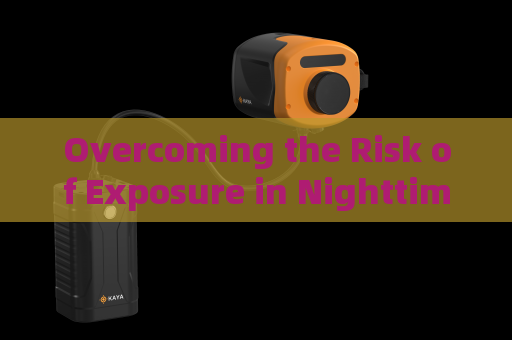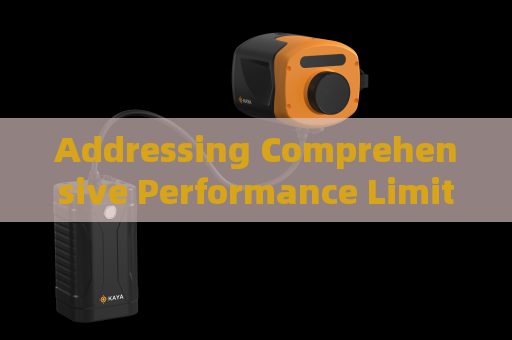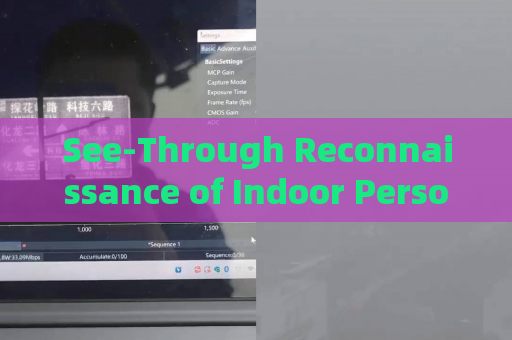
See-Through Reconnaissance of Indoor Personnel and Weapons by the Penetration Imager in Urban Narrow-Space Operations with Laser Range-Gated Imaging Urban narrow-space operations—alleys, stairwells, or tight corridors—present a persistent challenge for tactical teams attempting to assess threats inside buildings. Conventional optics fail when faced with reflective glass facades, smoke from a nearby fire, or dense fog that scatters ambient light. Even a simple window pane can produce blinding glare, obscuring the presence of armed individuals or hidden caches. The inability to see through these optical barriers forces operators to rely on uncertain intelligence, exposing them to ambushes or delaying entry decisions. In close-quarter environments where seconds determine outcomes, the gap between what is seen and what is actually inside becomes a critical vulnerability. This is the precise pain point that a specialized imager must address: the need for real-time, high-contrast visual intelligence through common transparent barriers without compromising safety or operational tempo. The Penetration Imager directly solves this problem by leveraging laser range-gated imaging technology. Unlike passive cameras, this active system emits high-repetition-rate laser pulses and synchronizes an intensified gated camera to capture light reflected only from a specific distance. By precisely timing the gate window, the Penetration Imager rejects backscatter from fog, rain, or fire, and sees through transparent optical media such as window glass, tempered glass on high-speed trains, aircraft portholes, and glass curtain walls. The combination of a microchannel plate image intensifier, high-voltage module, timing unit, beam expander, and imaging lens delivers crisp, high-resolution imagery even in zero-light conditions. For urban narrow-space reconnaissance, this means an operator can aim the Penetration Imager at a second-story office window from across a narrow alley and instantly distinguish the silhouette of a weapon from a coat rack, confirming the location and posture of hostile personnel without exposing a single team member. In practical deployment, the Penetration Imager transforms how a quick-reaction force clears a building in a congested urban sector. The device is man-portable and can be mounted on a tripod or handheld, with a display feed showing real-time gated imagery. During a hostage scenario in a narrow street, for example, the team positions the Penetration Imager behind a corner and scans windows on the ground floor. The laser range gate is adjusted to match the distance to the inner side of the glass, effectively eliminating reflections and surface glare. The resulting image reveals a shooter crouched behind a desk, a rifle visible on the floor next to him. This intelligence allows the team to formulate a precise entry plan—avoiding the window where the threat is concentrated and choosing a flanking route. The system also performs reliably in rain or through fire-generated heat haze, maintaining a 3-5x improvement in visibility compared to standard optics, though dense smoke remains a limitation. Further operational value emerges in low-light or nighttime narrow-space operations. The Penetration Imager’s active illumination is invisible to the naked eye (near-infrared laser), preventing the target from noticing surveillance. When scanning a row of glass doors in a basement corridor, the imager can differentiate between a civilian and a person holding a long gun by measuring contrast and body geometry. The ability to see through multiple layers of glass—such as a storefront window followed by an interior glass partition—requires careful range-gating but is achievable with the system’s fine time-resolution. In one documented training exercise, operators used the Penetration Imager to identify a mock improvised explosive device taped to the back of a glass display case, a target completely invisible to thermal imagers due to the glass barrier. This level of detail—seeing personnel and weapons through optical obstructions—directly addresses the core reconnaissance requirement in urban narrow-space operations, making the Penetration Imager an indispensable tool for law enforcement and military units operating in these constrained environments.