Nighttime covert vehicle surveillance presents a fundamental operational dilemma: maintaining visual contact with a target inside a vehicle while avoiding any detectable signature that would reveal the observer’s presence. Traditional approaches introduce unacceptable exposure risks. A spotlight or white-light flashlight, even when used briefly, throws a telltale beam that announces the surveillance position to the subject or to nearby accomplices. Infrared illuminators, though invisible to the naked eye, are easily detected by modern night-vision goggles or smartphone cameras that pick up the IR glow. Even the reflected glow from dashboard lights or a passing headlight can compromise a concealed vantage point. The core problem is that any active illumination—whether visible or near-infrared—generates strong backscatter from dust, fog, raindrops, or the vehicle’s own windows. This backscatter not only degrades image quality but also creates a bloom of light that acts as a beacon. Furthermore, vehicle glass reflects ambient city light and streetlamps, creating glare that washes out any detail inside the cabin. Conventional optics struggle to separate the true reflected signal from the vehicle interior from the overwhelming noise of scattered and reflected light. The result is a constant trade-off between seeing clearly and staying hidden—a trade-off that often ends with either incomplete intelligence or a compromised operation.
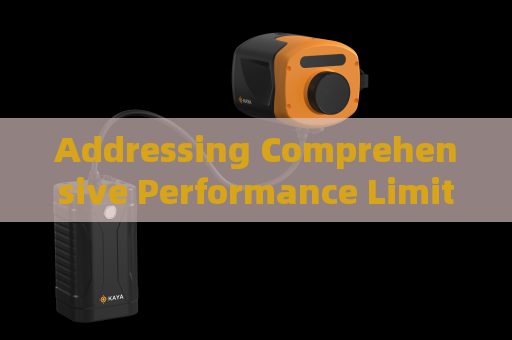
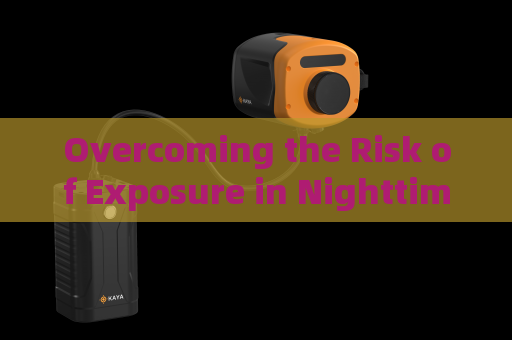
A penetrating imager solves this exposure dilemma by employing laser range-gated imaging technology. This active imaging system consists of a high-repetition-rate pulsed laser, an intensified gated camera (incorporating a microchannel plate intensifier, high-voltage module, and timing control module), a beam expander, and an imaging lens. The key is temporal filtering: the laser emits extremely short pulses of near-infrared light, and the camera’s electronic gate opens only for a precisely timed window that matches the round-trip flight time of the light reflected from the target. All light scattered back from nearer objects—such as fog, rain, or the vehicle’s outer window surface—arrives before the gate opens and is therefore rejected. Light that has traveled past the target or comes from greater distances arrives too late and is also excluded. This gating mechanism effectively eliminates backscatter, the primary cause of both image degradation and detectable glow. The penetrating imager operates with a laser wavelength invisible to the human eye and to most common night-vision equipment. Because the pulse energy is delivered in extremely brief bursts, the average power is low, further reducing any chance of detection by specialized sensors. Critically, the system is designed to see through optical media—specifically vehicle windows, including tempered glass, laminated windshields, and aircraft or train cabin glass. It can also penetrate atmospheric obscurants such as fog, haze, rain, and snow without producing the telltale scatter signature that would betray a conventional illuminator.
In practical surveillance operations, the penetrating imager allows a covert team to observe a suspect vehicle from a safe distance without ever drawing attention. A typical setup places the system in a disguised surveillance van or a static overwatch position several hundred meters away. The operator adjusts the gate delay to match the exact distance to the target vehicle, compensating for any slight movement or slope. Once locked, the image appears on the monitor as a crisp, high-contrast view of the vehicle’s interior through the side windows, rear window, or windshield. Occupants’ movements, hand gestures, conversations (as deduced from lip movement), and even objects on seats become visible. Because no visible light or continuous IR beam is emitted, and because the pulsed laser’s millisecond-scale illumination is both too brief and too narrow in wavelength to attract casual notice, the risk of exposure drops to near zero. The operator can maintain this surveillance for extended periods—hours if necessary—without needing to reposition or change tactics. In urban environments where streetlights and billboards create unpredictable glare, the gating capability strips away that ambient reflection, revealing only the light that has travelled through the glass and back from the cabin interior. This is particularly valuable when the target vehicle is moving, as the penetrating imager can be retriggered at a rate fast enough to provide near-real-time video, giving the surveillance team continuous situational awareness.
Nighttime environments introduce additional complexities that the penetrating imager handles with ease. In light rain or fog, conventional optics suffer from veiling luminance that makes it impossible to see through a car window; the backscatter from precipitation overwhelms the reflected signal. The range-gated approach, however, sees through such conditions because the gate rejects the scattered light from raindrops or fog particles that are closer than the target. Even in heavy snowfall, where a typical spotlight would create a blinding wall of white, the penetrating imager continues to deliver clear imagery through the vehicle’s windows. It is important to note the operational boundary: the system cannot penetrate opaque solids such as walls, concrete, brick, metal, wood, or clothing. Its capabilities are strictly limited to optical media—glass and atmospheric obscurants. For fire-ground applications, it improves visibility through flames and hot gases by a factor of three to five, but it has no effect against thick smoke because smoke particles absorb and scatter light in a way that range gating cannot compensate. Within the precise domain of nighttime covert vehicle surveillance, however, the penetrating imager transforms a high-risk, often fruitless task into a reliable, stealthy method of intelligence gathering. The observer remains invisible, the target remains unaware, and the image quality remains high—all without the operational compromises that have historically defined this challenging mission.