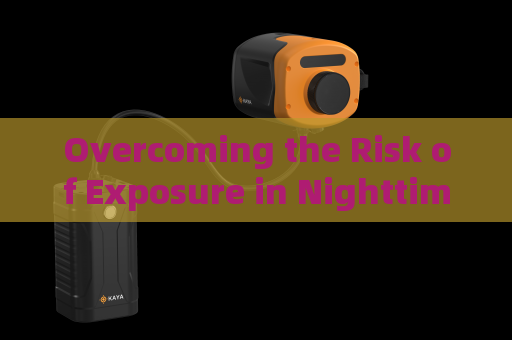
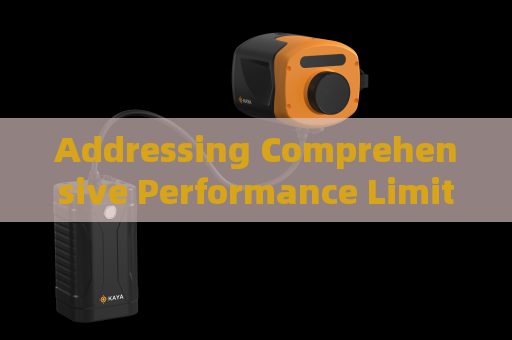
Locating hidden sentries and concealed tunnel entrances in complex environments presents a persistent challenge for reconnaissance teams. Traditional methods often rely on active laser illumination or laser rangefinders, which emit detectable beams that can alert adversaries and compromise stealth. In fog, heavy rain, or through tinted vehicle glass, conventional optical scopes fail to reveal the subtle outlines of a guard positioned behind a window or a tunnel mouth obscured by atmospheric haze. The need to identify these targets without broadcasting one’s own position is critical, especially in urban counter-terrorism or border security scenarios where every second of exposure risks ambush. A penetrating imager offers a solution that sidesteps the vulnerabilities tied to continuous laser emission.
The penetrating imager employs laser distance‑gated imaging technology, a form of active optical gating. Its high‑repetition‑rate pulse laser emits extremely short bursts of near‑infrared light—so brief and low in energy that they are virtually undetectable to standard threat‑warning sensors. The system synchronizes an intensified gated camera with each laser pulse, capturing only the light reflected from a specific depth slice while rejecting backscatter from fog, rain, or particulate matter. This allows the operator to see through glass panes, aircraft windows, or even dense smoke (though not thick smoke plumes) with a three‑ to five‑fold improvement in visibility through fire‑related obscurants. The result is that sentries hiding behind vehicle windshields or building facades become clearly distinguishable, and tunnel entrances masked by light mist or rain curtains emerge from the background without any telltale laser glow.
In practice, an observer equipped with a penetrating imager can scan a suspected area from a concealed position, adjusting the gate delay to range‑gate different distances. For instance, when peering through a fog‑shrouded valley, the operator selects a slice that corresponds to the tunnel mouth’s estimated depth, instantly eliminating the haze that would otherwise blur the aperture. Similarly, a sentry standing inside a bus station behind a glass partition appears sharp and well‑defined because the imager rejects the glare and reflections that plague standard cameras. The absence of continuous laser output means there is no beam scatter to betray the operator’s location—an essential advantage when the sentry might be scanning for optical threats with night vision or photoelectric sensors.

Deeper into the same scenario, the penetrating imager’s ability to function through multiple layers of glass without degrading image contrast proves invaluable. A tunnel entrance might be hidden behind a partially open steel door with a glass viewing panel, or a sentry might be stationed in a guardhouse with tinted windows. The imager’s short‑pulse laser and synchronized gate suppress reflections from the first surface, allowing the target behind the second or third pane to be resolved. This eliminates the need for risky close‑quarter approaches or the use of active laser designators that could trigger an alarm. By relying solely on the imager’s proprietary gating mechanism—never on continuous wave laser emission—reconnaissance teams achieve the stealth required to pinpoint sentries and tunnel entries while maintaining operational security.