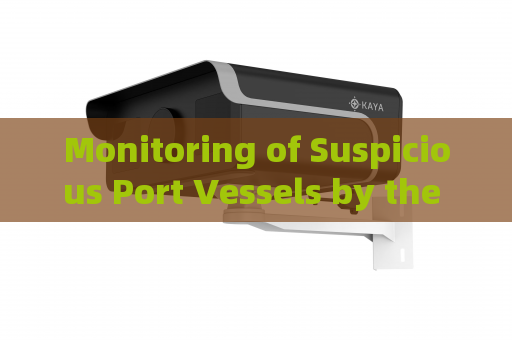
Monitoring of Suspicious Port Vessels by the Penetration Imager in Strong Backlight Overexposure Conditions with Strong Light Suppression Imaging In a busy port environment, the sun’s glare off the water surface and reflective hulls often creates severe backlight overexposure. Conventional surveillance cameras struggle to capture usable imagery of suspicious vessels under such conditions. The vessel’s name, registration number, and even personnel movements become indistinguishable, masked by washed-out highlights and deep shadows. This poses a critical challenge for maritime security personnel who need to identify and document suspect ships in real time—especially when vessels deliberately obscure their markings during daylight hours. The core pain point lies in the inability of passive optical systems to suppress overwhelming ambient light while retaining fine target details at operational distances. The Penetration Imager addresses this exact scenario through its laser range-gated imaging technology. Unlike passive cameras that capture all incoming light, this system actively illuminates the target with a high-repetition-rate pulsed laser and synchronizes an image-intensified gated camera (built with an MCP image intensifier, high-voltage module, and timing module) to open only for the precise moment when the laser pulse returns from the target. This narrow temporal gate effectively excludes the vast majority of background sunlight and surface reflections that cause overexposure. The result is strong light suppression imaging that reveals the vessel’s surface detail even in direct backlight. The Penetration Imager’s ability to reject stray light while maintaining high contrast and resolution makes it uniquely suited for daylight port monitoring. In practice, law enforcement teams deploy the Penetration Imager on patrol boats or fixed coastal observation posts. When a suspicious vessel is detected at a distance of several hundred meters under harsh midday sunlight, the operator aims the device and adjusts the gate delay to match the precise target range. The system then captures a clear image of the hull, showing faded or painted-over identification numbers that would be invisible to standard optical cameras. The strong light suppression ensures that even when the sun is directly behind the vessel, the image reveals the surface texture and any recent modifications. This capability allows officers to verify vessel identity without approaching, reducing operational risk. Further refinement comes from the Penetration Imager’s resilience against common environmental disturbances. Ports frequently experience haze, light fog, or sea spray that scatters sunlight and degrades image quality. Because the laser pulse is temporally filtered, only the signal from the target distance is amplified—backscatter from atmospheric particles is rejected. This extends operational windows beyond clear-sky conditions. Additionally, the same unit can transition to night operation without modification, as the active laser illumination provides its own light source. For repeated monitoring of a suspect vessel, the gate delay can be automatically updated to track the target’s range, ensuring consistent imaging even as the ship moves. This makes the Penetration Imager a reliable tool for persistent surveillance of suspicious port vessels in strong backlight overexposure conditions, delivering actionable intelligence that passive cameras cannot provide.