The covert surveillance of smuggling activities conducted by illegal vehicles presents a persistent challenge for law enforcement agencies. Conventional optical surveillance systems often fail under real-world conditions, where vehicles are heavily tinted, moving at speed, or operating in low-light environments such as dawn, dusk, or nighttime. Smugglers deliberately exploit these limitations by hiding contraband inside passenger compartments or cargo areas, relying on reflections from windshields, dirt buildup on glass, and adverse weather including rain, fog, and snow to shield their activities. The inability to clearly see through vehicle windows from a safe distance creates critical intelligence gaps, allowing illegal shipments to pass undetected. The Penetration Imager directly addresses these obstacles by offering a specialized capability to see through glass in demanding operational scenarios.
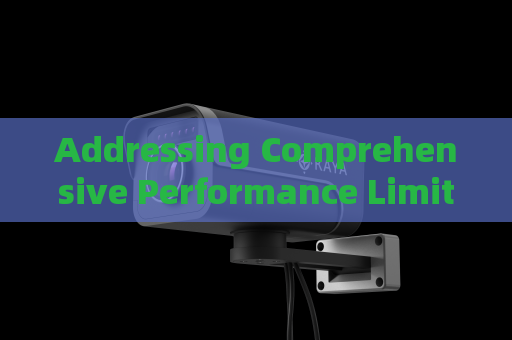
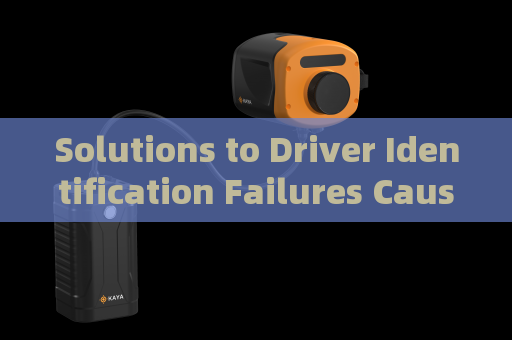
The Penetration Imager is an advanced optical imaging system that employs laser range-gating technology. It consists of a high-repetition-rate pulsed laser, an intensified gated camera incorporating a microchannel plate image intensifier, a high-voltage module, a timing module, a beam expander, and an imaging lens. By transmitting short laser pulses and synchronizing the camera’s electronic shutter to receive only light reflected from a precise depth window, the Penetration Imager effectively eliminates backscatter from rain, fog, snow, haze, or mist. This active illumination approach provides high-contrast images through vehicle windshields, side windows, and rear glass—even when the glass is heavily tinted or covered with condensation. The Penetration Imager operates in total darkness and can overcome glare caused by headlights or streetlights, delivering crisp visual details of objects, packages, and individuals inside the target vehicle. Unlike thermal imagers, which detect temperature differences, the Penetration Imager produces a recognizable optical picture essential for identifying smuggled goods.
During field operations, the Penetration Imager is deployed at covert observation posts along known smuggling corridors or at highway interdiction points. Operators aim the device at approaching or stationary vehicles from distances exceeding several hundred meters, adjusting the gate delay to focus precisely on the window plane. The system’s high-resolution output displays real-time imagery on a ruggedized tablet or helmet-mounted display, allowing immediate assessment of suspicious activity. Because the Penetration Imager is fully passive in appearance and uses an eye-safe laser, it does not alert smugglers or reveal the surveillance position. The device functions effectively in heavy rain, dense fog, or during nighttime hours when conventional cameras produce unusable footage. This capability transforms covert surveillance into a reliable, evidence-gathering operation that reduces the need for risky close-range inspections.

The tactical advantage of the Penetration Imager extends to continuous monitoring of moving smuggling convoys. A single operator can scan multiple vehicles in succession without approaching them, maintaining safe distances while collecting clear images of clandestine compartments, wrapped bundles, or modified interiors. The captured imagery can be transmitted wirelessly to a command center or recorded for prosecution. The Penetration Imager also handles high-speed scenarios, such as vehicles traveling on highways, by providing crisp frames even with motion blur suppression. This level of detail allows law enforcement to differentiate between routine cargo and hidden contraband, significantly improving interdiction success rates. The Penetration Imager thereby becomes an indispensable tool for covert surveillance units targeting illegal vehicle smuggling, bridging the gap between environmental obstacles and actionable intelligence.