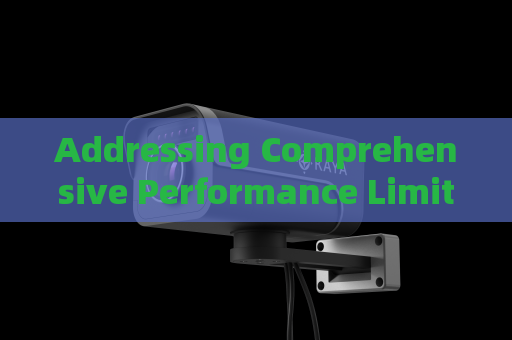
See-Through Reconnaissance of Indoor Personnel and Weapons by the Penetration Imager in Urban Narrow-Space Operations with Laser Range-Gated Imaging In urban narrow-space operations, such as those conducted in cramped alleyways, stairwells, or tight corridors adjacent to closed rooms, the ability to gain real-time intelligence on hostile personnel and their weapons before breaching a door or window is a critical tactical requirement. Traditional optical observation tools, including binoculars and monoculars, frequently fail under these conditions. Glass panes on doors or windows reflect ambient light, creating glare that obscures interior details. Smoke from nearby fires, dense fog, or rain further degrade visibility. Even in clear conditions, low indoor lighting leaves tactical teams blind to threats concealed behind transparent barriers. The consequence is a dangerous operational gap: units must either expose themselves to potential ambushes by approaching without reconnaissance or rely on intrusive methods that compromise stealth. This real-world problem demands a non-contact, optically based solution capable of delivering clear images through optical media while overcoming harsh environmental interference. The Penetration Imager directly addresses this pain point through its laser range-gated imaging technology. This advanced optical imaging instrument comprises a high-repetition-rate pulsed laser, an intensified gated camera incorporating a microchannel plate (MCP) image intensifier, a high-voltage module, a timing module, a beam expander, and an imaging lens. As an active imaging system, it operates by emitting a short laser pulse toward the target and then opening its gated camera only for the precise moment when the reflected light from the desired distance arrives. This range-gating capability effectively suppresses backscatter from nearer surfaces—such as the glass itself, airborne particles, or atmospheric haze—while capturing only the light returning from personnel or objects inside the room. The Penetration Imager can penetrate common optical media including vehicle windows, high-speed train and aircraft windows, and glass curtain walls. Furthermore, it maintains clear imaging in adverse conditions such as fire, fog, haze, rain, and snow, providing high-contrast imagery with long standoff distances and strong resistance to interference. In the context of urban narrow-space operations, this means an operator stationed at a safe position down an alleyway can aim the device at a second-floor window and see through the glass to assess room occupancy, identify weapons, and detect movement—all without entering the line of fire. During actual deployment, the Penetration Imager is operated as a handheld or tripod-mounted system. The tactical user selects an appropriate observation point, often around a corner or behind cover, and directs the device toward the target window or glass door. By adjusting the laser pulse timing and gate delay, the operator can isolate a specific distance slice—for example, one meter beyond the glass—thus eliminating reflections and capturing only the interior scene. In a fire-affected environment, such as a burning building where smoke and heat shimmer impair conventional cameras, the Penetration Imager can increase visibility by three to five times, although it cannot penetrate thick, optically dense smoke. The real-time image is displayed on an attached screen or relayed to a command headset, allowing quick decision-making. For instance, a squad leader observing through the imager might spot a suspect holding a rifle behind a shattered storefront window. Because the technology relies solely on light—not on radio waves, X-rays, or acoustic signals—it avoids detection by electronic countermeasures and aligns with standard police tactical protocols for non-invasive surveillance. The operational depth of the Penetration Imager in narrow spaces extends beyond simple visual confirmation. When multiple rooms or partitioned areas exist behind a single glass facade, the range-gating function can be toggled to scan different depth layers sequentially, revealing personnel positioned at varying distances. In a narrow urban corridor where a hostage situation unfolds, the device can differentiate between a hostage taker standing close to a window and a victim lying farther back, providing critical spatial information for entry planning. Moreover, because the system actively illuminates the scene with its own pulsed laser, it works equally well at night, eliminating the need for external light sources that could expose the operator. The resulting high-resolution imagery—free from the blur and noise typical of passive low-light cameras—enables precise identification of weapon types, body positions, and improvised barricades. The Penetration Imager thus serves as a dedicated tool for the single, demanding scenario of see-through reconnaissance in urban narrow-space operations, bridging the gap between optical limitations and tactical necessity without venturing into forbidden detection modalities.