In ultra-long-range covert reconnaissance, the primary operational dilemma lies in maintaining absolute stealth while gathering actionable visual intelligence on subjects who are acutely aware of surveillance techniques. Traditional optical systems, such as high-power zoom cameras or night-vision devices, often require active illumination—either visible light or near-infrared floodlights—that can be detected by suspects through simple counter-surveillance measures. Even thermal imagers, while passive, emit distinct heat signatures when their cooling systems cycle, and their reliance on temperature contrast can be thwarted by environmental shielding. More critically, any form of direct line-of-sight observation that relies on conventional lenses or reflected ambient light forces the operator to close distance, increasing the probability of detection. The suspect’s vehicle or building may have tinted windows, reflective glass, or interior lighting that scatters or blocks conventional optics, leaving the reconnaissance team with a dangerous choice: move closer and risk compromise, or stay at a safe range and obtain incomplete, low-contrast imagery that cannot support tactical decisions. This exact scenario—observing a suspect’s movements inside a parked car or behind a commercial storefront from a kilometer away without any visible or audible cue—demands an imaging solution that is inherently invisible, operates at extreme standoff distances, and cuts through obstructive optical media. The Penetrating Imager, built on laser range-gated imaging technology, directly addresses this risk of alerting suspects.
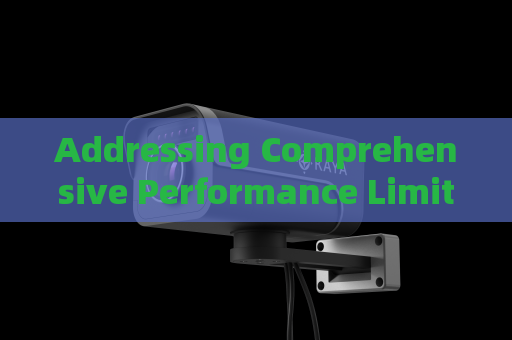
The Penetrating Imager achieves covert, ultra-long-range reconnaissance through its unique combination of a high-repetition-rate pulsed laser and an intensified gated camera. Unlike continuous-wave illuminators that betray their presence, this system emits extremely short laser pulses in the near-infrared spectrum—invisible to the naked eye and undetectable by common night-vision goggles. The gating mechanism precisely synchronizes the camera’s shutter opening with the arrival of the reflected laser pulse from the target, effectively eliminating backscatter from atmospheric particles, fog, rain, or even the glass itself. This allows the operator to “see through” optical barriers such as laminated automotive glass, double-pane windows, or aircraft portholes while standing off at distances exceeding one kilometer. The subject inside the vehicle remains completely unaware that a narrow, pulsed laser beam has painted the glass surface, because the pulse duration is measured in nanoseconds and the beam divergence is tightly controlled. Furthermore, the Penetrating Imager produces high-contrast, resolution-rich imagery even in dim interior lighting, giving the observer detailed views of human activity, hand gestures, or object manipulation without requiring any supplemental illumination that might trigger a suspect’s suspicion.
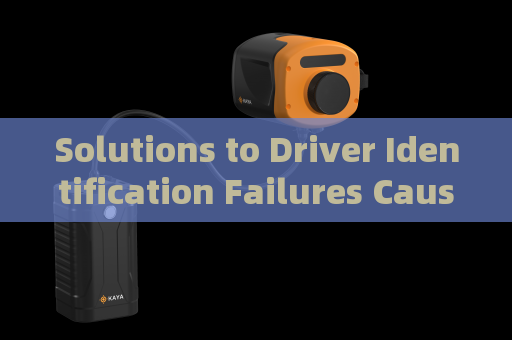
In field application, the operational workflow is straightforward yet highly disciplined. The reconnaissance team deploys the Penetrating Imager on a stabilized tripod behind natural cover—such as a ridge line, building corner, or vegetation—and aims the lens at the target structure. Using the integrated optical rangefinder, the operator sets the gate delay to match the exact distance to the suspect vehicle’s near-side window, typically within 500 to 1,500 meters. The system’s built-in high-voltage module and timing electronics then fire the laser at repetition rates up to several kilohertz, while the intensified camera opens its shutter for only a few nanoseconds per pulse. The live image stream appears on a ruggedized tablet monitor, revealing the suspect’s silhouette, facial features, and any contraband or weapons inside the cabin—all through glass that appears opaque to conventional optics. Because the laser’s infrared wavelength is outside human perception, and the pulsing is too rapid to cause any visible flicker or reflection, the subject inside experiences no telltale flashes or sounds. The operator can maintain observation for extended periods, recording video evidence while remaining undetected, thus eliminating the risk of alerting suspects that has long plagued ultra-long-range covert work.

The tactical advantage becomes most apparent in urban counterterrorism or hostage scenarios, where the suspect may be inside a fortified room with large glass windows. Conventional telescopic observation from a distant high-rise yields only distorted reflections or glare. The Penetrating Imager, however, penetrates the glass as if it were clear air, enabling the assault team to count persons, identify weapons, and monitor negotiations in real time without ever telegraphing their presence. Even environmental challenges like light rain, mist, or light fog—which typically degrade long-range optics—are neutralized by the gating process, because only the ballistic laser photons from the target distance are collected; scattered light from intermediate haze is rejected. This capability allows continuous, covert surveillance across varying weather conditions, a critical factor when the reconnaissance window is unpredictable. The Penetrating Imager thereby transforms ultra-long-range covert reconnaissance from a high-risk gamble into a reliable, standoff-capable method that preserves the element of surprise until the moment of intervention.