Locating sentries and tunnel entries in a hostile environment presents a fundamental operational difficulty. Traditional optical surveillance methods, such as binoculars or night vision, are severely degraded by fog, rain, dust, and glare from vehicle windows or building glass. The most direct workaround—using a laser rangefinder or active illumination—immediately exposes the observer’s position. Even a brief laser spot can be detected by enemy sensors or alert a sentry, turning a reconnaissance mission into a fatal ambush. This conflict between the need for clear imagery and the demand for covert operation is the core pain point. A Penetrating Imager is designed to resolve this exact tension, offering high-contrast visibility without the detectable signature of conventional laser emitters.
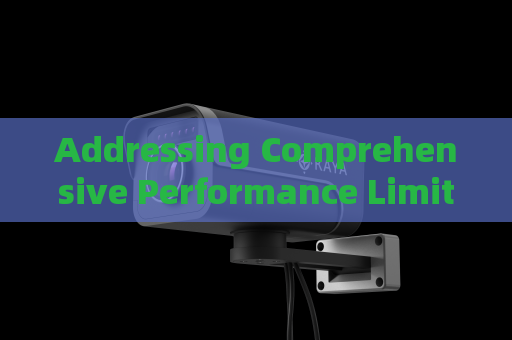
The Penetrating Imager employs laser range‑gated imaging technology, a form of active imaging that operates in the near‑infrared spectrum. Its high‑repetition‑rate pulsed laser emits extremely short bursts of light—on the order of nanoseconds—while the intensified gated camera (built with a microchannel plate, high‑voltage module, and timing control) opens its shutter only when the reflected signal from the target distance arrives. This synchronized gating suppresses backscatter from fog, rain, and smoke, and allows the system to see through glass, aircraft windows, and even fire‑filled atmospheres. Crucially, the pulse duration is so short and the wavelength is outside the visible range that no telltale continuous beam appears. Enemy soldiers or automatic threat‑detection systems cannot perceive the illumination as a laser pointer or designator. The Penetrating Imager thus delivers the optical advantage of active illumination while effectively maintaining a “no‑laser‑emission” posture in the field.
In practice, this capability transforms a high‑risk approach into a routine procedure. A patrol tasked with verifying a suspected tunnel entrance hidden behind a dense brush line can stand at a safe stand‑off distance and aim the Penetrating Imager at the area. The operator adjusts the range gate to the expected depth, and within seconds a clear image reveals the ground‑level opening, the camouflage netting, even the muzzle of a sentry’s weapon pressed against the foliage. Similarly, when scanning a row of parked vehicles for an armed lookout, the unit peers through tinted windows and thick fog without emitting any visible or easily detectable laser flash. The image is displayed on a ruggedized tablet, enabling real‑time assessment without radio chatter or laser backscatter warnings. Because the system is fully solid‑state and has no external moving parts, it can be mounted on a tripod or a compact rotorcraft for aerial overwatch, maintaining covert surveillance over a wide area.

The operational value extends to dynamic scenarios where sentries change position or tunnel entrances are camouflaged under debris. The Penetrating Imager provides continuous, high‑resolution imagery regardless of ambient lighting—moonless nights, heavy overcast, or thick smoke from nearby fires. The only limitation is optically dense smoke, for which the system cannot compensate; however, in the vast majority of field conditions—fog, rain, dust, glass obstructions, and fire haze—the range‑gated laser imaging cuts through these optical media, revealing details that would otherwise remain hidden. By eliminating the trade‑off between visibility and covertness, the Penetrating Imager directly addresses the challenge of locating sentries and tunnel entries without relying on laser emission that could compromise the mission.