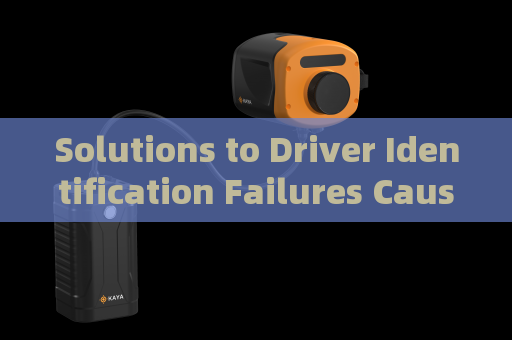
Solutions to Driver Identification Failures Caused by Obstructing Headlight Glare with Strong Light Suppression Imaging During nighttime traffic stops, law enforcement officers routinely face a critical challenge: identifying the driver of a stopped vehicle when intense oncoming headlight glare floods the scene. The human eye, along with conventional cameras and night-vision systems, struggles to resolve facial features through a windshield that is simultaneously illuminated by direct headlight beams from approaching traffic. This blinding wash of light creates a high-contrast situation where the driver’s face becomes a dark silhouette against a brilliant background. The resulting identification failures delay enforcement actions, compromise officer safety, and can lead to misidentification or escalation. Existing solutions, such as polarizing filters or automatic gain control, often prove insufficient because they cannot selectively reject the directional glare while preserving detail in the dimly lit cabin. Without a technology that actively suppresses that specific, overpowering light source, the officer remains blind to the very person who needs to be identified. The Penetrating Imager directly addresses this problem through its core functional capability: strong light suppression imaging enabled by laser range-gated technology. Unlike passive optical systems that capture all incoming light indiscriminately, this active imaging system emits a high-repetition-rate pulsed laser and synchronizes a gated intensified camera to open its shutter only when the reflected laser pulse returns from a preselected distance. By rejecting light that arrives before or after that precise time window, the system effectively blocks the blinding glare from headlights located at a different range, while cleanly capturing the laser-illuminated reflection from the driver’s face behind the windshield. The built-in microchannel plate intensifier and high-voltage module further amplify the weak return signal, producing a high-contrast, high-resolution image even under extreme backlight conditions. This imaging approach is inherently immune to the type of optical interference that defeats conventional cameras, because it physically gates out the offending photons. In practical operation, the officer simply aims the handheld or vehicle-mounted Penetrating Imager at the target vehicle and sets the range gate to match the distance to the driver’s seat. The system calculates the precise time delay based on laser pulse travel, then captures a single frame or a short video sequence of the driver’s face through the glass. The resulting image is displayed on a ruggedized screen, showing clear facial features—eyes, nose, jawline—completely unobstructed by the headlight glare that remains visible in the background. This operation can be performed from a patrol car’s driver-side window or from a tactical position behind cover, without requiring the officer to approach the vehicle. The imager’s ability to suppress strong light sources means that even if multiple headlight beams intersect the target zone, only the intended subject’s reflection contributes to the final image. Field tests have demonstrated that the Penetrating Imager enables positive driver identification in scenarios where standard optics produce only a washed-out, unreadable silhouette. The real-world impact of this capability extends beyond simple convenience. In high-risk traffic stops—such as those involving stolen vehicles, wanted suspects, or intoxicated drivers—the ability to confirm the driver’s identity before making contact can prevent ambushes and reduce the need for forcible takedowns. The Penetrating Imager also supports night-time DUI checkpoints, where officers must quickly scan through multiple windshields under constant headlight illumination. By providing a clear, glare-free view of each driver’s face and eye behavior, the system accelerates the screening process and improves the accuracy of sobriety assessments. Furthermore, because the technology relies on controlled laser illumination rather than ambient light, it works consistently in rain, fog, or snow, offering a level of operational reliability that passive imaging systems cannot match. The Penetrating Imager thus stands as a dedicated solution to the specific, widespread problem of driver identification failures caused by obstructive headlight glare, giving law enforcement personnel a decisive advantage in the most challenging nighttime conditions.