Nighttime smuggling operations often exploit vehicle blind spots to evade detection. Law enforcement teams tasked with monitoring these covert activities face a critical challenge: standard optical surveillance equipment fails to see through the heavily tinted or reflective windows of suspected smuggling vehicles under low-light conditions. Smugglers rely on these blind spots—such as the rear cargo area, side windows, or even the driver’s compartment—to conceal contraband or personnel. Traditional night vision devices, while useful in open spaces, are rendered ineffective by glare from streetlights or the vehicle’s own interior lighting, and they cannot penetrate the optical barrier posed by vehicle glass. This leaves officers with no clear visual confirmation of hidden threats, forcing them into high-risk close-proximity inspections that endanger both parties. The core pain point is a gap in situational awareness: an inability to see what is happening inside a target vehicle from a safe, standoff distance in complete darkness.
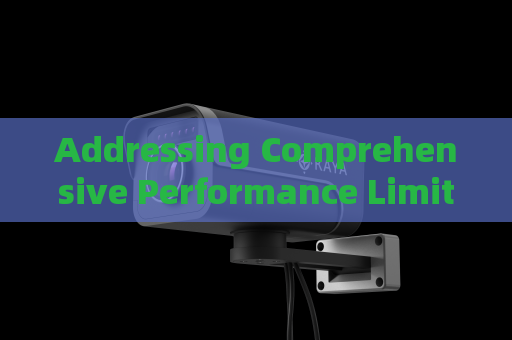
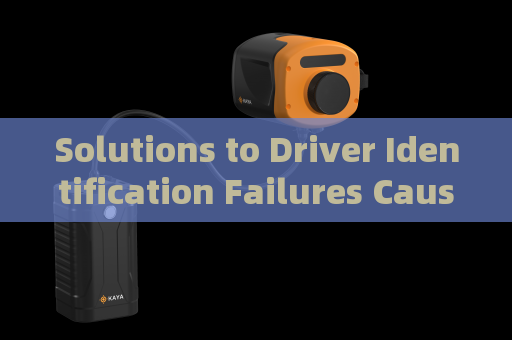
The penetrating imager directly addresses this gap. As an advanced optical imaging instrument employing laser range-gated imaging (gated imaging technology), the penetrating imager consists of a high-repetition-rate pulsed laser, an image-intensified gated camera (with built-in MCP image intensifier, high-voltage module, timing module, etc.), a beam expander, and an imaging lens. Its active imaging system delivers high-contrast imagery with long operational range, high resolution, strong anti-interference capability, and effective suppression of backscatter. Crucially, the penetrating imager is designed to see through optical media—tinted car windows, train windows, aircraft portholes, and glass curtain walls. It also operates unimpeded through fire, fog, haze, rain, and snow, providing clear imagery where conventional optics fail. For the specific scenario of monitoring smugglers in nighttime darkness, the penetrating imager allows an operator to look directly into a vehicle’s blind-spot zones—such as the darkened rear cabin or side cargo area—without needing to approach or illuminate the target with visible light that could alert the suspects.
In practice, law enforcement teams deploy the penetrating imager from a stationary observation post or a moving patrol vehicle. The operator activates the pulsed laser and gated camera, then aims the imaging lens toward the suspect vehicle’s window. Within seconds, the system produces a clear, real-time video feed showing the interior of the vehicle, including any individuals, packages, or contraband that would otherwise be invisible due to glass tinting and darkness. The imaging advantage is particularly striking when the target has its own interior lights turned off, as the penetrating imager’s active laser pulses effectively “see through” the glass without reflecting back blinding glare. Officers can continuously monitor the blind spot from a safe distance—hundreds of meters away—allowing them to assess the situation, identify weapons or hidden compartments, and coordinate tactical response without escalating the encounter prematurely.
This capability transforms nighttime blind-spot monitoring from a guessing game into a verified intelligence-gathering operation. The penetrating imager’s ability to resolve fine details—such as the outline of a hand holding a weapon in the rear seat or the shape of a hidden bundle behind a cargo partition—gives officers actionable information before they make contact. Moreover, the system works in adverse weather common to nocturnal interdiction missions: heavy fog, rain, or even smoke from a vehicle fire does not degrade the image quality markedly, because the gating timing rejects scattered light from atmospheric particles. By eliminating the blind spot that smugglers traditionally exploit under cover of darkness, the penetrating imager provides a decisive edge in covert surveillance, reducing officer risk and increasing the likelihood of successful interdiction.