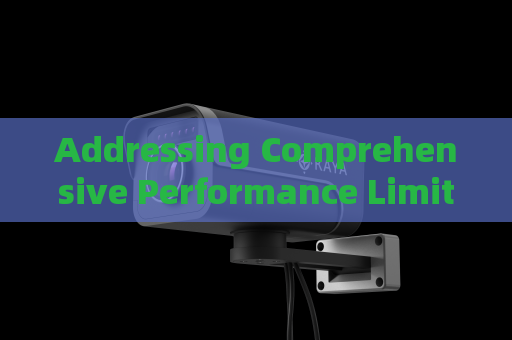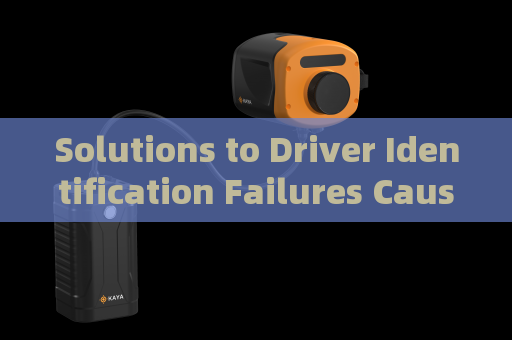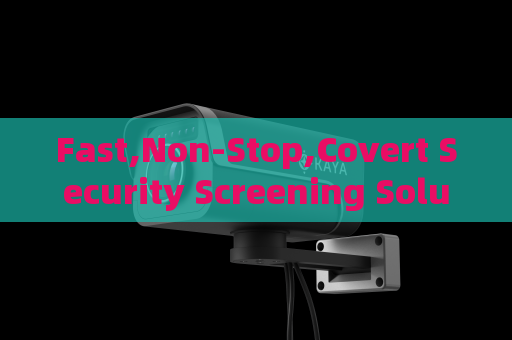
Fast, Non-Stop, Covert Security Screening Solution of the Penetration Imager for Large Gatherings with Millions of Vehicles For a national stadium hosting a championship final, the surrounding highway network can be inundated by a million vehicles in a single evening. The security reality is daunting: conventional vehicle checkpoints force every driver to stop, lower windows, and undergo a physical search or an X‑ray inspection. This process creates immense congestion, turning a 30‑minute commute into a three‑hour queue. More critically, the overt nature of these checkpoints allows adversaries to observe, adapt, and target the most vulnerable moment—when a vehicle is stationary and occupants are distracted. Rain, fog, and tinted windows further degrade visibility for human inspectors and conventional cameras. The core pain point is efficiency versus thoroughness: any solution that requires a vehicle to slow to a crawl or stop is operationally incompatible with a million‑vehicle flow, yet a solution that cannot see through glass under adverse weather leaves the perimeter dangerously porous. The penetration imager, designed precisely for this scenario, offers a way to break that trade‑off. The penetration imager solves this by exploiting laser range‑gated imaging technology. Unlike passive cameras that rely on ambient light or thermal imagers that detect heat, this active optical system fires a high‑repetition‑rate pulsed laser through an expanding beam. The image intensifier with an MCP‑based gated camera opens its electronic shutter only when reflected photons from the target distance arrive, rejecting all backscatter from rain, fog, or snow between the imager and the vehicle. This gating mechanism allows the penetration imager to “see” through the vehicle’s windshield or side windows at a range of several hundred meters, resolving objects inside the cabin—such as a weapon tucked between seats, a concealed explosive on a passenger’s lap, or unusual wiring—without requiring the driver to stop, slow down, or even be aware of the scan. The system operates at line‑of‑sight and in the optical spectrum only, so it cannot penetrate metal, concrete, or clothing; its entire value lies in stripping away the optical interference that hides threats behind glass. In practical deployment at a major event, the penetration imager is mounted on an overpass or a roadside pole several meters above the approaching traffic lane. As vehicles pass underneath at normal highway speed—anywhere from 40 to 70 mph—the imager acquires a sequence of high‑contrast images of each car’s interior. The acquisition is non‑stop: no vehicle ever decelerates, no driver is signalled to stop, and no queue forms. The data is relayed in real time to a central command center where automated image analysis flags anomalous shapes, unexpected masses, or suspicious reflections. A flagged vehicle’s license plate is instantly cross‑referenced with threat databases, and the response is covert: plainclothes officers stationed a mile ahead receive the plate number and discreetly direct the vehicle into a secondary screening lane while the rest of the traffic flows unhindered. The entire process, from image capture to alert, takes less than two seconds per vehicle. The operation is deliberately covert to preserve the element of surprise. The penetration imager is housed in a weather‑resistant casing painted to blend with signage or highway infrastructure. Its laser emission is eye‑safe and invisible to the naked eye, so passing drivers and passengers remain unaware that any inspection occurred. This concealment forces potential adversaries to assume that every vehicle might be screened, eliminating the “weak link” effect of predictable checkpoints. During a heavy downpour or a thick fog that would blind traditional cameras, the range‑gated system maintains its resolution and contrast because it only reads photons from the target plane. For a million‑vehicle gathering, this means that the perimeter security can be sustained 24 hours a day, in any weather, without ever creating a traffic bottleneck. The penetration imager transforms a logistical nightmare into a silent, continuous watch that does not disrupt the event experience while raising the bar for threat detection.