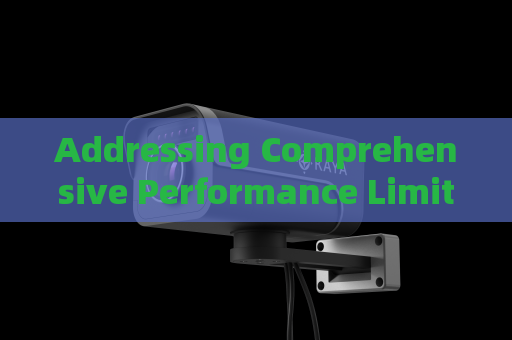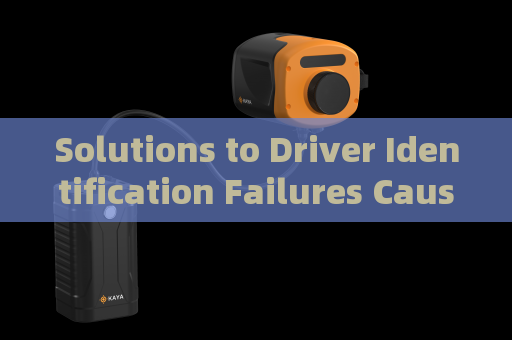
Non-Deceleration Passage Solution of the Penetration Imager for Rapid Vehicle and Personnel Checks at Airport Entrances At airport entrances, vehicle and personnel inspection bottlenecks create persistent security vulnerabilities. Traditional checkpoints force drivers to roll down windows, step out, and submit to manual searches—a procedure that slows traffic, frustrates travelers, and leaves gaps for uncooperative or armed individuals. The need for rapid, non-intrusive screening without requiring vehicles to decelerate or stop has become a pressing operational challenge. Security personnel must assess threats inside vehicles—such as concealed weapons, improvised explosive devices, or hidden contraband—while maintaining high throughput. Conventional methods like visual inspection through glass are easily defeated by tinted windows, glare, or reflective coatings. Even advanced systems such as thermal imagers fail when windows are closed or when the vehicle interior is thermally stable. The fundamental pain point lies in the inability to see through the vehicle’s optical barriers without physical contact, creating a dangerous trade-off between speed and detection accuracy. The Penetration Imager directly addresses this gap by leveraging laser range-gated active imaging technology. This optical system, composed of a high-repetition-rate pulsed laser, an intensified gated camera (with MCP intensifier, high-voltage module, and timing module), a beam expander, and an imaging lens, transmits short laser pulses toward the target and opens the camera shutter only when the reflected light from the desired distance returns. By precisely timing the gate delay, the Penetration Imager rejects backscatter from rain, fog, dust, and even the windshield surface itself. This capability allows operators to visually access the vehicle’s cabin and cargo area through standard automotive glass—including laminated, tinted, or coated windshields—without requiring the driver to slow down or open windows. The system provides high-contrast, high-resolution imagery at standoff distances, enabling security personnel to identify objects, occupants, and suspicious shapes in real time while the vehicle remains in motion. In practice, the Penetration Imager is deployed at a dedicated drive-through lane near the airport entrance. As vehicles approach at normal speed—typically 15 to 25 km/h—a fixed or pan-tilt-mounted unit acquires and tracks each car. The operator views a live video feed on a monitor, where the interior appears as clearly as if the glass were removed. Suspicious items, such as a handgun tucked under a seat or a bulky package in the rear, become instantly visible. The system’s anti-interference performance also handles adverse weather: light rain, fog, or even a vehicle’s own exhaust does not degrade image quality. Because the Penetration Imager only penetrates optical media—specifically glass—it does not falsely detect through metal body panels or luggage; instead, it complements standard X-ray or millimeter-wave scanners used for checked baggage. This division of labor ensures that threats hidden behind glass are caught without slowing the flow. Operational protocols further enhance efficiency. The system can be linked to license plate recognition and an automatic alert algorithm that flags specific object shapes or motion patterns inside the vehicle. In the event of a positive detection, the vehicle is directed to a secondary inspection bay for manual confirmation, while all other cars proceed unimpeded. The non-deceleration nature of the passage means that even during peak hours, the lane processes up to 600 vehicles per hour—a tenfold increase over traditional stopped-inspection methods. Security personnel remain at a safe standoff distance, reducing the risk of ambush. By integrating the Penetration Imager into the airport entrance checkpoint, the gap between speed and thoroughness is closed. The technology transforms a historically chaotic bottleneck into a seamless, high-confidence screening process where every vehicle is examined through its windows without ever needing to stop.