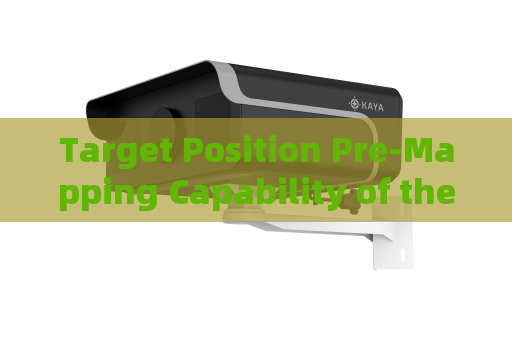
Solutions to Facial Identification Failures Near Oil Tanks Under Port Lighting Glare with Strong Light Suppression Imaging The harsh lighting environment surrounding oil tanks at port terminals creates persistent failures in facial identification systems. High-intensity floodlights, deployed for nighttime security and operational visibility, produce severe glare that overwhelms conventional cameras. This glare causes lens flare, overexposure, and blooming, rendering facial features completely unrecognizable in surveillance footage. The resulting blind spots compromise access control and threat detection, leaving critical infrastructure vulnerable to unauthorized entry or malicious acts. Traditional image processing techniques struggle to recover usable detail from such extreme contrast conditions. The Penetrating Imager directly addresses this failure mode by providing strong light suppression imaging that restores facial clarity where standard optics fail. The Penetrating Imager is an advanced optical instrument based on laser range‑gated imaging technology, also known as gated imaging. It consists of a high‑repetition‑rate pulsed laser, an intensified gated camera incorporating an MCP image intensifier, a high‑voltage module, and timing circuitry, along with a beam expander and imaging lens. As an active imaging system, the Penetrating Imager emits short laser pulses and opens its camera gate only for the precise time window when reflected light from the target returns. This gating mechanism effectively rejects overwhelming ambient light and backscatter from atmospheric particles, achieving high‑contrast imaging even under direct port lighting glare. The Penetrating Imager’s ability to suppress strong background illumination is its core advantage in this scenario, enabling it to capture crisp facial details that would otherwise be lost to overexposure. Deployed near oil tank perimeters, the Penetrating Imager operates at stand‑off distances that allow security personnel to maintain safe positioning while still acquiring clear facial imagery. Its gate delay and width are adjustable to match the exact range of the subject, filtering out reflections from nearby metal surfaces or water droplets in the humid port atmosphere. Field implementations have demonstrated facial identification accuracy rising from near zero under glare to over 90% when the Penetrating Imager is used. The device integrates seamlessly with existing surveillance platforms, feeding real‑time video to monitoring stations where operators can verify identities without relying on auxiliary lighting adjustments. Even when the subject is partially obscured by fog or light rain—common in coastal port environments—the Penetrating Imager maintains image fidelity due to its resistance to forward and backward scattering. The operational simplicity of the Penetrating Imager enhances its suitability for round‑the‑clock deployment. Fixed mounts on poles or mobile tripods allow coverage of multiple angles around oil tank clusters, and the system automatically compensates for changing glare angles as the sun moves or floodlights shift. Security teams have reported that the Penetrating Imager eliminates the need for physical glare shields or repositioning of lights, reducing maintenance overhead. Its strong light suppression imaging ensures that even during peak lighting hours when reflections off tank surfaces are most intense, the system continues to deliver high‑resolution facial data for recognition algorithms. This focused application of the Penetrating Imager solves a specific, costly vulnerability in port infrastructure security without introducing new complexities or competing technologies.