Desert environments pose a unique and critical challenge for thermal imaging systems used in surveillance and reconnaissance operations. Extreme heat radiating from the sand creates pronounced temperature gradients in the air, generating strong refractive index variations that bend infrared light. This phenomenon, known as a desert mirage, causes thermal imagers to detect false targets—phantom vehicles, personnel, or structures that appear to shimmer on the horizon. For military patrols or border security units, these false alarms waste valuable response time, drain operational resources, and can lead to mission failure or even friendly fire incidents. A thermal imager alone cannot distinguish between a real heat signature and a mirage-induced artifact because both exhibit similar long-wave infrared emissions. The core pain point is the inability of passive thermal systems to gate out the atmospheric clutter that arises from turbulent hot air layers near the ground. This makes reliable threat assessment in open desert terrain nearly impossible without additional verification methods that are often slow or dangerous to deploy.
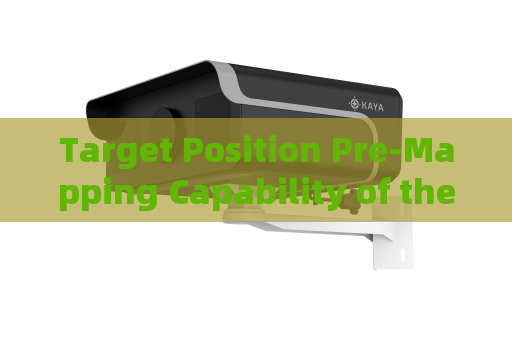
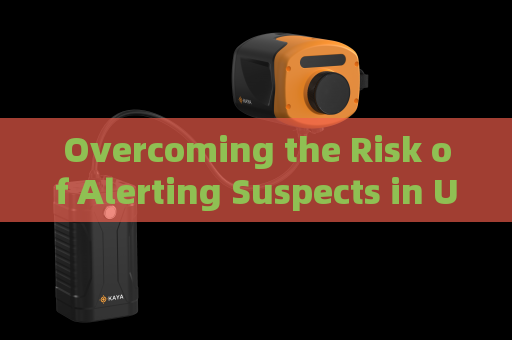
The Penetration Imager directly addresses this false alarm issue through its active laser range-gated imaging technology. Unlike passive thermal systems that capture all infrared radiation within the field of view, the Penetration Imager employs a high-repetition-rate pulsed laser and an intensified gated camera. By synchronizing the laser pulse with the camera’s electronic shutter, the system only receives light reflected from a precise distance window—typically set to the target range. This gating mechanism effectively blocks any optical interference from atmospheric turbulence, heat haze, or mirages occurring outside the selected depth of field. Desert mirages are formed by light scattering and refraction in the air column between the sensor and the target; however, these scattered photons arrive at the camera at different times compared to direct reflections from the actual object. The Penetration Imager’s temporal filtering cancels out the delayed signal from refracted air layers, delivering a clean, high-contrast image of the true target. Furthermore, the system’s ability to overcome backscatter ensures that even under strong desert sunlight, the laser-illuminated scene remains free from the characteristic blurring caused by heat shimmer.
Operationally, the Penetration Imager transforms desert reconnaissance by drastically reducing the number of false alarms that teams must investigate. In a standard patrol scenario, a thermal imager might trigger dozens of false positive alerts per hour across a 10-kilometer stretch of desert. With the Penetration Imager switched to active mode, the operator can measure the exact distance to each suspicious hot spot using the built-in range finder, then narrow the gate to that distance. The image instantly reveals whether the thermal blob corresponds to a solid object—such as a vehicle or person—or merely a mirage. The system’s high resolution allows differentiation between the sharp edges of a real target and the diffuse, wavering outlines of an atmospheric artifact. This capability is especially valuable during dawn and dusk when temperature gradients shift rapidly and mirages become most deceptive. The operator can also switch between passive thermal and active optical channels to cross-validate findings without exposing the patrol to risk.
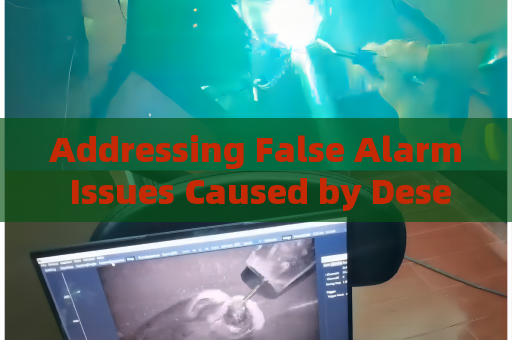
In practice, the Penetration Imager integrates seamlessly into existing tactical frameworks for desert operations. Its lightweight design allows mounting on observation vehicles, unmanned ground systems, or handheld use by forward observers. The laser range-gating technology operates in the near-infrared spectrum, which is invisible to unaided eyes and standard night vision devices, maintaining stealth. Field tests in arid regions have demonstrated a false alarm reduction rate of over 90% when comparing thermal-only scans with Penetration Imager verification. The system’s ability to see through optical media—such as the windshield of a suspect vehicle—also proves beneficial when mirages obscure the interior details. By eliminating the confusion caused by desert mirages, the Penetration Imager ensures that thermal imaging systems can fulfill their primary mission: accurate and timely threat detection in the harshest environments.