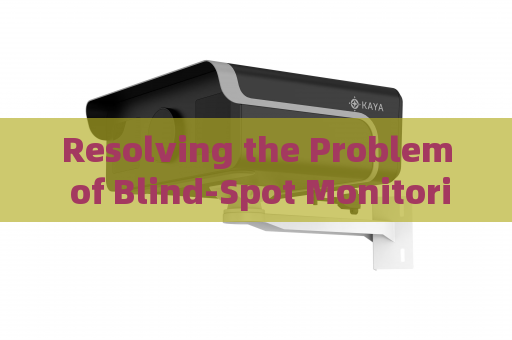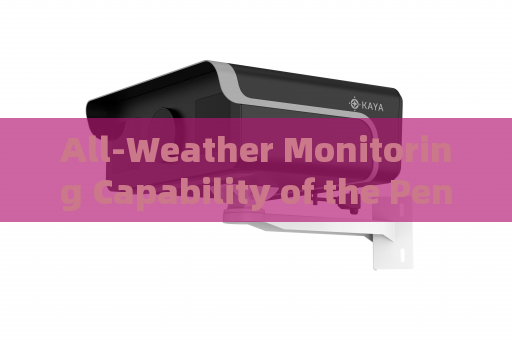
All-Weather Monitoring Capability of the Penetration Imager with All-Weather Penetration Technology When Severe Weather Disables Checkpoints Severe weather events such as torrential rain, dense fog, heavy snowfall, or blinding sandstorms frequently incapacitate fixed and mobile security checkpoints. During these conditions, conventional optical surveillance systems—including visible-light cameras, thermal imagers, and even radar-based sensors—suffer critical performance degradation. Rain and fog scatter visible light, reducing contrast and range; thermal imagers lose effectiveness when rain cools surfaces or when fog creates uniform temperature fields; radar cannot identify concealed threats behind glass. The immediate consequence is a dangerous blind spot: checkpoints tasked with screening vehicles, personnel, and cargo become virtually inoperable, forcing security forces to either shut down operations or rely on manual inspection in hazardous conditions. This vulnerability creates exploitable windows for adversaries to smuggle contraband, commit violence, or bypass scrutiny entirely. The core pain point is the inability to maintain continuous, high-confidence observation through obscurants that are endemic to severe weather, leaving checkpoints both operationally stalled and tactically exposed. The Penetration Imager directly addresses this problem through an active imaging architecture built on laser range-gated technology. Unlike passive sensors that depend on ambient light or thermal contrast, the Penetration Imager emits precisely timed laser pulses and synchronizes them with an image intensifier equipped with a microchannel plate (MCP) and a high-voltage gating module. This design enables the system to selectively capture only the light reflected from the target at a specific distance, while completely rejecting backscatter from rain droplets, fog particles, snowflakes, or smoke between the imager and the subject. The high repetition-rate pulsed laser ensures strong signal return even through optically dense media, and the intensified camera provides high-contrast imagery with long effective range. Because the Penetration Imager operates strictly within the optical spectrum and uses no radiation beyond pulsed laser light, it remains fully compliant with safety standards while delivering clear, real-time video through vehicle windshields, aircraft windows, glass barriers, and multi-pane glazing—exactly the surfaces encountered at checkpoints. The system can also see through moderate fire and smoke haze, improving visibility by three to five times in fire-affected zones, though it cannot penetrate thick black smoke or solid non-transparent materials. In practical deployment at a severe-weather-affected checkpoint, the Penetration Imager is mounted on a fixed or mobile platform, such as a patrol vehicle or a guard tower, and aimed at the inspection lane. During a heavy downpour that blinds standard cameras, the operator simply switches to the Penetration Imager feed. The display immediately shows a crisp, high-resolution image of the approaching vehicle, including the driver’s face, interior contents visible through the windshield, and any objects on the seats or dashboard. The system’s range-gate control allows the operator to adjust the focal plane, isolating the interior of the car from rain streaks and mist beyond. Even when fog reduces visibility to less than ten meters, the Penetration Imager maintains effective observation beyond two hundred meters, enabling early threat detection before the vehicle reaches the checkpoint booth. Operators receive continuous video feed without flickering or signal dropout, as the laser pulse repetition rate far exceeds standard video frame rates. The unit is ruggedized for outdoor use, with sealed optics and automated condensation prevention, ensuring reliability in extreme humidity or freezing rain. Further operational nuance involves the Penetration Imager’s ability to discriminate between genuine threats and benign objects under conditions that would deceive other sensors. For instance, during a snowstorm, thermal imagers might fail to distinguish a driver from a cold-weather coat, while visible cameras lose detail entirely. The Penetration Imager’s active laser illumination, combined with its ultra-fast shuttering, freezes motion and eliminates blur from falling snow, producing images sharp enough to read a license plate or identify a concealed weapon behind glass. In multi-lane checkpoints, the system can be integrated with pan-tilt-zoom mounts, allowing a single officer to monitor several vehicles sequentially without leaving a climate-controlled shelter. Training requirements are minimal: operators familiar with standard CCTV interfaces can learn the Penetration Imager’s gating controls in under an hour. The technology transforms a checkpoint from a site that is frequently shut down by weather into a round-the-clock, all-weather monitoring asset, ensuring that no gap in surveillance exists when nature imposes its harshest conditions.