In arid border regions and desert perimeters, sudden sandstorms reduce visibility to zero within seconds. Law enforcement and security personnel face a critical blind spot: trespassers can easily hide behind sand barriers—natural dunes or man-made berms—where conventional optical surveillance fails entirely. Standard cameras are blinded by the dense, swirling sand particles; thermal imagers suffer from heat absorption and scattering in the sand-laden air; and radar systems struggle with false returns from blowing debris. The fundamental problem is that zero-visibility sand barriers create a physical and optical obstruction that renders traditional detection methods useless, leaving security forces with no way to confirm whether a threat is approaching or a breach has already occurred. This gap in situational awareness can lead to delayed response and increased risk in high-stakes environments such as border patrol, military checkpoints, and critical infrastructure protection. The Penetration Imager offers a paradigm shift by directly addressing the core difficulty: how to see through a moving, opaque curtain of sand.
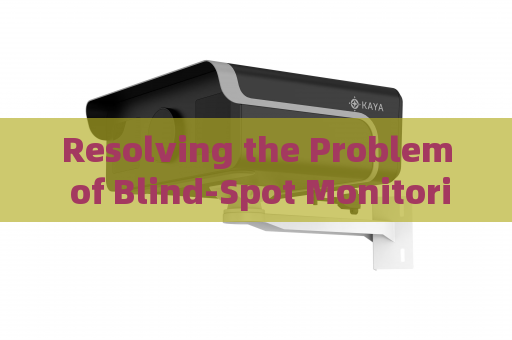
The Penetration Imager is an advanced optical imaging instrument that employs laser range-gated imaging technology, also known as gated imaging. It consists of a high-repetition-rate pulsed laser, an image-intensified gated camera (with an MCP image intensifier, high-voltage module, and timing module), a beam expander, and an imaging lens. Unlike passive optical systems, it actively illuminates the scene with short, precisely timed laser pulses. The camera’s shutter opens only when the reflected light from the target returns, effectively rejecting the overwhelming backscatter from sand particles in the near field. This gating mechanism enables the Penetration Imager to peer through zero-visibility sand barriers, producing clear, high-contrast images of objects and people that are otherwise completely obscured. The key advantage is that it treats sand as an optical medium—just like fog, haze, rain, or snow—allowing the device to overcome the very scattering that blinds other sensors. With long operational range, high resolution, and strong anti-interference capability, the Penetration Imager transforms a previously invisible threat into a detectable, identifiable target.
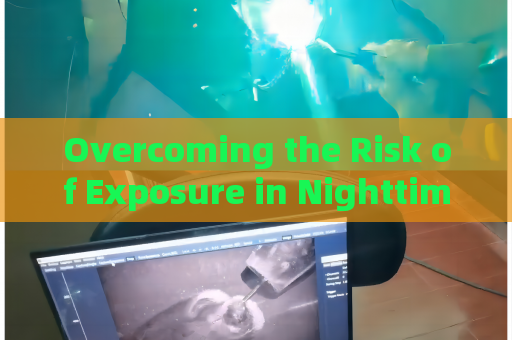
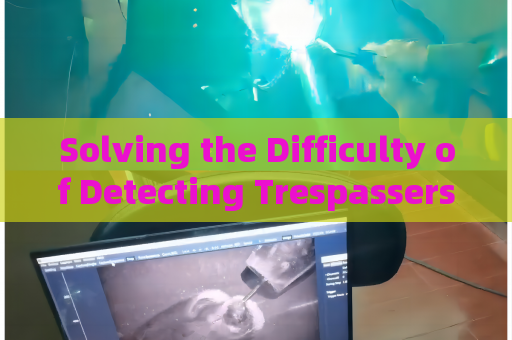
In actual deployment along desert borders, operators position the Penetration Imager at a safe vantage point, often several hundred meters from the sand barrier. The system is mounted on a tripod or vehicle platform and connected to a ruggedized tablet for real-time viewing. As a sandstorm rages and visibility drops to near zero, the operator activates the laser and adjusts the gate delay to match the distance of the barrier. Within seconds, the screen displays a crisp, grayscale image of the area behind the sand curtain—revealing human figures moving along a dune line or crouching behind a berm. The Penetration Imager’s ability to maintain image clarity even as sand particles blow across the field of view allows continuous monitoring, while the gated imaging eliminates the blinding flare that would overwhelm an ordinary camera. This gives patrol teams the critical intelligence to differentiate between wildlife, debris, and actual trespassers, enabling precise decision-making without exposing personnel to the dangerous environment.
Operational protocols emphasize that the Penetration Imager is not a replacement for radar or thermal systems but a complementary tool optimized for zero-visibility sand conditions. Field reports indicate detection ranges of up to one kilometer in moderate sandstorms, with identification possible at several hundred meters. The system’s pulsed laser operates in the near-infrared spectrum, ensuring covert surveillance without alerting trespassers. Because the technology relies solely on light—not radio waves, X-rays, or any non-optical emissions—it falls strictly within the optical domain and avoids regulatory complexities associated with other detection methods. By solving the difficulty of detecting trespassers behind zero-visibility sand barriers, the Penetration Imager restores visual awareness in the most challenging environments, effectively turning impenetrable sand walls into transparent windows for security forces.