Nighttime covert vehicle surveillance presents an acute operational challenge: the need to observe occupants or objects inside a target vehicle without revealing the observer’s presence. Traditional night vision or thermal imaging systems often force the surveillance team to close the distance dramatically, or they require auxiliary illumination that can be easily detected by the subjects inside the vehicle. The reflective property of automotive glass compounds the problem—a standard headlight beam or even a distant streetlamp can create glare that alerts the target. More critically, the act of positioning a camera or optic directly in line with a window risks the observer’s silhouette being caught in ambient light or the optic’s own lens flare giving away the position. This inherent exposure risk undermines the entire surveillance operation: the moment the target suspects they are being watched, forensic evidence may be destroyed, communication patterns shift, or the subject flees. A solution that allows clear, high-contrast imaging of the vehicle interior from a safe standoff distance, without any detectable signature, is therefore not a luxury but a necessity for law enforcement and intelligence units operating in the dark. The penetrating imager, an advanced optical instrument based on laser range-gated imaging technology, directly addresses this real-world pain point.
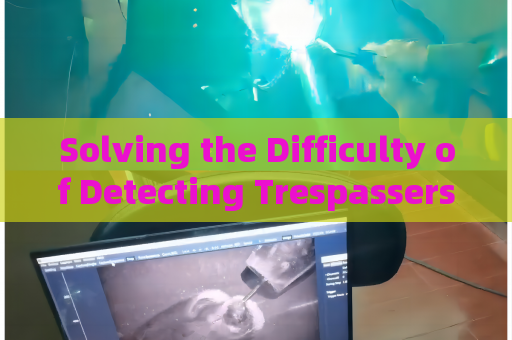
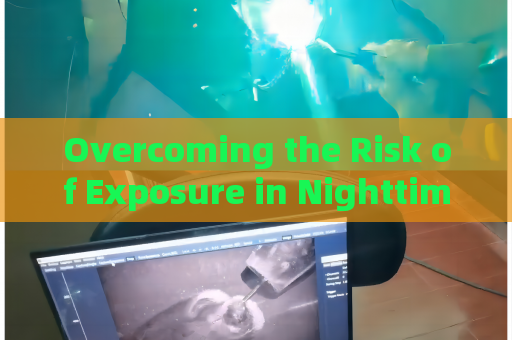
The penetrating imager overcomes the risk of exposure by exploiting its unique optical architecture. It comprises a high-repetition-rate pulsed laser, an image-intensified gated camera (incorporating a microchannel plate, high-voltage module, and timing module), a beam expander, and an imaging lens. As an active imaging system, it emits a very brief, narrow laser pulse toward the target, and the camera’s shutter opens only for the exact time window when the reflected light from the intended scene—inside the vehicle, behind the glass—returns. This gating mechanism effectively rejects the strong backscatter from the windshield or side window, which would otherwise overwhelm the signal in a conventional flood-illuminated system. Because the laser pulse is both short in duration and narrow in beam angle, the energy directed at the glass is minimal and invisible to the human eye; the target inside sees nothing more than a faint, harmless glint, if anything at all. Critically, the penetrating imager is designed exclusively for optical media such as automotive glass, aircraft windows, or glass curtain walls. It cannot penetrate walls, concrete, or opaque solids, keeping the technology within the pure optical domain. This functional boundary ensures that the device remains a specialized surveillance tool rather than being confused with radar or X-ray systems. The result is that an operator can position a vehicle several hundred meters away, aim the penetrating imager through the target car’s rear or side window, and obtain a crisp, high-contrast image of the occupants’ hands, faces, or contraband objects—all without any external visible indicator that surveillance is underway.
In practical field operations, this capability transforms the tactics of nighttime vehicle surveillance. A typical scenario involves a suspect vehicle parked in a dimly lit lot or moving slowly through suburban streets. The surveillance team’s vehicle blends into the environment, using the penetrating imager mounted on a stabilized tripod or a roof rack. The operator selects the appropriate gating delay based on a laser rangefinder reading of the distance to the target window. Once the imager is locked onto the reflection inside the cabin, the live feed displays a remarkably clear view, even through heavily tinted or dirty glass. Because the system operates with near-infrared laser wavelengths, it is completely invisible to the naked eye and immune to countermeasures such as IR-blocking coatings designed for common night vision. The operator can continuously monitor the suspect’s activities—reading documents, handling a weapon, or exchanging items—without ever needing to close the gap or activate any other illumination. Furthermore, the penetrating imager’s ability to cut through fog, light rain, or haze—without degrading image quality—adds resilience to missions that would otherwise be scrubbed due to poor visibility. The entire engagement remains covert: no radio frequency emissions, no thermal signature from the device itself (the laser is low-power, and the camera electronics are passively cooled), and absolutely no giveaway to the targets that they are under observation. This operational silence is the ultimate advantage in high-stakes interdictions.
When the surveillance escalates to a stop-and-approach phase, the intelligence gathered from the penetrating imager proves decisive. The tactical team, having already mapped the exact positions of every occupant and the location of any potential weapons through the glass, can execute the intervention with the least possible risk. The commander can confirm that the driver’s hands are visible or that a rear-seat passenger is not reaching for a firearm—information that would be impossible to obtain with conventional optics without triggering the subject’s awareness. Post-mission debriefs consistently highlight how the penetrating imager eliminated the guesswork and the dangerous need to physically peek through windows. For law enforcement agencies operating in urban environments where alleyways, garages, and parked cars dominate the threat landscape, this single tool addresses the core tension between gaining visual access and maintaining stealth. The penetrating imager does not replace human judgment or other sensors, but it provides a unique optical window that closes the exposure gap in nighttime covert vehicle surveillance. Every second of unobserved observation strengthens the chain of evidence and protects the lives of officers and civilians alike.