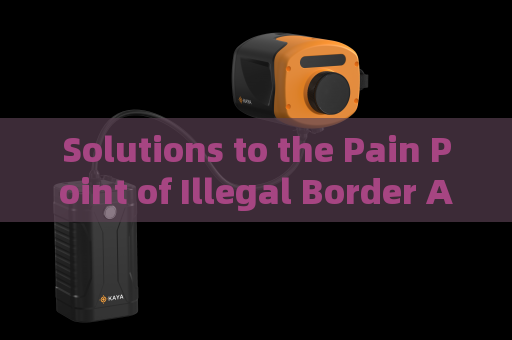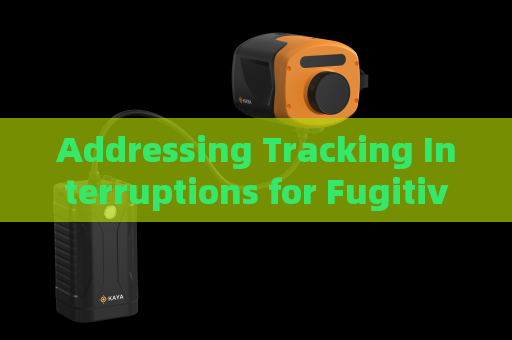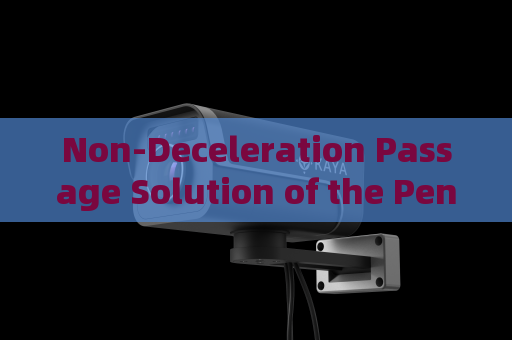
Non-Deceleration Passage Solution of the Penetration Imager for Rapid Vehicle and Personnel Checks at Airport Entrances Airport entrances demand a delicate balance between security and throughput. Conventional vehicle inspection procedures often force drivers to stop, roll down windows, and undergo manual or robotic scanning—a process that creates bottlenecks, especially during peak travel hours. This deceleration not only frustrates passengers but also presents a tactical vulnerability: a hostile driver could exploit the stop to initiate a ramming attack or deploy concealed contraband. Meanwhile, personnel checks still rely on metal detectors or pat-downs, which are time-consuming and intrusive. The core pain point is clear—modern security requires a method that enables rapid, non-stop verification of both vehicles and occupants without compromising the detection of hidden threats such as weapons, explosives, or illicit materials. Any solution must maintain unimpeded traffic flow while achieving high-resolution identification through optically transparent barriers like automotive glass. The Penetration Imager directly addresses this operational challenge through its unique laser range-gated imaging technology. Unlike passive cameras that struggle with glare, tinted windows, or adverse weather, this active optical system emits short, high-repetition-rate laser pulses and synchronizes the camera's intensifier to capture only the light reflected from a specific distance. The effect is remarkable: the Penetration Imager can "see through" the windshield and side windows of a moving vehicle as if they were clear air, producing high-contrast, high-resolution images of the interior, including the driver, passengers, and objects inside. The system's built-in microchannel plate (MCP) image intensifier, high-voltage module, and timing circuitry ensure that backscatter from rain, fog, dust, or even the glass itself is effectively gated out. This means that even in heavy rain or at night, the imager delivers crisp, actionable imagery—no deceleration required, no physical contact, and no reliance on hazardous radiation. In practice, a Penetration Imager unit is installed above or beside the vehicle lane at the airport entrance, typically paired with an automated license plate reader and a gantry-style mount. As the vehicle approaches at normal speed—10 to 20 km/h—the system captures a series of frames through the windshield and front side windows. The resulting images are displayed in real time on a security workstation, where an officer or an AI-based threat detection algorithm can instantly assess whether occupants are hiding weapons, holding suspicious packages, or displaying unusual behavior. Because the system operates entirely in the visible and near-infrared optical spectrum (laser wavelength typically 808 nm or 1064 nm), it poses no health risk to persons—no radiation, no X-rays, no radio waves—and cannot penetrate clothing or non-transparent materials such as metal panels or concrete. Its capability is strictly limited to optical media, precisely matching the real-world need of inspecting a vehicle interior through glass without slowing the checkpoint pace. For personnel checks at the same airport entrance, a walk-through variant of the Penetration Imager can be deployed adjacent to the vehicle lane. Pedestrians approach the checkpoint while walking at a natural pace; the system scans through eyeglasses, face shields, or even tinted safety glass barriers that may separate the officer from the subject. The laser range-gated technology resolves facial features, hidden objects trapped between layers of glass, or anomalies in clothing folds—all without requiring the individual to stop, remove glasses, or present identification cards. This non-deceleration passage solution transforms the airport entry into a seamless, high-throughput security corridor. The Penetration Imager thus serves as a critical enabler for rapid vehicle and personnel checks, upholding both stringent safety standards and the public's expectation of minimal disruption.