Nighttime operations against smugglers present a critical challenge for law enforcement and border security agencies. Smugglers frequently exploit the cover of darkness and the inherent blind spots of vehicles, such as heavily tinted windows, cargo compartments, or modified panels, to conceal contraband, undocumented individuals, or weapons. Traditional surveillance systems—including standard optical cameras, thermal imagers, and night-vision devices—fall short in this environment. Thermal imagers cannot see through glass, leaving law enforcement blind to what is hidden behind closed windows or windshields. Conventional night vision struggles with glare from headlights, reflections, and the intense backscatter caused by fog, rain, or dust. These limitations create dangerous blind spots where smugglers can operate with near impunity, requiring officers to physically approach vehicles—a tactic that increases risk and alerts suspicious subjects. The core problem is the inability to obtain clear, real-time visual intelligence through vehicle glass in complete darkness, a gap that directly undermines effective interdiction and officer safety.
The penetrating imager solves this exact problem through its advanced laser range-gated imaging technology, an active optical system specifically designed to overcome the barriers posed by optical mediums. Unlike passive imagers, the penetrative imager emits high-repetition-rate pulsed laser light synchronized with an image-intensified gated camera, which captures only the reflected light from the target within a precise time window. This process effectively eliminates backscatter from fog, rain, snow, or dusty atmospheres while maintaining high contrast and resolution. Crucially, the device can see through vehicle glass—including tinted windshields, side windows, and rear windows—that would otherwise obstruct a clear view. In the context of blind-spot monitoring for smugglers, this capability allows law enforcement to observe the interior of a suspicious vehicle from a safe standoff distance, even in pitch-black conditions. The penetrating imager does not rely on X-rays, radio waves, or any non-optical phenomena; it operates entirely within the spectrum of light, making it a safe, non-invasive tool for first responders.
In field deployment, the penetrating imager fundamentally changes how officers conduct nighttime interdiction. A patrol unit positioned at a checkpoint or observation post can aim the device at a suspect vehicle’s driver-side window or cargo compartment, instantly revealing whether hidden compartments or passengers are present behind darkened glass. The system’s long operational range—often exceeding several hundred meters—means officers can maintain a safe distance while gathering actionable intelligence. For example, during a routine traffic stop along a remote highway, an officer can use the penetrating imager to scan the rear cargo area of a pickup truck with opaque tonneau covers, detecting smuggled goods without needing to exit the vehicle or approach the suspect. The high-resolution imagery, rendered in monochrome or pseudo-color, clearly distinguishes human shapes, packages, or structural modifications that would otherwise remain invisible. This direct visual confirmation eliminates guesswork, reduces the need for physical searches, and enhances both officer safety and operational efficiency.
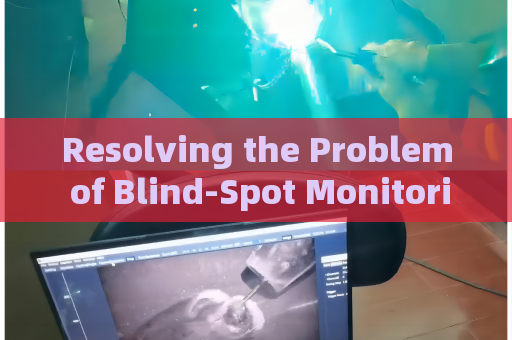
Further adapting to the nocturnal smuggling environment, the penetrating imager excels when ambient light is virtually nonexistent or when obscurants like heavy fog or rain are present. In coastal or border regions where smugglers often use boats or off-road vehicles with heavily tinted cabs, the device can see through both the windshield and side windows to detect contraband stowed in the cabin. The imaging system’s ability to penetrate glass while disregarding rain droplets or mist means that operations can continue uninterrupted during adverse weather. Law enforcement teams can also integrate the penetrating imager with tactical workflows, such as remote monitoring via a ruggedized tablet or helmet-mounted display, enabling real-time decision-making from a command vehicle. By resolving the blind-spot monitoring problem in nighttime darkness, this optical tool empowers agencies to locate hidden threats, intercept illegal cargo, and protect personnel without compromising the element of surprise or risking close-quarter confrontations.