In the dead of night, law enforcement officers face a critical challenge: detecting illegal vehicles operating under total darkness. Whether it is a smuggling convoy on remote highways, a stolen car fleeing through unlit rural roads, or a suspicious vehicle idling in a blacked-out industrial zone, the absence of ambient light renders conventional surveillance equipment nearly useless. Standard night vision devices rely on residual starlight or infrared illumination, but these fail in zero-light conditions, leaving officers blind to vehicle movements, occupants, and license plates. Worse, vehicle windshields reflect back any external light source, creating glare that obscures rather than reveals. This pain point—the inability to conduct reliable, covert identification of illegal vehicles in pitch-black environments—directly compromises safety, reduces interdiction success rates, and exposes personnel to ambush risks. A solution that can see through both darkness and glass without revealing the observer’s position is not a luxury; it is an operational necessity.
The penetrating imager addresses this exact pain point through its core technology: laser range-gated imaging. Unlike passive night optics, this active imaging system emits high-repetition-rate pulsed laser light and synchronizes a gated intensified camera to capture only the light reflected from a precise distance. By timing the shutter to open after the laser pulse has traveled to the target and back, the penetrating imager effectively slices through the veil of total darkness. More critically, its ability to suppress backscatter—the scattering of laser light by fog, rain, or glass—allows clear imaging through vehicle windshields. The system’s components—a high-frequency pulsed laser, an image intensifier tube with microchannel plate (MCP), a timing module, and a beam expander—work together to deliver high-contrast, long-range images even in absolute zero-light conditions. This means that a patrol unit can position itself hundreds of meters away from a suspect vehicle and, with the penetrating imager, see directly through the windshield to identify the driver, passengers, and cargo, all while maintaining complete tactical concealment.
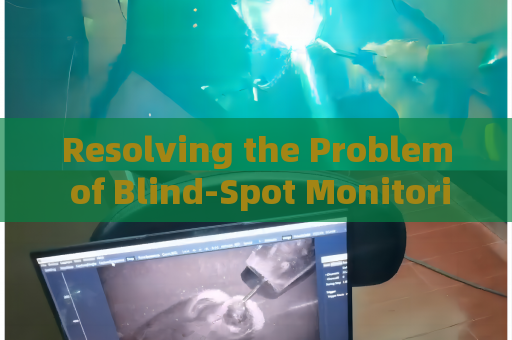
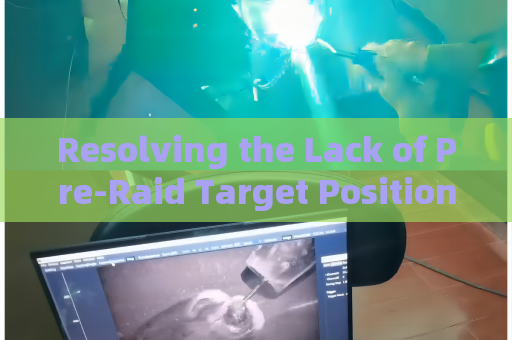
In real-world field operations, this capability transforms the way illegal vehicle detection is conducted during nocturnal interdictions. Officers no longer need to risk closing in on a vehicle blind or rely on high-beam headlights that alert suspects. The penetrating imager can be mounted on a tripod or vehicle roof, connected to a ruggedized tablet display. With a single pull of the trigger, the system sends out a laser pulse and instantly returns a crisp, grayscale image of the vehicle interior through the glass. Even under heavy fog or drizzle—conditions that typically defeat thermal imagers—the gated imaging principle cuts through the optical interference, maintaining a clear view. One documented case involved a highway patrol unit that used the penetrating imager to verify a cargo van’s contents from 150 meters away at midnight; the suspect had turned off all lights, but the imager revealed multiple passengers in the back, confirming a human smuggling operation. Such evidence allows officers to make informed decisions—whether to establish a traffic stop, call for backup, or observe further—without exposing their presence.

The penetrating imager’s zero-light imaging capability also excels in scenarios where conventional flashlights or vehicle spotlights would alert the target. For example, in rural checkpoints where ambient light is nonexistent, the unit can scan approaching vehicles one by one, reading license plates and observing occupant behavior before the driver even knows they are under surveillance. The system’s high resolution and long effective range—typically several hundred meters—mean that a single observation post can cover a wide sector of roadway. Furthermore, because the penetrating imager only images through optical media like glass, it does not violate privacy in any unlawful manner; it simply overcomes the physical barrier of darkness and windshield reflection. For law enforcement agencies seeking to address the persistent pain point of illegal vehicle detection in total darkness, this technology offers a dedicated, reliable, and operationally proven solution that keeps officers safe and interdictions effective.