In high-stakes police and counter-terrorism operations targeting hideouts such as a fortified vehicle or a glass-enclosed structure, the inability to accurately map the positions of armed suspects before entry poses a critical tactical disadvantage. Standard optical reconnaissance tools—binoculars, spotting scopes, or even drone cameras—fail to deliver reliable intelligence when the target is concealed behind automotive glass, commercial storefront windows, or reinforced aircraft-grade glass. The resulting uncertainty forces tactical teams to rely on assumptions, risking ambushes, hostage harm, or extended standoffs. The core pain point is the absence of a non-contact, real-time solution that can see through optical barriers without revealing the operator’s position or relying on emitted radiation. This gap demands an imaging system that operates purely within the light spectrum, capable of penetrating common transparent materials while rejecting backscatter from environmental obscurants like fog, rain, or glare.
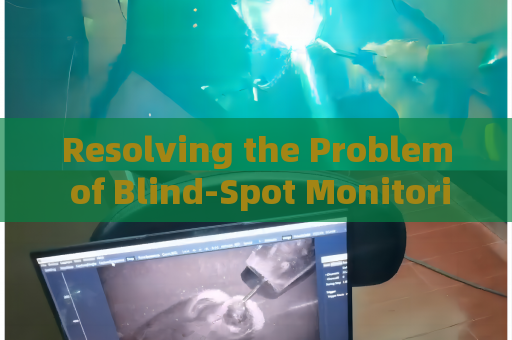
The penetrating imager—an advanced optical instrument employing laser range-gated imaging (gated imaging technology)—directly addresses this reconnaissance deficiency. Comprising a high-repetition-rate pulsed laser, an intensified gated camera (with MCP image intensifier, high-voltage module, timing module), a beam expander, and an imaging lens, this active imaging system achieves high-contrast imagery through optically transparent barriers. By synchronizing the laser pulse with the camera’s gated shutter, it selectively captures light reflected from the target at a precise distance while rejecting photons scattered by the intervening glass or atmospheric particles. This capability enables operators to obtain clear, silhouetted outlines and even facial features of individuals inside a vehicle, behind a lobby glass door, or within an airport terminal’s glass wall—all from a safe standoff distance of several hundred meters. The system’s resistance to backscatter further ensures that rain, smoke haze, or dust do not degrade the image quality, effectively turning an optically opaque scene into a actionable intelligence picture.
Operationally, the penetrating imager is deployed during the pre-raid phase of hideout clearance. A tactical observer positions the device—either as a handheld unit or mounted on a tripod—at a concealed location with line-of-sight to the target enclosure. The operator manually adjusts the gate delay to match the estimated distance, then scans the area while viewing the real-time feed on a ruggedized display. Within seconds, the system reveals the number of occupants, their relative positions, and any weapon movements visible through the glass. This data is relayed via encrypted radio to the assault team, who can refine their entry plan: selecting the optimal breach point, assigning shooters to specific threat zones, and minimizing surprise risk. For instance, in a vehicle interdiction scenario, the imager can confirm whether the driver’s hand is reaching for a concealed weapon or whether a passenger in the back seat is holding a hostage at gunpoint. Such precise mapping eliminates guesswork and reduces the reliance on dynamic entry tactics that might escalate casualties.
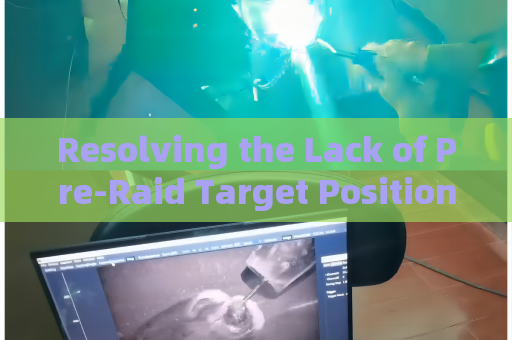
The technology’s performance remains consistent under challenging environmental conditions that would incapacitate conventional optics. During a nighttime raid through fog or drizzle, the penetrating imager’s active illumination and gating principle cut through the optical noise produced by water droplets and airborne particles. However, it is critical to note the system’s boundary: it cannot penetrate dense black smoke—typical of an enclosed fire—or any opaque, non-transparent solid material, in strict compliance with its optical-only operating principle. In the context of hideout operations, the primary limitation arises when the target takes cover behind a solid concrete wall or a metal partition; for such scenarios, the penetrating imager must be complemented by other sensing modalities. Yet for the vast majority of urban hideouts that rely on glass enclosures—vehicle cabins, glass storefronts, airport lounges, or armored vehicle vision blocks—this tool resolves the lack of pre-raid target position mapping with unmatched clarity and safety, enabling law enforcement and military units to execute surgical interventions with confidence.