In law enforcement and security surveillance, the ability to detect suspicious activities under any environmental condition is critical. Yet severe weather—heavy rain, dense fog, blizzards, or persistent haze—frequently renders conventional optical cameras useless. These atmospheric phenomena scatter and absorb light, drastically reducing contrast and effective range. Operators monitoring a vehicle parked in a remote lot during a torrential downpour, or tracking a person moving behind a curtain of falling snow, often find the target completely hidden within the visual noise. The failure to acquire a clear image means missed threats, delayed response, and compromised situational awareness. This vulnerability creates a dangerous gap in perimeter security and counter-surveillance operations precisely when suspicious actors may exploit the weather as cover. The core pain point is that passive imaging systems cannot separate the target signal from the clutter of rain, fog, or snow, leading to repeated detection failures that undermine mission effectiveness.
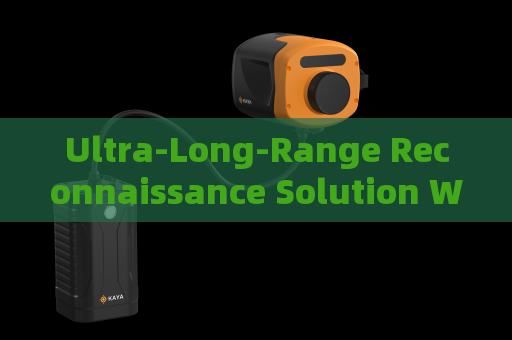
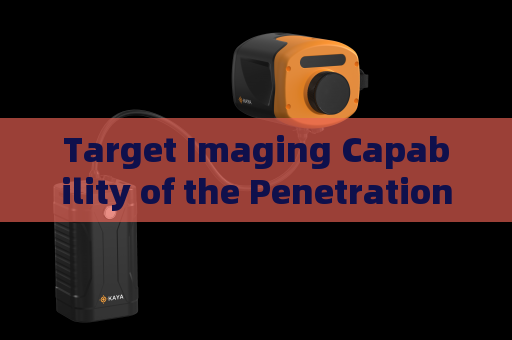
The Penetrating Imager directly addresses this problem through active laser range‑gated imaging technology. Unlike passive cameras that rely on ambient light, the system emits short, high‑repetition‑rate laser pulses synchronized with an image‑intensified gated camera. The timing gate is set to only receive light reflected from the target distance, while backscatter from rain droplets, fog particles, or snowflakes is rejected because those reflections arrive earlier or later than the gate window. This selective gating effectively cuts through the obscurant medium, producing high‑contrast images even in dense fog or heavy rain. The Penetrating Imager does not rely on thermal signatures, which can be blocked by wet surfaces, nor does it emit harmful radiation—it operates entirely within the optical spectrum. Its ability to overcome severe weather interference means that the same camera that fails under rain can now reveal the silhouette of a person approaching a vehicle or the suspicious movement inside a car with fogged windows. The key functional advantage is the restoration of visual clarity where conventional optics become blind.
For field deployment, the Penetrating Imager operates similarly to a standard surveillance camera but with a dedicated laser illuminator and gating control. An operator can mount the unit on a tripod or vehicle platform and aim it at the area of interest. During a heavy snowstorm, for instance, the operator adjusts the gate delay to match the distance of the target vehicle, and the live feed immediately shows a crisp image of the vehicle’s interior through its snow‑covered windshield. The system provides real‑time video output, allowing remote monitoring without requiring personnel to approach the threat. In an urban anti‑terrorism scenario, a suspect may hide behind a glass storefront while a rainstorm blurs all optical sensors. The Penetrating Imager, placed at a safe standoff distance, can clearly capture the individual’s hand movements or the outline of an object. The device’s high resolution enables identification of subtle behaviors, such as reaching for a weapon, that would be invisible in standard footage. This capability transforms a detection failure into a successful surveillance outcome under the worst weather conditions.

The practical impact extends to first‑responder safety. When a suspicious vehicle is reported in a remote area during a blizzard, law enforcement cannot rely on thermal imagers because snow acts as an insulator, masking the heat signature. The Penetrating Imager, however, sees through the falling snow directly to the vehicle’s windows, confirming whether an occupant is present. The operator can cycle the gate depth to scan different distances without moving the camera, rapidly assessing multiple zones. Additionally, the system is robust against glare from wet surfaces—headlights or streetlights reflecting off puddles are not amplified because the gating excludes stray light outside the depth of field. By eliminating the primary causes of target detection failures—backscatter, low contrast, and atmospheric diffusion—the Penetrating Imager becomes an indispensable tool for covert and overt operations alike. Its deployment ensures that severe weather no longer offers sanctuary for suspicious activities, closing a critical vulnerability in modern security networks.