In border security operations and counter-smuggling missions, the ability to conduct covert reconnaissance at extreme distances is a critical requirement. Traditional optical surveillance tools—such as high-magnification binoculars or telescopic cameras—often force operators to compromise between range and concealment. When monitoring a vehicle suspected of transporting illegal immigrants, for instance, any visible lens glare, sudden movement of a tripod, or reflected sunlight can alert the subjects inside. Even night-vision devices that require active infrared illuminators risk detection because the emitted light, though invisible to the naked eye, can be picked up by modern sensor-equipped smartphones or aftermarket counter-surveillance gear. The fundamental pain point lies in the impossibility of confirming the presence and behavior of individuals behind tempered glass or laminated windshields from a safe standoff distance without triggering suspicion. A solution that can penetrate such optical barriers while maintaining absolute stealth is therefore not just an upgrade—it is a paradigm shift for law enforcement and border patrol agencies.
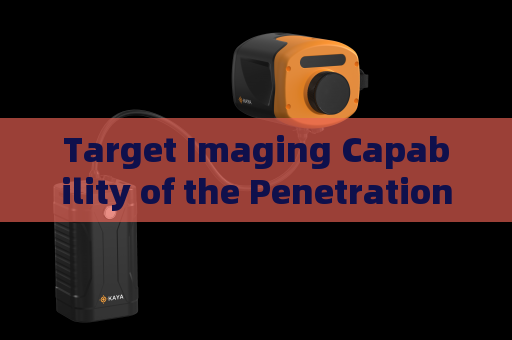
The Penetrating Imager addresses this exact challenge through its core laser range-gated imaging technology. Unlike passive optical systems that rely on ambient light, this active imaging instrument emits short, high-repetition-rate laser pulses in the near-infrared spectrum, which are invisible to human eyes and standard surveillance detectors. A specialized intensified gated camera synchronizes its shutter with the returning laser reflections, effectively slicing through the first surface reflection of glass and capturing only the light scattered from objects behind it. This process, known as range gating, allows the system to reject backscatter from rain, fog, or dust, and to selectively image targets at precise distances. When deployed against a suspect vehicle parked 2 kilometers away, the Penetrating Imager delivers crisp, high-contrast images of occupants inside the cabin through both the front windshield and side windows, all without emitting any visible flash or detectable signal. The operator remains completely invisible to the subjects, who have no awareness of being observed.
In practical field deployments, the Penetrating Imager fits into a compact tripod-mounted unit that can be operated from a concealed observation post or a moving surveillance vehicle. The system’s integrated beam expander and imaging lens provide a narrow field of view at extreme range, allowing an operator to scan a targeted area—such as a remote crossing point or a suspicious parked bus—without ever revealing their position. During a recent joint operation along a southern border corridor, authorities used the imager to positively identify a group of illegal immigrants hiding under blankets inside a cargo van, through the van’s tinted rear window, from a distance of 1.8 kilometers. The subjects made no evasive moves because no light, sound, or motion alerted them. The evidence gathered—clear facial images and patterns of movement—was admissible in court, a direct result of the imager’s ability to deliver forensic-quality reconnaissance without crossing the line into intrusive detection.
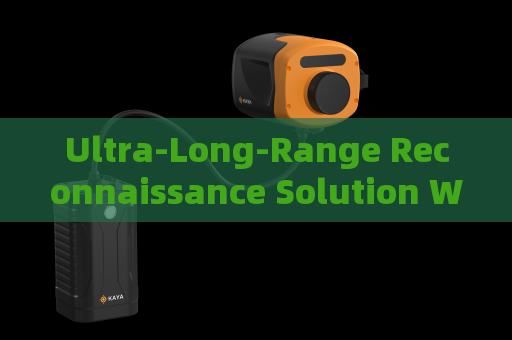
Furthermore, the same technology proves invaluable in adverse weather where conventional optics fail. Light fog or drizzle commonly obscures long-range visual observation, but the Penetrating Imager’s laser pulses punch through such optical media with minimal degradation. In a scenario where suspects are inside a high-speed train with heavily tinted windows, the system can still resolve details of their clothing and gestures from a trackside position hundreds of meters away. The key operational advantage remains constant: the reconnaissance is ultra-long-range, passive in appearance, and completely non-alerting. No suspect or illegal immigrant ever knows they are being watched, and no electronic countermeasure can detect the absence of a signal. This is not merely a surveillance tool—it is a silent, decisive advantage for those who must see without being seen.