Nighttime border surveillance faces a critical challenge when absolute darkness combines with environmental obstructions. Illegal border crossers deliberately exploit zero-light conditions, often moving under cover of fog, rain, or heavy haze to evade detection. Conventional imaging systems such as thermal cameras struggle with glass barriers—vehicle windows or observation post glazing—while low-light devices require some ambient illumination to function. Even advanced infrared sensors cannot penetrate optical mediums like windshield glass, and their performance degrades sharply in adverse weather. This leaves border patrol agents blind to activities occurring inside vehicles or behind transparent barriers, creating a persistent security gap. The Penetration Imager offers a targeted solution to this pain point, enabling law enforcement to overcome the dual obstacles of zero-light and optical interference without alerting suspects.
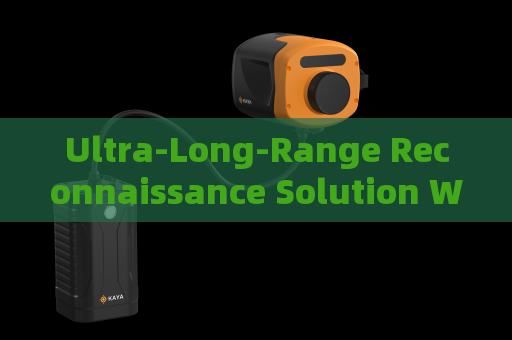
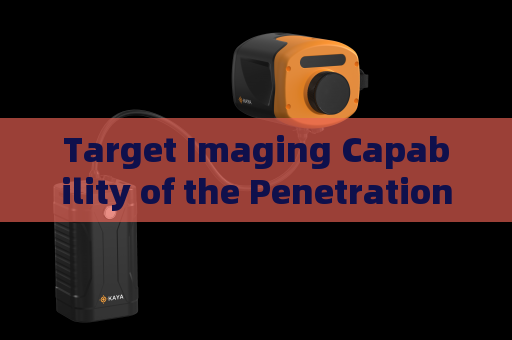
The Penetration Imager is an active optical imaging system built on laser range-gated imaging technology. It comprises a high-repetition-rate pulsed laser, an intensified gated camera with an MCP image intensifier, high-voltage modules, timing modules, a beam expander, and an imaging lens. This configuration allows the device to emit short laser pulses and synchronize a fast electronic shutter, effectively gating out backscatter from atmospheric particles or intervening media such as fog, rain, snow, and smoke. Critically, the Penetration Imager can see through transparent optical media like vehicle windshields, train windows, aircraft portholes, and glass curtain walls. In zero-light conditions, the active laser illumination provides its own light source, eliminating the need for external lighting that would betray an observer’s position. The system delivers high-contrast images with long standoff distances and superior resolution, making it ideal for covert identification of illegal activity behind glass at border checkpoints or during mobile patrols.
In practical deployment, border security teams use the Penetration Imager to monitor approaching vehicles from a safe distance. An operator aims the device at a target car’s side windows or windshield; the pulsed laser penetrates the glass while the gated camera captures only the reflected light from objects inside, rejecting glare and scattering. This reveals occupants, contraband, or concealed persons even under pitch‑black skies. The device’s ability to operate through heavy fog or rain further extends its utility—conditions that would cripple passive night vision or thermal imagers. A typical operation involves a stationary patrol post scanning a checkpoint lane, or a mobile unit positioned along a smuggling route. The Penetration Imager’s real‑time video feed allows instant threat assessment without physically approaching the vehicle, minimizing risk to officers and preserving tactical surprise.
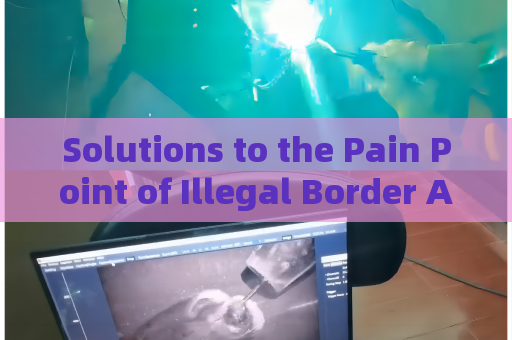
During missions where suspects hide inside vehicles with tinted glass, the Penetration Imager overcomes another common problem. Tinted windows reduce visible light transmission but do not block the near‑infrared laser pulses, and the range‑gated timing isolates the interior return signal from window reflections. This capability proves vital when intercepting human trafficking or drug smuggling at border crossings. The system’s operational simplicity—point, focus, and view—enables rapid training for frontline agents. With no need for ambient light, the Penetration Imager remains effective from dusk to dawn, filling a critical void in all‑weather, all‑darkness border detection. Its design adheres strictly to optical detection principles, relying solely on reflected light rather than any non‑optical radiation, ensuring compliance with operational safety and legal standards.